Alta California: The History of a Spanish and Mexican Province
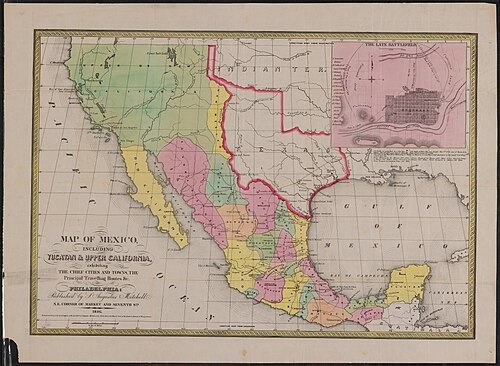
Alta California (Upper California), also known as Nueva California (New California), was a pivotal frontier province that transitioned through three distinct political eras: the Spanish colonial period, the Mexican era, and finally, its integration into the United States. Formally established as a separate province of New Spain in 1804, it encompassed a vast territory including present-day California, Nevada, and Utah, as well as portions of Arizona, Wyoming, and Colorado.
The region's development was shaped by the interplay of religious missions, military presidios, and sprawling cattle ranches, creating a unique cultural identity known as the Californio culture.
Key Facts
- Established: 1804 as a separate province of New Spain.
- Capital: Monterey served as the administrative center from 1804 to 1836.
- Territorial Scope: Included modern California, Nevada, Utah, and parts of Arizona, Wyoming, and Colorado.
- Primary Economy: Based on the export of hides and tallow from livestock.
- End of Era: Ceded to the United States in 1848 following the Mexican-American War.
Early Colonization and the Mission System (1697–1821)
The push into the Californias began in the late 17th century. In 1697, Jesuit expansion led to the founding of the Misión de Nuestra Señora de Loreto Conchó, the first mission established in the Californias.
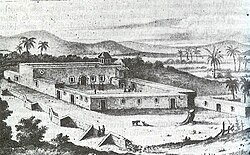
By 1769, Spanish colonization intensified. The Spanish established a network of 21 missions in Alta California to convert the Indigenous population to Christianity and secure the territory for the Spanish Crown.
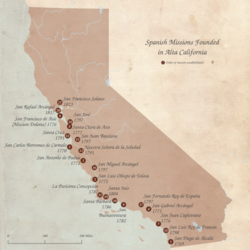
The mission system had a devastating impact on the precolonial Indigenous population, estimated at 340,000 people. Between 1769 and 1832, records show at least 87,787 baptisms and 63,789 deaths among Indigenous peoples, reflecting a staggering mortality rate. While many Indigenous people resisted conversion or navigated religious expectations to preserve their own cultural practices, the missions remained the central social and religious hubs of the era.
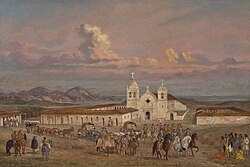
Mission San Carlos Borromeo de Carmelo, established in 1770, eventually became the headquarters of the entire Californian mission system from 1797 until 1833.
The Rise of the Ranchos and Californio Culture
Parallel to the missions, the Spanish government introduced the rancho system. The first rancho, Rancho San Pedro, was established in 1784 as a 48,000-acre site for cattle grazing. These large land grants were often given to retired soldados de cuera (leather-jacket soldiers) as rewards for their service.
The ranchos focused on raising cattle and sheep, with hides and tallow serving as the primary exports. This economy relied heavily on the labor of Indigenous peoples, who performed the construction, ranching, and domestic work. Over time, the cattle ranchers (rancheros) and townspeople (pobladores) developed into the distinct Californio culture.
Transition to Mexican Rule (1821–1846)
Following the Mexican War of Independence, Mexico gained independence from Spain on August 24, 1821. Alta California became a territory of the new Mexican nation in 1822. Because of its small population, the 1824 Constitution of Mexico designated it as a "territory" rather than a constituent state.
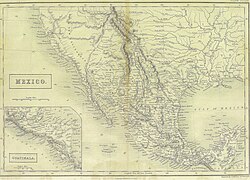
Political instability marked the Mexican era. In 1836, the Siete Leyes (Seven Laws) constitutional reform replaced the federalist system with a centralist one, reuniting Alta and Baja California into a single Departamento de las Californias.
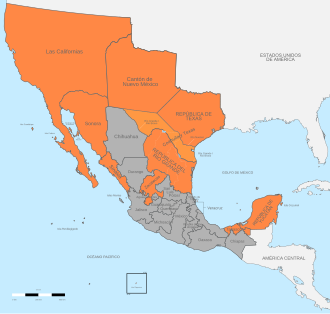
This centralist shift sparked a revolt in 1836 led by Juan Bautista Alvarado, who seized control of Monterey. Although Alvarado eventually became the official governor (1837–1842), the region continued to experience friction between local Californios and appointees from Mexico City. The last Mexican governor was Pío Pico, who served until the U.S. military occupation began in 1846.
The Mexican-American War and U.S. Annexation
The mid-19th century saw increasing American interest in the region. During the Mexican-American War (1846–1848), the U.S. Navy seized southern California cities. Despite victories by Californio irregular units at the Siege of Los Angeles, they were eventually defeated at the battles of Río San Gabriel and La Mesa.
The conflict ended with the Treaty of Cahuenga in 1847 and the Treaty of Guadalupe Hidalgo in 1848. Under the latter, Mexico ceded most of Alta California to the United States in exchange for $15 million. In 1850, California officially joined the Union as the 31st state.
Summary of Alta California's Administration
The following table summarizes the administrative shifts of the region during its colonial and territorial periods.
| Period | Political Entity | Status | Capital |
|---|---|---|---|
| 1804–1821 | Viceroyalty of New Spain | Province | Monterey |
| 1821–1824 | Mexican Empire | Province | Monterey |
| 1824–1836 | Mexico (Federal Republic) | Federal Territory | Monterey |
| 1836–1846 | Mexico (Centralist Republic) | Department | Monterey |
Frequently Asked Questions
What was the difference between Alta and Baja California?
Originally part of the province of Las Californias, the region was split in 1804. Baja California refers to the peninsula, while Alta California (Upper California) refers to the northern region encompassing the present-day U.S. state of California and surrounding areas.
Who were the Californios?
Californios were the Spanish-speaking inhabitants of Alta California, primarily consisting of rancheros (cattle ranchers) and pobladores (townspeople) who developed a unique regional culture under Spanish and Mexican rule.
What was the primary economic driver of the ranchos?
The rancho economy was centered on livestock, specifically cattle and sheep. The most valuable exports from these estates were hides and tallow.
How did Alta California become part of the United States?
Following the Mexican-American War, the Treaty of Guadalupe Hidalgo was signed in 1848. Mexico ceded the territory to the U.S. for a payment of $15 million, and California became a state in 1850.
What was the impact of the missions on Indigenous peoples?
The missions had a devastating effect, characterized by an immense death rate. While they sought to convert Indigenous peoples to Christianity, many natives resisted or adapted their behaviors to maintain their own cultural and religious identities.