Micronesia: Geography, History, and Culture of the Small Islands
Micronesia, a name derived from the Greek words mikrós (small) and nêsos (island), is a vast region of Oceania characterized by thousands of small islands scattered across the western Pacific Ocean. From its ancient Austronesian roots to its complex colonial history, the region represents a unique intersection of maritime skill, diverse ethnicities, and strategic geopolitical importance.
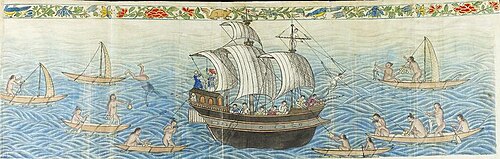
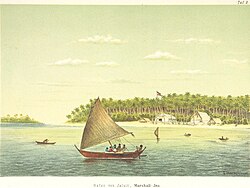
The human story of Micronesia began several millennia ago with the Austronesian expansion. Scientific consensus suggests these seaborne migrants originated from pre-Han Formosa between 3000 and 1500 BCE. By 2200 BCE, they had reached the Batanes Islands in the northern Philippines. These pioneers developed revolutionary oceangoing technologies—including catamarans, outrigger boats, and the crab claw sail—which allowed them to disperse rapidly across the Indo-Pacific and assimilate with earlier populations starting around 2000 BCE.
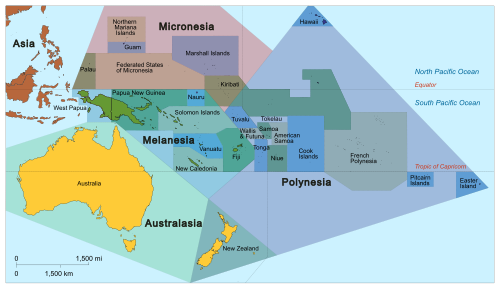
Key Facts
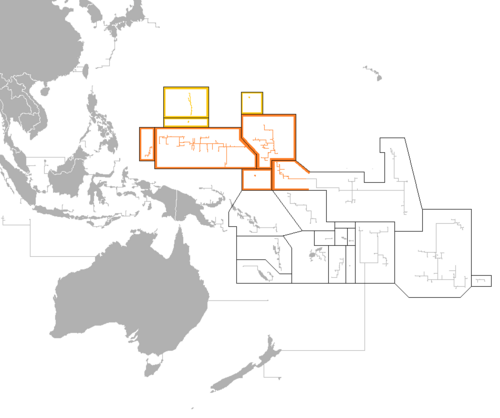
- Island Count: Approximately 2,100 islands.
- Total Land Area: 2,700 km².
- Ocean Area: 7,400,000 km² within the island perimeter.
- Major Groups: Caroline, Gilbert, Mariana, and Marshall Islands.
- Population: Approximately 517,464 (2021).
- Primary Religion: Christianity (estimated between 93.1% and 99%).
Geography and Island Groups
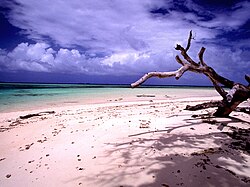
Micronesia is defined by its immense ocean-to-land ratio. While the total land area is relatively small, the region encompasses millions of square kilometers of ocean. The largest individual landmass is Guam, covering 582 km².
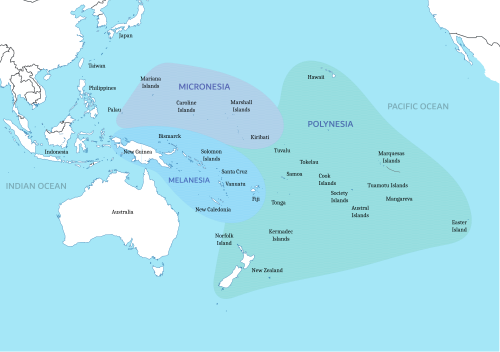
The region is divided into four primary island groups:
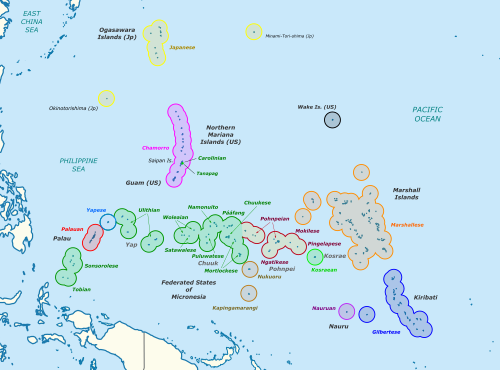
- The Caroline Islands: Comprising Palau and the Federated States of Micronesia.
- The Gilbert Islands: Now part of Kiribati.
- The Mariana Islands: Including Guam and the Northern Mariana Islands (U.S.).
- The Marshall Islands: A collection of atolls and isolated islands.
The Mariana Islands
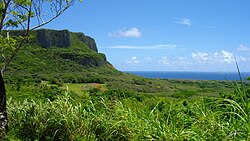
The Marianas form an arc-shaped archipelago created by the summits of fifteen volcanic mountains. This chain was formed by the Pacific Plate plunging beneath the Mariana plate, making it the most volcanically active convergent plate boundary on Earth.
The Marshall Islands
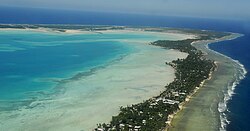
Located north of Kiribati and Nauru, the Marshall Islands consist of 29 low-lying atolls (ring-shaped coral reefs) and five isolated islands. These are divided into the Ratak (sunrise) and Ralik (sunset) chains. With few natural resources, the Republic of the Marshall Islands relies on a service economy, fishing, and agriculture.
Historical Transitions and Colonization
![Chronological dispersal of Austronesian peoples across the Indo-Pacific[26]](/images/3e/27/3e2760d182b44d5fda997a40480200bcb8e8f2afaf520fb426563027fac4bc01.webp)
The political landscape of Micronesia was drastically reshaped during the late 19th and 20th centuries. A pivotal moment occurred during the Spanish-American War, after which the United States took possession of Guam and Wake Island.
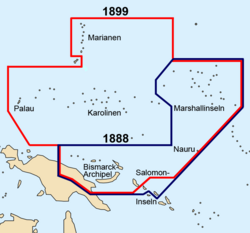
Under the German-Spanish Treaty of 1899, Spain sold its remaining Pacific possessions—including the Caroline and Mariana Islands—to the German Empire. Germany administered these as a protectorate from German New Guinea, having already annexed Nauru in 1888.
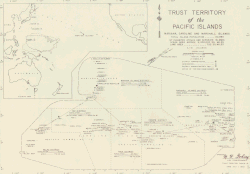
Following World War I, Germany lost its colonies, and the Northern Mariana Islands became a League of Nations Mandate under Japanese control. After World War II, these areas transitioned into the United Nations Trust Territory System administered by the United States. In 1976, the Northern Mariana Islands entered a political union with the U.S., granting residents citizenship and commonwealth status.
Demographics and Society
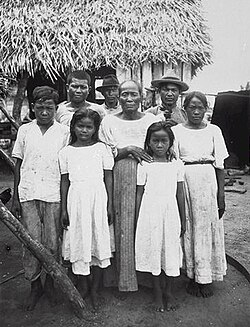
The population of Micronesia is a blend of indigenous groups and immigrant communities. Indigenous peoples include the Chamorro, Carolinian, Chuukese, and Nauruan. One of the most isolated groups are the "Kapings" of Kapingamarangi, who live on a remote atoll 320 km from the nearest immigration point.
Immigration in the 1800s and 1900s brought significant Asian populations to the region. For example, Filipinos make up a substantial percentage of the population in Guam (26.3%) and the Northern Mariana Islands (35.3%). Genetic studies have also indicated paternal relations with Japanese Haplogroup D-M55, likely resulting from the Japanese military occupation during World War II.
Education and Law
Education is highly valued, particularly in the Federated States of Micronesia, where it is mandatory for children aged 6 to 13. The College of Micronesia-FSM provides higher education across four states, with a national campus in Palikir. Legally, many of the region's frameworks were influenced by the U.S. Trust Territory Code established in the mid-20th century.
Regional Summary Table
The following table provides a comparative overview of the states and dependencies within the Micronesian region.
| Entity | Population | Area (km²) | Capital | Official Language(s) |
|---|---|---|---|---|
| Federated States of Micronesia | 113,131 | 702 | Palikir | English |
| Guam (USA) | 170,534 | 549 | Hagåtña | English, Chamorro |
| Kiribati | 128,874 | 811 | South Tarawa | English, Gilbertese |
| Marshall Islands | 42,050 | 181 | Majuro | Marshallese, English |
| Nauru | 12,511 | 21 | Yaren (de facto) | Nauruan, English |
| Northern Mariana Islands (USA) | 49,481 | 477 | Saipan | English, Chamorro, Carolinian |
| Palau | 18,024 | 458 | Ngerulmud | Palauan, English |
Frequently Asked Questions
What is the difference between the region of Micronesia and the Federated States of Micronesia?
Micronesia is a broad geographical region in Oceania encompassing thousands of islands and several different countries and territories. The Federated States of Micronesia (FSM) is a specific sovereign nation located within that larger region.
Who were the first people to settle Micronesia?
The region was first settled by Austronesian peoples who migrated from pre-Han Formosa between 3000 and 1500 BCE, utilizing advanced sailing technologies like outrigger boats and catamarans.
How was the region divided among colonial powers in the early 20th century?
The islands were primarily divided between the United States (which held Guam and Wake Island), Germany (which held Nauru and purchased the Marshall, Caroline, and Northern Mariana Islands from Spain), and later Japan.
What is the primary economic basis for the Marshall Islands?
Due to a lack of extensive natural resources, the Marshall Islands rely on a service-based economy, supplemented by agriculture and fishing.
What is the religious landscape of Micronesia?
The region is overwhelmingly Christian, with surveys indicating that between 93.1% and 99% of the population identifies as Christian.