Mestizo Argentines: History, Genetics, and Cultural Identity
In the diverse tapestry of South American identity, Mestizo Argentines (known in Spanish as Argentinos mestizos or Argentinos de origen mixto) represent a significant portion of the population. Defined by a mixed ancestry—primarily a blend of European and Indigenous origins—this group is the second largest ethnic demographic in the Argentine Republic, following those of predominantly white ancestry.
While Argentina is often perceived globally as a predominantly European nation, the reality is a complex blend of miscegenation that began during the colonial era and continues through modern migration patterns.
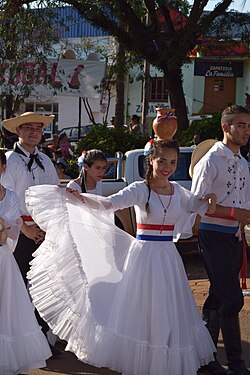
Key Facts
- Estimated Population: Approximately 7.6 million people (16.3% of the total population).
- Ancestry: Between 30% and 56% of Argentines have at least one indigenous ancestor.
- Primary Regions: Concentrated in the Northwest, Chaco, Formosa, and major urban immigration hubs.
- Genetic Profile: High Caucasian contribution in Y-chromosome DNA, with significant Amerindian contribution in mitochondrial DNA.
- Modern Influence: Significant recent growth due to immigration from Bolivia, Paraguay, and Peru.
Historical Origins and the Colonial Era
The roots of the Mestizo population lie in the viceregal period and the subsequent era of independence. During the time of the Viceroyalty of the Río de la Plata, the Spanish crown focused its economic interests on Upper Peru due to the Potosí Mines. Because the rest of the current Argentine territory was primarily used for livestock, it saw fewer black slaves and a smaller population compared to other Spanish colonies.
Unlike the rigid colonial caste system found in New Spain (Mexico) or New Granada (Colombia), the social hierarchy in the Río de la Plata was less defined by race and more by political power. The primary tension existed between those born in Spain and those born in the colonies, a friction that eventually fueled the movement for independence.
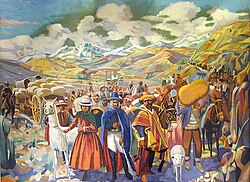
Mixed Ancestry in the War of Independence
The fight for independence saw soldiers of all backgrounds fighting side-by-side. Notable figures include Sergeant Juan Bautista Cabral, a Zambo (of Guaraní and Angolan descent) who sacrificed himself to save Colonel José de San Martín at the Battle of San Lorenzo. Similarly, Sergeant Major María Remedios del Valle, known as the "Mother of the Homeland," served as a combatant and auxiliary in the Army of the North and was recorded as parda (a term for mixed-race individuals).
The Impact of European Immigration
Between 1880 and 1930, Argentina experienced a massive wave of immigration from Europe and the Levant. Millions of immigrants, primarily from Italy and Spain, integrated into the population. This demographic shift led to widespread intermarriage with the existing Mestizo population, resulting in a national identity that is overwhelmingly Western in culture and tradition, though native customs persist in various regions.
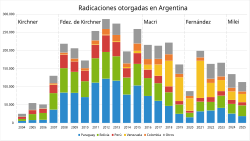
Modern South American Immigration
Following the return to democracy in 1983, Argentina saw a resurgence of immigration from neighboring South American countries, particularly Bolivia, Paraguay, and Peru. Many of these immigrants settled in Villas Miseria (squatter settlements) around major cities like Buenos Aires, Salta, and Córdoba.
This migration has brought new cultural influences, such as cumbia villera, a musical genre based on Peruvian cumbia. According to 2022 census data, the Buenos Aires Metropolitan Area (AMBA) hosts 1,159,446 immigrants, representing 8.29% of its population. Over 82% of these immigrants are from the Americas, with Paraguayans (32.46%) and Bolivians (15.75%) forming the largest groups.
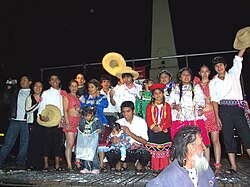
Demographics and Genetic Analysis
Official census data on mixed ancestry is limited. A 1778 census recorded only 3.31% of the population as mestizo, though this figure likely undercounted those categorized as "Blacks" for simplicity. Today, mixed ancestry is most prevalent in the Argentine Northwest and in urban centers with high immigrant populations.
Genetic Findings
Scientific studies reveal a distinct pattern of genetic admixture. A 2009 study led by Daniel Corach analyzed samples across eight provinces, finding:
- Y-Chromosome DNA (Paternal): 94.1% Caucasian, 4.9% Native American, and 0.9% Black African.
- Mitochondrial DNA (Maternal): 53.7% Amerindian, 44.3% Caucasian, and 2% African.
- Autosomal Markers: 78.5% Caucasian, 17.3% Amerindian, and 4.2% Black African.
This suggests a historical pattern where European males and Indigenous females were the primary contributors to the mixed gene pool. The Caucasian influence is strongest from the Iberian and Italian peninsulas, with Italian ancestry dominating the East and Center-West, and Spanish influence prevailing in the North.
Summary of Argentine Ethnic Composition
| Category | Details |
|---|---|
| Estimated Population | 7.6 million (approx. 16.3%) |
| Indigenous Ancestry | 30% to 56% of the population have at least one ancestor |
| Primary Genetic Sources | Spanish, Italian, Amerindian, and small African contributions |
| Key Immigration Hubs | AMBA, Salta, Mendoza, Formosa, Rosario |
| Top Immigrant Groups (AMBA) | Paraguayans, Bolivians, Venezuelans, Peruvians, Chileans |
Notable Mestizo Argentines
- María Remedios del Valle: Revolutionary combatant and "Mother of the Homeland."
- Ángel Di María: Professional footballer.
- Carlos Alberto Tevez: Former professional footballer.
- Carlos Roque Monzón: Former professional boxer.
- Bernardo de Monteagudo: Revolutionary and political activist.
Frequently Asked Questions
What does "Mestizo" mean in the Argentine context?
In Argentina, Mestizo refers to individuals of mixed ethnic origin, typically a blend of European (mostly Spanish) and Indigenous American ancestry, often characterized by brown skin.
Why is the paternal DNA so different from the maternal DNA in Argentina?
Genetic studies show a high percentage of Caucasian Y-chromosomes (paternal) and a high percentage of Amerindian mitochondrial DNA (maternal). This reflects the historical colonial pattern of European men having children with Indigenous women.
Which regions of Argentina have the highest Mestizo populations?
The highest concentrations are found in the Argentine Northwest and in provinces that received less European immigration between 1880 and 1930, as well as in border cities and the Buenos Aires Metropolitan Area due to recent South American migration.
Who was María Remedios del Valle?
She was a mixed-race (parda) woman who served as a combatant and auxiliary in the Army of the North during the First Upper Peru campaign and is honored as the "Mother of the Homeland."
How has recent immigration affected the Mestizo population?
Immigration from Bolivia, Paraguay, and Peru since 1983 has increased the mixed-ancestry population, particularly in urban centers, and has introduced new cultural elements like cumbia villera.