ArgentinaBuenos AiresArgentine historySouth AmericaArgentine economy

Argentina: A Comprehensive Overview of History, Geography, and Culture

Argentina: A Comprehensive Overview of History, Geography, and Culture The Argentine Republic, known simply as Argentina, is a vast and diverse nation located in the southern half of Sout...

Argentina: A Comprehensive Overview of History, Geography, and Culture

The Argentine Republic, known simply as Argentina, is a vast and diverse nation located in the southern half of South America. From the towering peaks of the Andes to the bustling urban center of Buenos Aires, Argentina is a land of dramatic contrasts, rich cultural heritage, and a complex political history. As the eighth-largest country in the world by area, it plays a pivotal role in the geopolitical and economic landscape of the Southern Hemisphere.
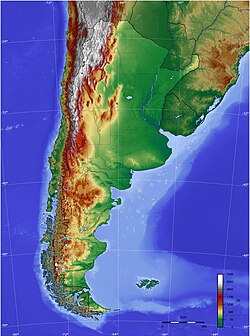
Topographical map of Argentina

Key Facts

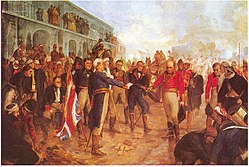
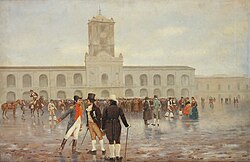
Painting showing the surrender during the British invasions of the Río de la Plata.
The surrender of Beresford to Santiago de Liniers during the British invasions of the Río de la Plata
  • Capital: Buenos Aires, the largest city in the country.
  • Government: Federal presidential republic.
  • Official Language: Spanish, with regional languages including Guaraní, Quechua, and Welsh.
  • Highest Point: Aconcagua, the highest mountain outside of Asia (6,960.8 meters).
  • Economy: A major global producer of wine and beef, with significant mining interests in gold and lithium.
  • Population: Approximately 46.7 million (2025 estimate).

A Journey Through History
People gathered in front of the Buenos Aires Cabildo during the May Revolution

Pre-Columbian and Colonial Eras

Long before European arrival, the region was inhabited by various indigenous groups. Evidence of early human activity can be seen in sites like the Cave of the Hands in Santa Cruz province. The colonial era began with Spanish conquest, establishing a foundation of administration and religion that would persist for centuries.
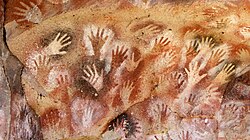
The Cave of the Hands in Santa Cruz province

Independence and the Path to Nationhood

The drive for autonomy culminated in the May Revolution on May 25, 1810, leading to the formal declaration of independence from Spain on July 9, 1816. Figures such as General José de San Martín were instrumental in liberating not only Argentina but also Chile and Peru.
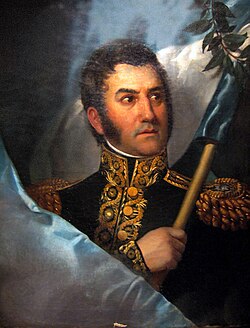
Painting of San Martín holding the Argentine flag
General José de San Martín, Libertador of Argentina, Chile and Peru[53]

The 20th Century: Peronism and Political Turbulence

The mid-20th century was dominated by the rise of Juan Perón and his wife, Eva Perón. Peronism, a political movement blending nationalism and social justice, left a lasting mark on the nation's social fabric. However, this era also saw significant instability, including the 1955 massacre on Plaza de Mayo and the subsequent military juntas.
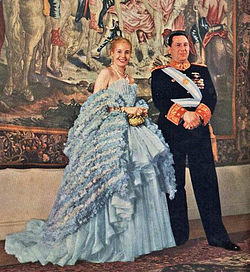
Juan Domingo Perón and his wife Eva Perón, 1947.
Juan Perón and his wife Eva Perón, 1947

The most dark period occurred during the National Reorganization Process, a military dictatorship characterized by severe human rights abuses. Democracy was eventually restored in 1983, though the country continued to face economic challenges, including the 2001 riots that forced the resignation of President Fernando de la Rúa.
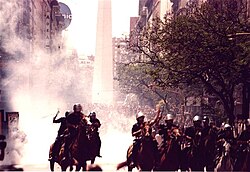
Civil unrest on Plaza de Mayo during the Argentinazo riots, which forced De La Rúa to resign on 21 December 2001

Geography and Natural Wonders

Conquest of the Desert, by Juan Manuel Blanes (fragment showing Julio Argentino Roca, at the front, a major figure of the Generation of '80)[82]

Argentina's landscape is defined by its extreme variety. The west is dominated by the Andes Mountains, which serve as a natural border with Chile. To the east lie the fertile Pampas, while the south consists of the rugged Patagonian plateau.
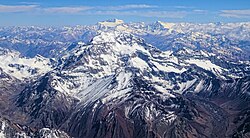
Mountain tops, with clouds shown.
Aconcagua is the highest mountain outside of Asia, at 6,960.8 metres (22,837 ft), and the highest point in the Southern Hemisphere[173]

Biodiversity and Climate

The country spans multiple climate zones, from subtropical in the north to subantarctic in the south. This diversity supports a wide array of flora and fauna, including the national flower, the ceibo. One of the most striking natural features is the Perito Moreno Glacier, a testament to the region's glacial power.

Argentina features geographical locations such as this glacier, known as the Perito Moreno Glacier[184]

Government and Economy

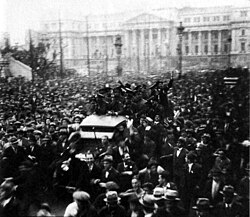
Crowds outside the Argentine National Congress during the 1930 Argentine coup d'état which marked the start of the Infamous Decade

Argentina operates as a federal presidential republic. The executive power is held by the President, currently Javier Milei, while the legislative power resides in the National Congress, consisting of the Senate and the Chamber of Deputies.
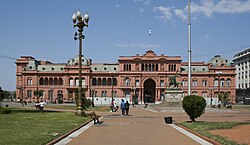
Casa Rosada in Buenos Aires, workplace of the Argentine president

Economic Drivers

The economy is heavily reliant on agriculture and natural resources. Argentina is the sixth-largest wine producer globally, with Mendoza serving as a primary hub. Additionally, the country is a leader in beef production and possesses significant mineral wealth, including gold from the Veladero mine and lithium deposits.

A vineyard in Mendoza. Argentina is the sixth-largest producer of wine.[245]

Category Detail
Total Area 2,780,085 km²
GDP (Nominal 2026 Est.) $688.378 billion
HDI (2023) 0.865 (Very High)
Currency Argentine peso (ARS)
Main Ethnic Groups White (79.4%), Mestizo (16.3%), Indigenous (2.8%)

Culture and Society

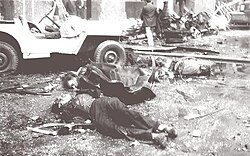
Civilian casualties after the air attack and massacre on Plaza de Mayo, June 1955

Argentine culture is a blend of European influences—particularly from Italy and Spain—and indigenous roots. This is evident in the Spanish dialect spoken across the country and the prevalence of Christianity.
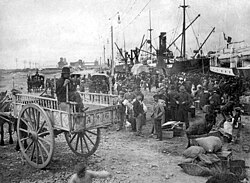
Immigrants from Italy arriving in Buenos Aires, during the great European immigration wave to Argentina

Arts, Literature, and Sport

The nation has produced world-renowned intellectuals and artists, including writers like Jorge Luis Borges and Julio Cortázar. In the realm of sport, football is a national passion, exemplified by the success of Lionel Messi and the national team.
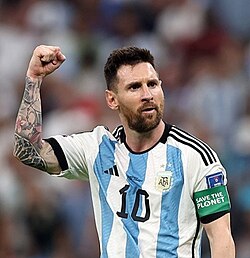
Footballer Lionel Messi, eight-time Ballon d'Or winner, is the current captain of the Argentina national football team.

Frequently Asked Questions
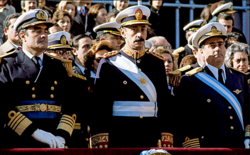
The "first military junta" – Admiral Emilio Massera, Lieutenant General Jorge Videla and Brigadier General Orlando Agosti (from left to right) – observing the Independence Day military parade on Avenida del Libertador, 9 July 1978
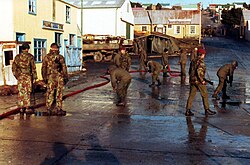
Argentine POWs after the surrender in 1982
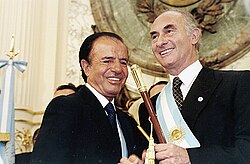
Menem (left) with Fernando de la Rúa on 10 December 1999 just after the latter became president
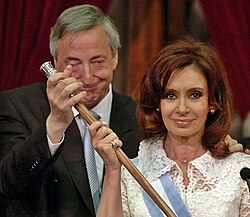
Kirchner and his wife Cristina Kirchner just after her presidency began, 10 December 2007
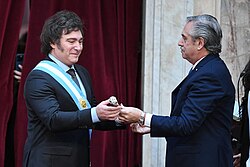
Javier Milei receiving the presidency from Fernández on 10 December 2023
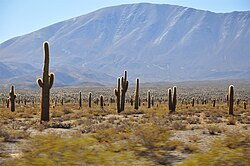
Los Cardones National Park
The ceibo flower (Erythrina crista-galli) is the national flower and tree of Argentina by Decree No. 13,847/42[174]
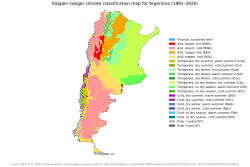
Köppen climate classification in Argentina
The National Congress is composed of the Senate and the Chamber of Deputies.[198]
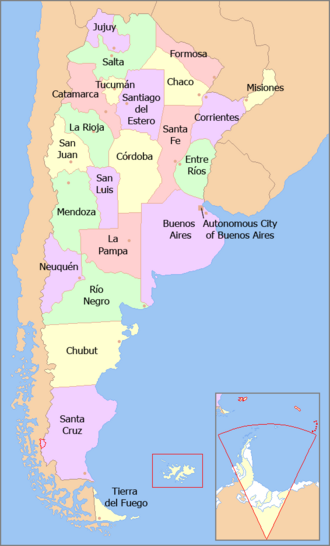
Provinces of Argentina. Click to explore.
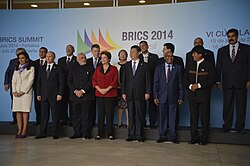
Cristina Kirchner alongside the members of BRICS and Union of South American Nations in 2014
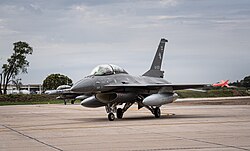
F-16 operated by the Argentine Air Force
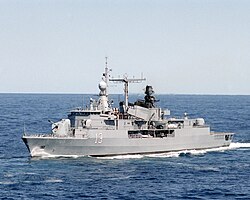
Argentine destroyer ARA Sarandí (D-13)
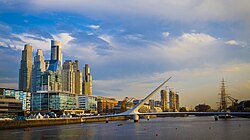
The Puerto Madero business complex in Buenos Aires CBD
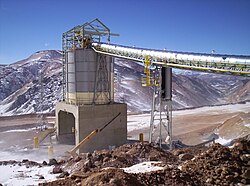
Veladero mine is a gold mine in San Juan Province.
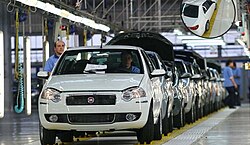
Fiat factory in Córdoba, Argentina
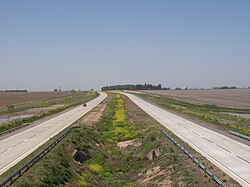
A stretch of National Route 9 between Rosario and Córdoba
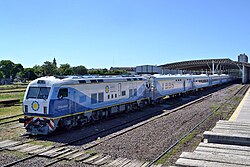
A Trenes Argentinos CNR CKD8G at Mar del Plata railway station
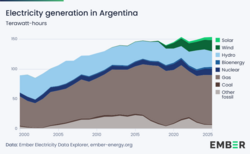
Electricity generation in Argentina in terawatt-hours
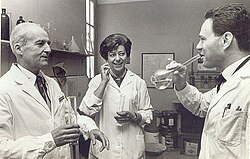
Luis Federico Leloir (left) and his staff toast his 1970 Nobel Prize in Chemistry.
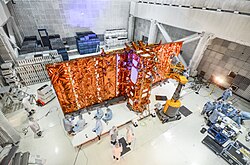
The SAOCOM 1A inside the facilities of CEATSA
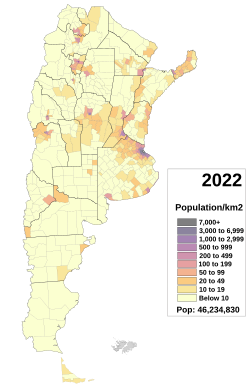
A map of Argentina's population density, 2022
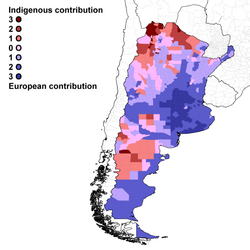
Proportion of European and indigenous ancestry in Argentina
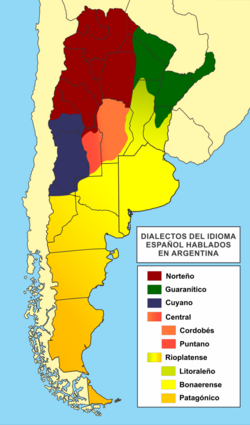
Dialectal variants of the Spanish language in Argentina
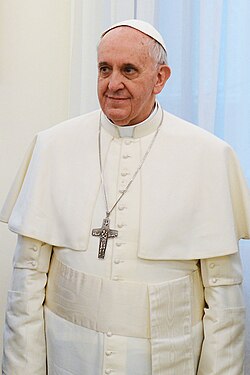
Francis, the first pope from the Americas, was born and raised in Argentina.
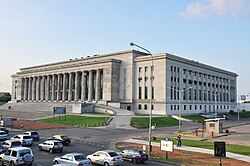
Faculty of Law of the University of Buenos Aires
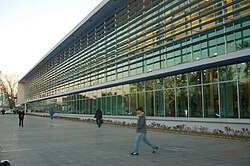
Clemente Álvarez Emergency Hospital in Rosario
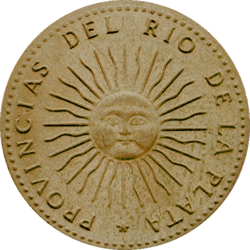
The Sun of May on the first Argentine coin, 1813
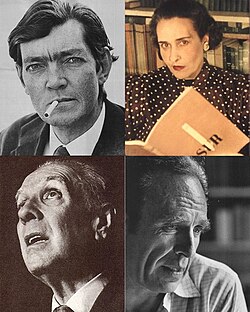
Mosaic image showing the four photographs
Four Argentine writers. Top left to bottom right: Julio Cortázar, Victoria Ocampo, Jorge Luis Borges, and Adolfo Bioy Casares.
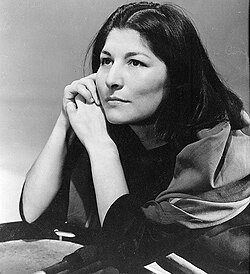
Photograph of Mercedes Sosa by Annemarie Heinrich
Andy Muschietti, director of It, the highest-grossing horror film of all time.[382][383]
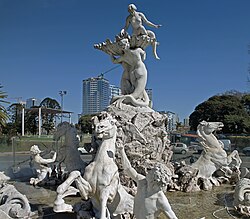
Las Nereidas Font by Lola Mora
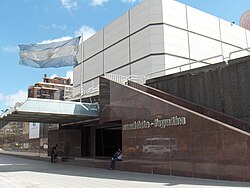
Headquarters of the Channel 7, the first television station in the country
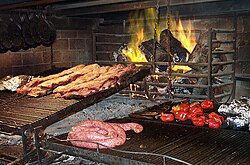
Table with a cut of Argentine beef, wine, sauces and spices
Argentine beef as asado
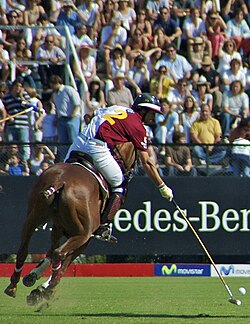
Argentine Polo Open Championship

What is the official language of Argentina?

The official language is Spanish, although regional languages such as Guaraní, Quechua, and Welsh are spoken in specific provinces.

Who is the current president of Argentina?

As of December 10, 2023, the president of Argentina is Javier Milei.

What is the significance of Aconcagua?

Aconcagua is the highest mountain in the Southern Hemisphere and the highest point outside of Asia, reaching an elevation of 6,960.8 meters.

What are the primary exports of the Argentine economy?

Argentina is a major global exporter of beef and wine, and it also produces significant amounts of gold and lithium.

What was the May Revolution?

The May Revolution occurred on May 25, 1810, and was the first step toward Argentina's independence from Spanish colonial rule.

References

  1. Though not declared official de jure, the Spanish language is the only one used in the wording of laws, decrees, resolutions, official documents and public acts thus making it the de facto official language.
  2. The total area claimed is 3,669,710.7 km2 of which the American continental part is 2,780,084.6 km2 (including Tierra del Fuego Province). Area does not include territorial claims in Antarctica (873,718.4 km2, including the South Orkney Islands and the South Shetland Islands) and the South Atlantic Islands (15,907.7 km2, including the Falkland Islands, the South Georgia Island and the South Sandwich Islands).[7][8]
  3. Spanish: [aɾxenˈtina] ; Guarani: Arahentína or Ayhentína; Mapudungun: Arkentina; Quechua: Arjintina; Welsh: (yr) Ariannin [(ər) arˈjanɪn].
  4. Article 35 of the Argentine Constitution gives equal recognition to the names "United Provinces of the Río de la Plata", "Argentine Republic" and "Argentine Confederation" and using "Argentine Nation" in the making and enactment of laws.[14]
  5. Spanish: República Argentina [reˈpuβlika aɾxenˈtina]; Guarani: Arahentína Tavakuairetã or Ayhentína Tavakuairet; Mapudungun: Arkentina ñi Repüwlika; Quechua: Arjintina Ripuwlika; Welsh: Gweriniaeth yr Ariannin [ˌɡwɛrɪˈnjaɪθ ər arˈjanɪn].