Mention in Dispatches: Military Recognition of Gallantry and Merit
To be mentioned in dispatches (or despatches) is a prestigious military honor. It occurs when a member of the armed forces is named in an official report written by a superior officer and sent to the high command. These reports describe the individual's gallant or meritorious actions in the face of the enemy.
While a mention in dispatches (MiD) does not grant the recipient post-nominal letters (titles after their name), it typically entitles them to wear a specific metallic device on a campaign medal ribbon. In some national military systems, being mentioned in dispatches is a mandatory prerequisite for receiving further high-level decorations.
Key Facts
- Definition: An official report by a superior officer recognizing bravery or merit during combat.
- UK Recognition: Denoted by an oak leaf device on a campaign medal ribbon.
- French System: Uses a system of "mentions in orders" with stars and palms on the Croix de Guerre.
- Posthumous Awards: Many nations allow MiDs to be awarded after a service member's death.
- Variations: Different countries use unique symbols, such as the lotus leaf in India or the Imtiazi Sanad in Pakistan.
The British Empire and Commonwealth Systems
United Kingdom
In the British Armed Forces, a mention in dispatches is published in the London Gazette. Recipients receive a certificate and are authorized to wear an oak leaf device on the ribbon of the relevant campaign medal. If no campaign medal was awarded, the oak leaf is worn directly on the coat.
The design of the device has evolved over time. From 1914 to August 1920, a bronze spray of oak leaves was worn on the Victory Medal (or the British War Medal if the Victory Medal was not awarded). Between 1920 and 1993, this changed to a single bronze oak leaf. Since September 1993, the device has been silver and is specifically defined as an operational gallantry award for bravery during active operations.
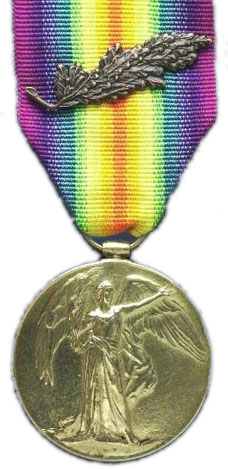
Historically, some officers were mentioned with exceptional frequency. For example, Field Marshal Viscount Gort and Canadian General Sir Arthur Currie were both mentioned nine times during the First World War.
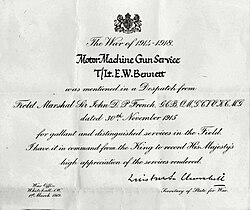
Canada, Australia, and South Africa
Canada continues to use the bronze oak leaf insignia for acts of brave or meritorious service, often presented by the Governor General. In contrast, Australia replaced the MiD on January 15, 1991, with the Australian Honours System, introducing the Commendation for Gallantry and the Commendation for Distinguished Service.
South Africa historically used a multiple-leaved bronze oak leaf for First World War services. During the Second World War, they also utilized the King's Commendation (South Africa), denoted by a bronze King Protea flower for services rendered away from the battlefield.
International Variations
India and Pakistan
India recognizes distinguished service and gallantry that does not warrant a full gallantry award through mentions in dispatches. Recipients are entitled to wear a lotus leaf emblem on their campaign medal ribbon and receive a Ministry of Defence certificate.
In Pakistan, the Imtiazi Sanad is conferred upon members of the armed forces mentioned in dispatches for acts of gallantry that do not qualify for a formal gallantry award.

France
The French military uses citations dans les ordres (mentions in orders). These are divided into two categories: mentions with cross (for bravery in the presence of the enemy) and mentions without cross (for bravery not in the presence of the enemy).
Mentions with cross are associated with the Croix de Guerre or the Croix de la Valeur Militaire. The level of the mention determines the attachment on the ribbon:
- Bronze Star: Regiment or brigade level.
- Silver Star: Division level.
- Silver Gilt Star: Corps level.
- Bronze Palm: Army level.
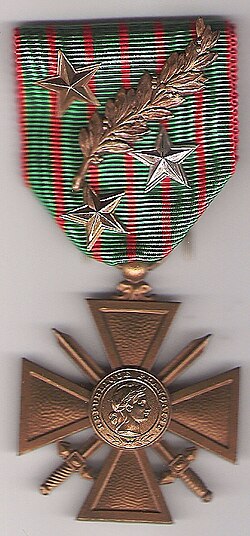
Since 2004, mentions without cross are recognized with a gold Médaille de la Défense nationale (National Defence Medal).
Summary of Mention in Dispatches Devices
| Country | Device/Award | Ribbon Attachment | Key Detail |
|---|---|---|---|
| United Kingdom | Oak Leaf | Bronze (pre-1993), Silver (post-1993) | Published in the London Gazette |
| India | Lotus Leaf | Lotus leaf emblem | Includes civilians working with armed forces |
| Pakistan | Imtiazi Sanad | Varies | For gallantry not qualifying for formal awards |
| France | Stars/Palms | Bronze/Silver stars or palms | Attached to Croix de Guerre or similar |
| Canada | Oak Leaf | Bronze oak leaf | Presented by the Governor General |
Frequently Asked Questions
Does a mention in dispatches provide post-nominal letters?
No, being mentioned in dispatches entitles the recipient to wear a metallic device on a ribbon, but it does not include the entitlement to use post-nominal letters.
What is the difference between a bronze and silver oak leaf in the UK?
The bronze oak leaf was used for awards made between 1920 and 1993. Since September 1993, the oak leaf has been silver and is specifically defined as an operational gallantry award.
Can a mention in dispatches be awarded posthumously?
Yes. In the UK, all gallantry decorations have been eligible for posthumous award since 1979. Similar provisions exist in the Indian and South African systems.
How does the French system differ from the British system?
The French system is more tiered; the device attached to the medal (star or palm) indicates the level of command that issued the mention, ranging from the regiment level up to the army level.
What happened to the MiD in Australia?
Australia replaced the mention in dispatches on January 15, 1991, with the Commendation for Gallantry and the Commendation for Distinguished Service as part of the Australian Honours System.