Marshal of the Royal Air Force
The Marshal of the Royal Air Force (MRAF) is the most senior rank within the United Kingdom's Royal Air Force (RAF). As a five-star rank, it represents the pinnacle of professional achievement and royal appointment within the air service. While historically granted to the most senior officers on active duty, the nature of the rank has evolved over the last century, shifting from a standard career peak to a largely honorary or wartime distinction.
Key Facts
- Rank Level: Five-star rank (NATO code OF-10).
- Equivalents: Admiral of the Fleet (Royal Navy) and Field Marshal (British Army).
- First Holder: Sir Hugh Trenchard, promoted in 1927.
- Total Holders: 27 individuals (22 professional officers and 5 members of the Royal Family).
- Current Status: General promotions have been discontinued since the 1990s; now primarily honorary or reserved for wartime.
Historical Evolution and Origins
The path to establishing the rank was not without controversy. When RAF officer titles were first proposed in 1919, there was a debate regarding the naming convention. Initially, it was suggested that "air marshal" be the highest rank, similar to a field marshal. However, "air marshal" was eventually assigned as an equivalent to a lieutenant general, leading to the proposal of "marshal of the air" for the top position.
This title was famously disliked by Sir Henry Wilson, the Chief of the Imperial General Staff, who described it as "ridiculous." Despite this, Sir Hugh Trenchard, the Chief of the Air Staff, pushed the title forward. It remained "marshal of the air" until April 1925, when it was officially changed to Marshal of the Royal Air Force. This change was made because the previous title was considered "indefinite in character," and it was reported that King George V felt the term "marshal of the air" implied divine attributes that should be reserved for God.
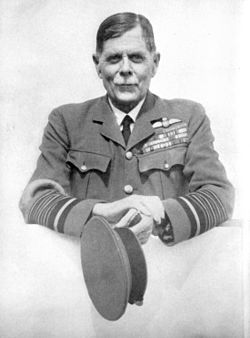
Rank Requirements and Appointments
In peacetime, the rank was traditionally granted to officers serving as the Chief of the Defence Staff or to retired Chiefs of the Air Staff on their final day of service. While those who attained the rank retain it for life, the highest rank currently available for officers on active service is air chief marshal.
Since the British defence cuts of the 1990s, general promotions to MRAF have ceased. However, the monarch retains the discretion to grant the rank in peacetime as an honorary title to members of the Royal Family or exceptionally senior officers. For example, the then Prince of Wales (now King Charles III) was promoted in 2012, and Lord Stirrup was promoted in 2014 in recognition of his seven-year tenure as Chief of the Air Staff and Chief of the Defence Staff.
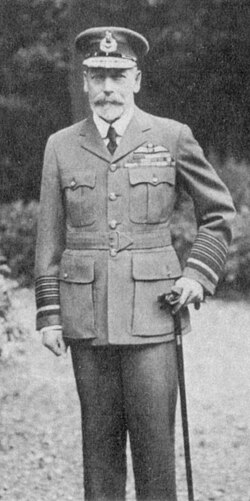
Insignia and Symbols of Authority
The visual identifiers of a Marshal of the Royal Air Force are designed to reflect the rank's prestige and its equivalence to the Royal Navy's highest rank.
Uniform Insignia
The sleeve insignia consists of one broad black band with a light blue band above it, topped by four narrow light blue bands (each on a slightly wider black band). This design is derived from the sleeve lace of an admiral of the fleet. For ceremonial events, shoulder boards are used, featuring the air officer's eagle surrounded by a wreath, two crossed marshal's batons, and the St Edward's Crown (which replaced the Tudor Crown after the coronation of Queen Elizabeth II in 1953).
Command Flag and Vehicle Plate
The MRAF's distinguishing command flag features a broad red horizontal band in the center, flanked by two thinner red bands. For official transport, the vehicle star plate displays five white stars on an air force blue background, signifying the five-star status of the rank.
Summary of Rank Specifications
| Attribute | Detail |
|---|---|
| NATO Rank Code | OF-10 |
| Rank Group | Officers of air rank |
| Equivalent Army Rank | Field Marshal |
| Equivalent Navy Rank | Admiral of the Fleet |
| Insignia Elements | Eagle, wreath, crossed batons, and Crown |
| Star Plate | Five white stars on blue background |
Frequently Asked Questions
Who was the first person to hold the rank of Marshal of the Royal Air Force?
Sir Hugh Trenchard was the first officer to receive the rank in 1927.
Is the rank of Marshal of the Royal Air Force still awarded to active officers?
Generally, no. Since the 1990s, the highest rank for officers on active service is air chief marshal. Promotions to MRAF are now typically honorary, reserved for the Royal Family, or granted in wartime.
How many people have held this rank in total?
There have been 27 holders of the rank: 22 professional RAF officers and 5 senior members of the British royal family.
What is the difference between a Marshal of the RAF and an Air Chief Marshal?
A Marshal of the RAF is a five-star rank (OF-10), whereas an Air Chief Marshal is a lower rank. MRAF is the highest possible rank in the service.
Did King George V formally hold the rank?
No, King George V did not formally hold the rank; he assumed the title of Chief of the Royal Air Force. However, he did wear the uniform and insignia of a marshal of the RAF from 1935 until his death.