Major General: Rank, Role, and History in the British Armed Forces
In the hierarchy of the United Kingdom's military, the Major General (abbreviated as Maj Gen) serves as a critical senior leadership position. As a "two-star" rank, it sits within the general officer group, bridging the gap between tactical brigade leadership and high-level strategic command. While most commonly associated with the British Army and the Royal Marines, the rank has a unique history across different service branches.
A Major General is senior to a Brigadier and subordinate to a Lieutenant General. On the NATO rank scale, this position is classified as OF-7, making it equivalent to a Rear Admiral in the Royal Navy or an Air Vice-Marshal in the Royal Air Force (RAF).
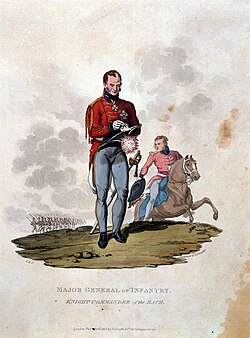
Key Facts
- Rank Level: Two-star general officer (NATO OF-7).
- Primary Role: Customary rank for a division commander in the British Army.
- Insignia: A star (pip) of the Order of the Bath positioned over a crossed sword and baton.
- Equivalents: Rear Admiral (Royal Navy) and Air Vice-Marshal (RAF).
- Hierarchy: Above Brigadier; below Lieutenant General.
Insignia and Nomenclature
The visual identification of a Major General is defined by specific insignia: the star, often referred to as a "pip," of the Order of the Bath, placed above a crossed sword and baton. This symbolism denotes the officer's status as a general officer.
The way the rank is written has evolved over time. Prior to approximately 1980, compound ranks were typically hyphenated (Major-General). In modern usage, the hyphen is generally omitted. Regardless of the style, when used as a formal title before a name, both words are capitalized. However, when used as a common noun, they may appear in lower-case (e.g., "several major generals were promoted").
Usage in the British Army
Within the British Army, the rank of Major General is most traditionally assigned to the commander of a division. Beyond field command, the rank is used for prestigious appointments, such as the Commandant of the Royal Military Academy Sandhurst.
Historically, until the 1980s, Major Generals also headed various service branches, including the Corps of Infantry, the Royal Artillery, and the Royal Armoured Corps. Additionally, the Chaplain-General—the senior officer of the Royal Army Chaplains' Department—is granted "relative precedence," meaning they receive the respect, courtesies, and insignia of a Major General without possessing the full command authority of the rank.
Usage in the Royal Marines
In the Royal Marines, the rank is tied to the office of the Commandant General Royal Marines (CGRM), the professional head of the service. The rank requirements for this office have shifted over the decades: it was a full general in 1943, downgraded to lieutenant general in 1977, and further reduced to major general in 1996. However, some recent appointments have seen officers holding higher ranks, such as Gwyn Jenkins, who was a full general upon succeeding Robert Magowan in 2022.
Royal Marines may also hold the rank of Major General in tri-service roles. An example occurred in April 2019, when James Morris was appointed commander of the Standing Joint Force with the rank of Major General.
Historical Usage in the Royal Air Force
The Royal Air Force (RAF) briefly utilized the rank of Major General for a period of eighteen months, from its inception on April 1, 1918, until July 31, 1919. Because the RAF was formed from the amalgamation of the Army's Royal Flying Corps and the Navy's Royal Naval Air Service, its early ranks were a compromise between the two traditions.
The RAF insignia for Major General was based on the Royal Navy's Rear Admiral, featuring a broad gold cuff stripe below a narrow gold stripe, topped by an eagle under a King's crown. On August 1, 1919, the RAF replaced this title with the rank of Air Vice-Marshal. Despite the short window of use, several prominent officers held the rank, including Hugh Trenchard and Geoffrey Salmond.
| Service Branch | Rank Title | NATO Code | Insignia Basis |
|---|---|---|---|
| British Army / Royal Marines | Major General | OF-7 | Star over crossed sword and baton |
| Royal Navy | Rear Admiral | OF-7 | Naval stripes/stars |
| Royal Air Force | Air Vice-Marshal | OF-7 | Air Force braids |
Frequently Asked Questions
What is the NATO rank code for a Major General?
The NATO rank code for a Major General is OF-7.
Who does a Major General report to in the British Army?
A Major General is subordinate to a Lieutenant General.
What is the typical role of a Major General in the Army?
The customary appointment for a Major General in the British Army is the commander of a division.
Did the Royal Air Force always use the rank of Air Vice-Marshal?
No. From April 1918 to July 1919, the RAF used the rank of Major General before replacing it with Air Vice-Marshal on August 1, 1919.
How is the rank of Major General written today?
While it was commonly hyphenated (Major-General) before 1980, it is now almost always written without a hyphen as Major General.