Captain Rank in the British Army and Royal Marines
In the hierarchy of the United Kingdom's armed forces, the rank of Captain (abbreviated as Capt) serves as a vital junior officer position within the British Army and the Royal Marines. Positioned above a lieutenant and below a major, the captain plays a key role in tactical leadership and operational management.
To avoid confusion, it is important to distinguish this rank from that of a captain in the Royal Navy. While the Army and Marines captain is a junior officer, a Royal Navy captain is a significantly more senior officer, equivalent in status to a colonel in the Army.
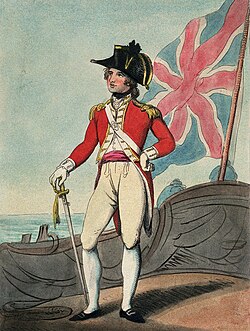
Key Facts
- Rank Group: Junior officer.
- NATO Rank Code: OF-2 (Non-NATO code O-2).
- Equivalent Ranks: Lieutenant (Royal Navy) and Flight Lieutenant (Royal Air Force).
- Typical Role: Often serves as the second-in-command (2IC) of a company, managing units of up to 120 soldiers.
- Formation: Established circa 1815.
Rank Hierarchy and Equivalencies
The captain rank is standardized across NATO forces under the code OF-2. In the modern British Army, these officers often provide the essential link between senior command and platoon-level leadership.
| Service Branch | Equivalent Rank | NATO Code |
|---|---|---|
| British Army / Royal Marines | Captain | OF-2 |
| Royal Navy | Lieutenant | OF-2 |
| Royal Air Force | Flight Lieutenant | OF-2 |
The Evolution of Rank Insignia
The visual identification of a captain has undergone several transformations since the mid-19th century. Badges of rank were first introduced on January 30, 1855, and were originally worn on shoulder epaulettes.
Early Changes and the Crimean War
Following the Crimean War, a new system emerged featuring the first complete rank insignia in British Army history. During this period, captains wore a crown and a "pip" (a star-shaped badge) on their collars—markings that are now associated with the rank of lieutenant-colonel.
The Shift to Shoulder Boards and Stars
By 1880, insignia returned to the shoulder boards for full-dress uniforms. Between 1880 and 1902, captains were identified by two stars. This changed in 1902 when the insignia was updated to three stars, a pattern that remains in use today.
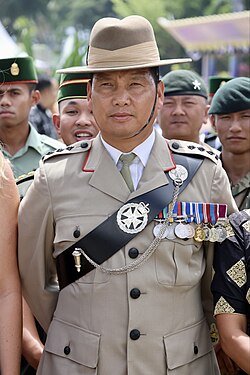
Cuff Markings and World War I
Historically, rank was also indicated by gold lace on the cuffs of full-dress tunics. From 1902, a system of narrow rings of worsted braid was used; captains wore two rings. In Scottish regiments, these rings were placed around the top of the gauntlet-style cuff.
During World War I, the visibility of cuff badges made officers easy targets for snipers. Consequently, many officers began wearing jackets similar to those of enlisted men, moving rank badges to the shoulders. This practice was officially sanctioned in 1917 and became permanent in 1920 when cuff badges were abolished.
Historical and Cultural Context
The rank has seen various iterations over the centuries. For instance, a rank of "second captain" existed within the Ordnance during the era of the Battle of Waterloo. Additionally, the Royal Air Force briefly utilized the rank of captain from April 1, 1918, to July 31, 1919, before replacing it with the rank of flight lieutenant.
The rank has also appeared frequently in English literature and media. Notable fictional captains include Arthur Hastings, the companion of Hercule Poirot in Agatha Christie's novels, and Edmund Blackadder from the series Blackadder Goes Forth.
Frequently Asked Questions
Is a British Army Captain the same as a Royal Navy Captain?
No. A British Army Captain is a junior officer (OF-2). A Royal Navy Captain is a much more senior officer, equivalent to a colonel in the Army.
What is the current rank insignia for a Captain?
In the British Army, a captain is identified by three stars (pips) worn on the shoulder.
What are the primary responsibilities of a Captain in the 21st century?
Captains are frequently appointed as the second-in-command (2IC) of a company or a similar unit consisting of up to 120 soldiers.
Which ranks are immediately above and below a Captain?
The rank immediately above a captain is major, and the rank immediately below is lieutenant.
Why were cuff badges removed from uniforms?
Cuff badges were abolished in 1920 because they made officers too conspicuous to snipers during World War I, leading to a preference for shoulder-based insignia.