Battle of New Orleans: The Decisive Clash of the War of 1812
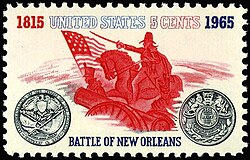
The Battle of New Orleans stands as one of the most famous engagements in American military history. Fought on January 8, 1815, this conflict occurred during the closing stages of the War of 1812. Despite the war technically nearing its end, the battle resulted in a stunning American victory that cemented the reputation of Andrew Jackson and bolstered national pride.
The conflict was not merely a clash of professional armies but a diverse gathering of forces. The American defense included regular soldiers, militia, and volunteers, while the British sought to seize the strategic port of New Orleans to control the Mississippi River.
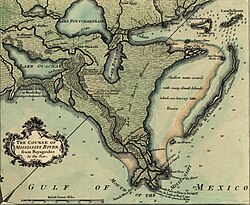
Key Facts
- Date: January 8, 1815
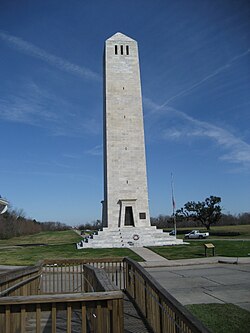
- Location: Near New Orleans, Louisiana (Chalmette Battlefield)
- American Commander: Andrew Jackson
- British Commander: Edward Pakenham
- Outcome: Decisive American victory
- American Casualties: 71 total (13 dead, 39 wounded, 19 missing/captured)
- British Casualties: 2,037 total (291 dead, 1,262 wounded, 484 missing/captured)
The Road to Chalmette
The campaign began in earnest on December 23, 1814. General Andrew Jackson coordinated a diverse force, including the support of warships in the Mississippi River such as the USS Louisiana, USS Carolina, and USS Eagle, along with the steamboat Enterprise. By late December, Jackson had mustered approximately 3,300 men, bolstered by Major Thomas Hinds' squadron of light dragoons from the Mississippi Territory.
![Affair Below New Orleans: December 23, 1814[28]](/images/1d/ba/1dba54c8c9a5f900aef49514cc0372e550364938ee21d75c52f2bc33ef243e61.jpg)
The British strategy involved a complex approach, including movements through Lake Borgne and subsequent disembarkations. As the British forces pushed toward the city, they encountered a well-fortified American line at Chalmette.
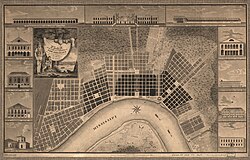
The Diverse American Force
One of the most notable aspects of Jackson's army was its composition. The defense relied on a mixture of professional soldiers and irregulars, including Free Men of Colour and Choctaw Indian Volunteers, illustrating the broad coalition assembled to protect the Gulf Coast.
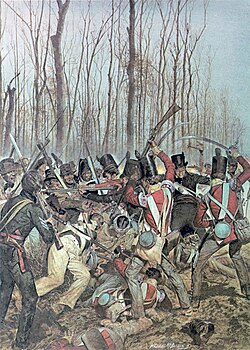
The Battle of January 8
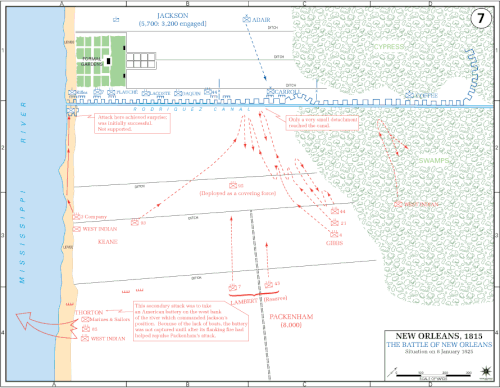
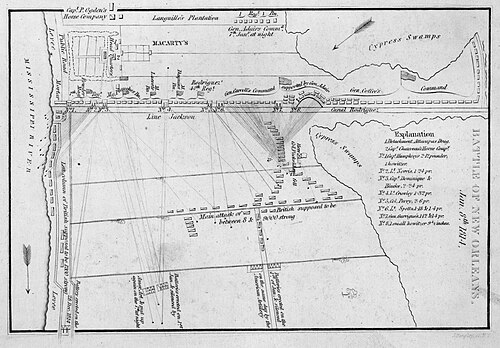
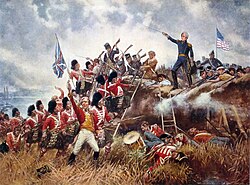
The climax of the campaign occurred on January 8, 1815. The Americans had constructed a formidable defensive position known as Line Jackson. This line featured various batteries, including Battery 4, which housed a massive naval 32-pounder gun transferred from the USS Carolina.
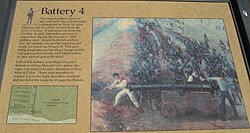
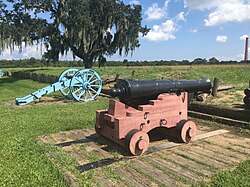
The British assault was aimed primarily at the Left Bank, specifically targeting the area beyond Batteries 5 and 6. However, the British faced significant logistical hurdles. While the Americans utilized a mix of army and naval artillery, the British relied heavily on naval guns. These pieces, characterized by small wheels and large frames, became bogged down in the muddy fields of Chalmette, hindering their mobility and effectiveness.
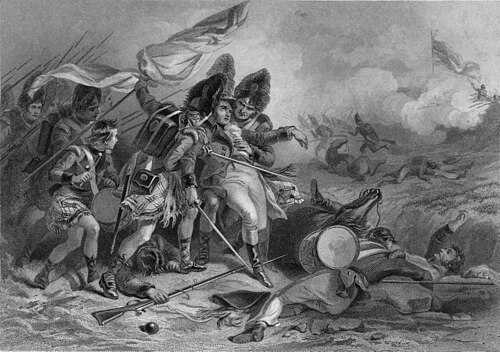
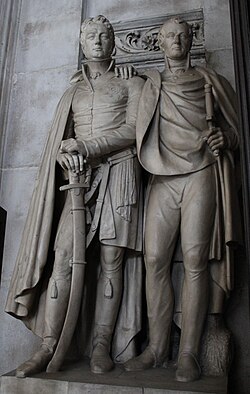
The assault ended in disaster for the British. Major General Sir Edward Pakenham was killed during the engagement, and the British forces were forced to retreat with staggering losses compared to the minimal American casualties.
Analysis and Aftermath
The disparity in casualties is one of the most remarkable elements of the battle. Official American records cite only 71 total losses. British losses are more disputed; while some reports suggest 2,037 total casualties, other dispatches from Colonel Arthur P. Hayne estimated 700 fatalities and 1,400 wounded. Regardless of the exact figure, the British defeat was absolute.
Following the defeat, the British withdrew from the region. The victory had profound political outcomes in the United States, elevating Andrew Jackson to the status of a national hero and influencing the trajectory of American historiography.
Summary of Forces and Losses
| Metric | United States | United Kingdom |
|---|---|---|
| Commanders | Andrew Jackson | Edward Pakenham |
| Approx. Strength | 5,700 | 8,000 |
| Dead | 13 | 291 |
| Wounded | 39 | 1,262 |
| Missing/Captured | 19 | 484 |
| Total Casualties | 71 | 2,037 |
Frequently Asked Questions
Who led the American forces at the Battle of New Orleans?
The American forces were led by General Andrew Jackson, who was supported by other leaders including Daniel Patterson, Pushmataha, and the privateer Jean Lafitte.
Why did the British artillery struggle during the battle?
The British primarily used naval artillery, which featured small wheels and large frames. These designs were unsuitable for the terrain, causing the guns to become bogged down in the muddy fields of Chalmette.
What was the significance of Line Jackson?
Line Jackson was the primary American defensive fortification. It utilized strategic batteries and a mix of army and naval artillery to repel the British assault with minimal casualties.
How did the casualties compare between the two sides?
The casualties were heavily skewed; the Americans suffered only 71 total losses, while the British suffered over 2,000 casualties, including 291 dead and 1,262 wounded.
What happened to the British commander, Sir Edward Pakenham?
Major General Sir Edward Pakenham was killed during the battle on January 8, 1815, as the British attempted their assault on the American lines.