Lebanon Economy: Analysis of Growth, Crisis, and Structural Reforms
Lebanon, a lower-middle income country positioned strategically between the East and the West, possesses a diverse economic landscape heavily weighted toward the service sector. While historically known as a financial hub, the nation has faced significant political and social challenges that have deeply impacted its fiscal stability and growth trajectories.
The economy is characterized by a high reliance on services, which account for 83% of the GDP, while industry and agriculture contribute 13.1% and 3.9% respectively. This structure makes the nation particularly sensitive to regional stability and international trade fluctuations.
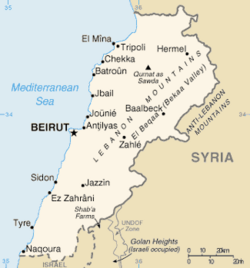
Key Facts
- GDP (Nominal 2025): $34.497 billion.
- GDP (PPP 2025): $70.189 billion.
- Primary Sector: Services (83% of GDP).
- Population (2025 est.): 5,364,482.
- Currency: Lebanese Pound (LBP).
- Human Development Index (2023): 0.752 (Ranked 102nd).
- Major Export Partners: GCC (29.96%), EU (15.04%), and Egypt (7.66%).
Economic Indicators and Macro-Trends
Lebanon's economic journey has been marked by extreme volatility. After periods of growth, the country entered a severe downturn, with a GDP growth rate of -7.5% in 2024, though projections suggest a recovery to 4.0% in 2025. The nominal GDP per capita stood at $6,443 in 2024, while the Purchasing Power Parity (PPP)—a measure that adjusts for price level differences between countries—was $13,110.
The labor market reflects the service-oriented nature of the economy, with 65.76% of the workforce employed in services as of 2019. However, youth unemployment remains a critical challenge, reaching 22.7% in 2023. Additionally, the country hosts approximately 1 million foreign workers, supplementing the domestic labor force of 2,399,073.
The following table summarizes the core economic metrics for Lebanon:
| Metric | Value/Detail | Year/Reference |
|---|---|---|
| Nominal GDP | $34.497 Billion | 2025 (est.) |
| GDP Growth | 4.0% | 2025 (est.) |
| Inflation (CPI) | 14.6% | 2025 (est.) |
| Government Debt | $74.5 Billion (140% of GDP) | 2018 |
| FDI Stock | $61.02 Billion | 2016 |
Trade and External Relations
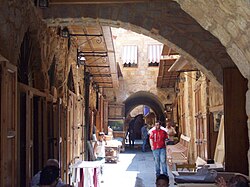
Lebanon maintains a significant trade deficit, with imports valued at $18.7 billion and exports at $4.29 billion in 2024. The European Union is the primary source of imports (30.55%), while the Gulf Cooperation Council (GCC) is the largest destination for exports (29.96%).
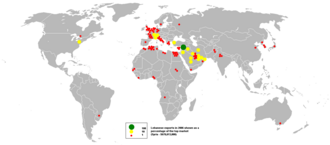
Key import partners include China (10.7%), the EU (led by Greece at 8.17%), and the GCC (10.43%). Export markets are dominated by the UAE (24.1%) and other GCC nations, alongside the United States (6.21%) and France (2.55%).
![External trade (USD, million)[142][143]](/images/09/6d/096deb1a4bb9473298f1388ca5f9d1311fb3690af23f7a46a26641e0f894ded9.png)
The 2019–Present Economic Crisis
Since 2019, Lebanon has grappled with a systemic economic collapse. This crisis was precipitated by a combination of unsustainable external debt, a severe currency crisis, and deep-seated political instability and corruption. The impact was felt immediately in the financial sector, with the stock market capitalization of listed companies dropping from $11.5 billion in January 2018 to $9.6 billion by January 2019.
The crisis has led to a sharp increase in poverty. By 2011, 63% of the population lived on less than $5.50 per day, and the national poverty line was exceeded by 27.4% of the population in 2012. The Financial Action Task Force (FATF) also placed Lebanon on its "grey list," citing concerns over money laundering and the need for stronger financial oversight.
Sectoral Analysis
Services and Tourism
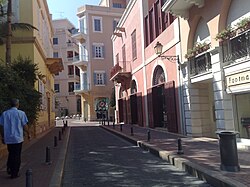
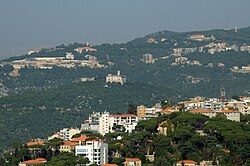
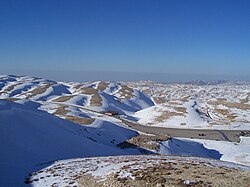
Tourism is a vital pillar of the economy, attracting visitors from Europe, the GCC, and other Arab nations. Destinations range from the urban center of Beirut to the ski resorts of Faraya in the Mount Lebanon Governorate.
Agriculture and Industry
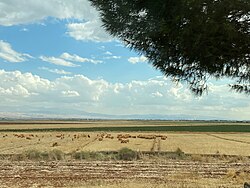
Agriculture, while a smaller portion of the GDP, remains a key employer (11.94% of the labor force), with the Bekaa Valley serving as a primary agricultural hub.
Infrastructure and Energy
The nation faces ongoing challenges in energy and water supply, with frequent power blackouts and a growing need for sustainable energy solutions, such as solar PV installations.
Path to Recovery and Reforms
To restore financial solvency, the Lebanese government has outlined a reform program based on three primary pillars:
- Economic Revival: Driving sustainable growth through the private sector.
- Fiscal Consolidation: Improving public sector finances and cutting losses at state-owned enterprises.
- Stability: Achieving monetary, financial, and price stability.
Recent efforts include engagements with the IMF and World Bank, including the 2025 Spring Meetings, to secure funding and implement structural improvements to the banking system.
Frequently Asked Questions
What is the current state of Lebanon's GDP growth?
Lebanon experienced a contraction of -7.5% in 2024, but it is estimated to grow by 4.0% in 2025.
Which sector dominates the Lebanese economy?
The services sector is the dominant force, accounting for 83% of the GDP and employing 65.76% of the workforce as of 2019.
Who are Lebanon's main trading partners?
The GCC is the largest export partner (nearly 30%), while the European Union is the largest source of imports (over 30%).
What caused the economic crisis starting in 2019?
The crisis was caused by a combination of high external debt, a currency collapse, and systemic corruption and political instability.
What is the FATF grey listing?
The FATF grey listing indicates that Lebanon is under increased monitoring to address deficiencies in its regimes to combat money laundering and terrorism financing.