Lebanon 2008 Conflict: The May 7 Clashes and the Doha Agreement
The 2008 Lebanon conflict, often referred to as the May 7 clashes, was a brief but intense period of civil strife that brought Lebanon to the brink of a full-scale civil war. Occurring primarily between May 7 and May 14, 2008, the conflict pitted the Hezbollah-led March 8 Alliance against the pro-government March 14 Alliance. What began as a political deadlock over security and telecommunications quickly escalated into armed combat in the streets of Beirut and the mountains of Mount Lebanon.
Key Facts
- Duration: Main phase from May 7 to May 14, 2008, with sporadic clashes continuing into July.
- Primary Belligerents: The March 8 Alliance (Hezbollah, Amal Movement, LDP, SSNP-L, Arab Democratic Party) vs. the March 14 Alliance (Future Movement, Progressive Socialist Party).
- Casualties: Estimated between 70 and 110 deaths.
- Trigger: Government decisions to dismantle Hezbollah's private telecommunications network and disputes over airport surveillance.
- Resolution: The Doha Agreement signed on May 21, 2008.
Political Foundations: March 8 vs. March 14
To understand the 2008 conflict, one must look back to the political divide that emerged after the 2005 Cedar Revolution. Lebanon was split into two primary political coalitions:
- The March 8 Alliance: An opposition coalition led by the Shiite Hezbollah and Amal Movement, alongside the Christian Free Patriotic Movement and smaller parties like the Syrian Social Nationalist Party (SSNP) and the Lebanese Democratic Party (LDP).
- The March 14 Alliance: A pro-government coalition holding the majority of parliamentary and cabinet seats at the time. This group was led by the primarily Sunni Future Movement and included the Druze Progressive Socialist Party (PSP) and the Christian Lebanese Forces.
By December 2006, this divide manifested in a series of protests and sit-ins led by the March 8 coalition against the government of Prime Minister Fouad Siniora, initiating an 18-month political crisis.
The Escalation of May 2008
Tensions reached a breaking point in early May 2008 due to two primary security controversies. First, Walid Jumblatt, leader of the Progressive Socialist Party, revealed that a remote-controlled camera had been installed in a container park overlooking Beirut international airport's runway 17. March 14 politicians feared this surveillance was intended for political assassinations, a recurring threat in Lebanese politics. While Hezbollah dismissed these claims as "scaremongering," the atmosphere grew volatile.
Second, Jumblatt alleged that Hezbollah had established a private fiber optic telecommunication network. While the network existed in Shiite strongholds like Dahiya in South Beirut, the government claimed it was being illegally extended into predominantly Christian and Druze areas of Mount Lebanon. The government's subsequent decision to dismantle this system served as the immediate catalyst for violence.
Armed Clashes and the Takeover of Beirut
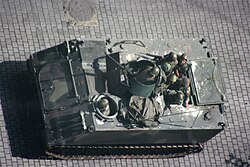
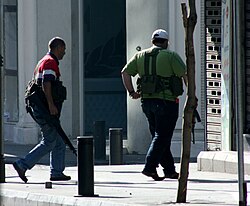
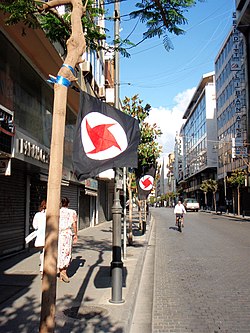
On May 7, protests escalated into minor clashes, which rapidly intensified by May 8 and 9. Hezbollah forces seized control of several majority Sunni neighborhoods in west Beirut, effectively asserting dominance over the capital's western districts.
The Battle of Mount Barook and Aley District
The violence soon spread beyond the capital to the Aley District and Mount Lebanon. On May 9, fighting broke out between Hezbollah and PSP fighters after four Druze members of the Aley municipal police were kidnapped by Hezbollah. The conflict centered on Hill 888, where artillery and mortars were deployed for the first time.
The fighting extended to Mount Barook, a strategic area separating the Druze heartland of Shouf from the Bekaa Valley. Druze fighters utilized defensive positions remaining from the 1975–1990 Civil War to repel Hezbollah attacks. The hostilities in this region ended after a prisoner exchange on May 12, where the kidnapped police members were released in exchange for approximately 30 Hezbollah members.
Resolution and the Doha Agreement
As fighting spread to Tripoli and other northern regions, the Arab League intervened on May 15 to broker an immediate ceasefire. This intervention led to a mediation process in Qatar. On May 21, 2008, the warring parties signed the Doha Agreement, which resolved the 18-month political feud and prevented the country from sliding back into a full-scale civil war.
| Category | Details |
|---|---|
| Main Phase | May 7 – May 14, 2008 |
| Primary Cause | Telecommunications network dispute & airport surveillance |
| Key Locations | West Beirut, Aley District, Mount Barook, Tripoli |
| Casualties | 70–110 dead |
| Final Outcome | Doha Agreement (May 21, 2008) |
Frequently Asked Questions
What triggered the 2008 Lebanon conflict?
The conflict was triggered by the Lebanese government's decision to dismantle a private telecommunications network operated by Hezbollah, combined with allegations that Hezbollah was using surveillance cameras to monitor politicians at Beirut international airport.
Who were the main parties involved in the fighting?
The fighting occurred between the March 8 Alliance (led by Hezbollah and the Amal Movement) and the March 14 Alliance (led by the Future Movement and the Progressive Socialist Party).
What was the significance of the Aley District clashes?
The clashes in the Aley District and Mount Barook represented the spread of the conflict from Beirut to the Druze heartland, involving heavy weaponry such as artillery and mortars.
How was the conflict finally resolved?
The conflict was resolved through the intervention of the Arab League, which led to the signing of the Doha Agreement on May 21, 2008, ending the political deadlock and the armed hostilities.
How many people died during the May 2008 clashes?
It is estimated that between 70 and 110 people lost their lives during the main phase of the conflict and the subsequent sporadic clashes.