Battle of Aleppo (2012–2016)
The Battle of Aleppo was one of the most significant and devastating confrontations of the Syrian Civil War. Spanning over four years, from July 19, 2012, to December 22, 2016, the battle transformed Syria's second-largest city into a fragmented landscape of urban warfare, sieges, and humanitarian crisis.
The conflict pitted the Syrian Arab Army (SAA) and its international allies against a diverse array of opposition forces, including the Free Syrian Army (FSA) and various Islamist factions. The struggle for Aleppo was not merely a fight for territory but a strategic pivot point for the entire Syrian conflict, involving major global powers and regional militias.
Key Facts
- Duration: 4 years, 5 months, and 3 days.
- Outcome: Victory for the Syrian Arab Army and its allies.
- Major Impact: Extensive damage to the Ancient City of Aleppo, a UNESCO World Heritage site.
- Casualties: Over 31,273 total deaths in the province, including 21,452 civilians.
- Final Result: Pro-government forces regained control of the rebel-held east in December 2016.
Combatants and Alliances
The battle involved a complex web of belligerents, ranging from national armies to ideological militias.
Pro-Government Forces
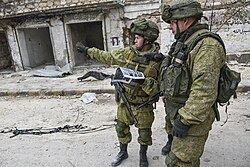
The Ba'athist Syrian government relied on the Syrian Arab Army (SAA), including the 4th Armoured Division and the Republican Guard. They were heavily supported by Iran (via the IRGC and Quds Force) and Russia, which provided critical air and ground support starting in September 2015. Allied militias included Hezbollah, Liwa al-Quds, and various Iraqi Shia militias.
Opposition and Rebel Forces
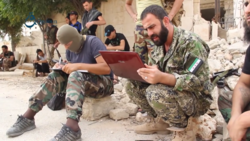
The opposition was a fragmented coalition. This included the Fatah Halab and the Army of Conquest, alongside Islamist groups such as the al-Nusra Front and Ahrar al-Sham. Other participants included the Syrian Turkmen Brigades and the Army of Revolutionaries.
Other Actors
The YPG (People's Protection Units), a Kurdish-led force, maintained control over the Kurdish-majority Sheikh Maqsoud neighborhood. Additionally, the Islamic State (ISIL) was active in the region between 2013 and 2014, often clashing with both the government and other rebel groups.
Course of the Battle
2012–2013: Initial Assaults and Stalemate
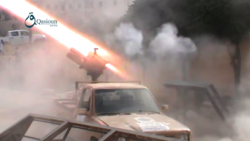
The battle began in July 2012 when rebel forces launched an attack to capture the city. By late 2012, the city was effectively split, with rebels holding the east and the government maintaining control of the west. This period was marked by fierce urban combat and a series of advances and counter-advances.
2014–2015: Encirclement and Attrition
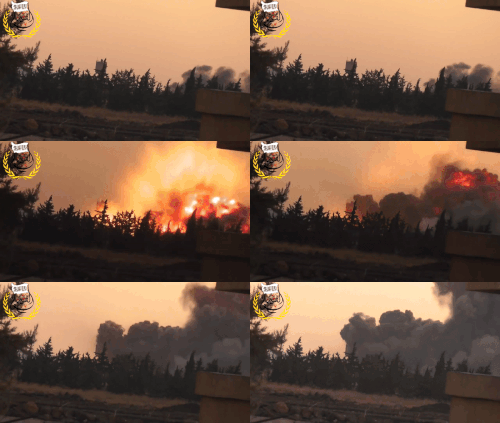
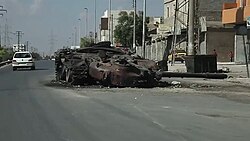
By 2014, the Syrian government began a strategy of encirclement, attempting to cut off rebel supply lines. The conflict evolved into a war of attrition, characterized by prolonged shelling and the use of barrel bombs (improvised explosive devices dropped from helicopters) by government forces.
2016: The Final Siege and Evacuation
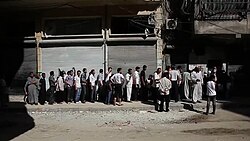
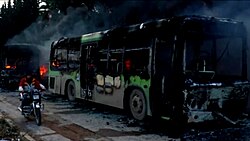
The tide turned decisively in 2016. Government forces, bolstered by Russian airpower, successfully cut off the final supply routes into eastern Aleppo. After a brutal siege, the remaining rebel forces were defeated. In December 2016, a deal was reached to evacuate the remaining fighters and civilians from the east to other rebel-held areas.
Aftermath and Destruction
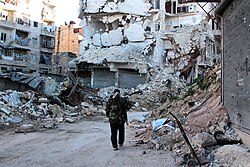
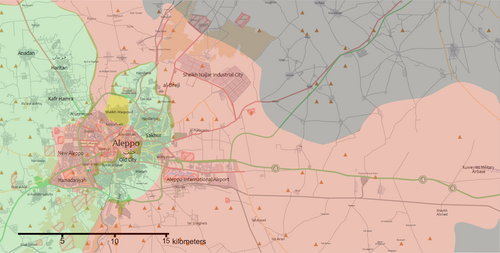
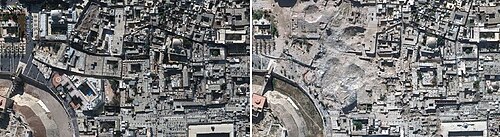
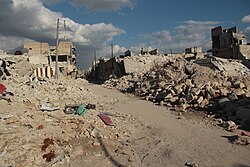
The victory for the Syrian government brought an end to the battle but left the city in ruins. The Ancient City of Aleppo, renowned for its historical significance, suffered catastrophic damage, including the destruction of the Al-Khusrawiyah Complex and the National Hamidi Hospital.
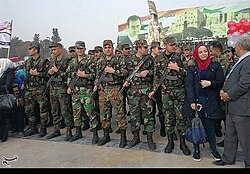
Following the liberation of the city, the government began efforts to restore order. Public celebrations, including the first public Christmas celebrations in years, marked the transition back to government rule.

Battle Summary Table
| Category | Details |
|---|---|
| Timeline | 19 July 2012 – 22 December 2016 |
| Primary Victor | Syrian Arab Army and Allies |
| Key International Allies | Russia, Iran |
| Major Rebel Factions | Fatah Halab, al-Nusra Front, Army of Conquest |
| Civilian Deaths | 21,452 (estimated) |
| Cultural Loss | Severe damage to UNESCO World Heritage site |
Frequently Asked Questions
Who eventually won the Battle of Aleppo?
The Syrian Arab Army and its allies, including Russian and Iranian forces, achieved victory by gaining full control of the rebel-held eastern districts in December 2016.
What was the humanitarian impact on the city?
The impact was devastating, with over 31,000 deaths in the province, the majority of whom were civilians. The city suffered from severe food shortages, destroyed infrastructure, and the widespread use of heavy weaponry in residential areas.
What happened to the Ancient City of Aleppo?
The Ancient City, a UNESCO World Heritage site, was largely damaged. Satellite imagery and reports confirm the destruction of key historical complexes and hospitals due to the intense fighting.
What role did Russia play in the battle?
Russia entered the conflict in September 2015, providing critical air support and military advisors that helped the Syrian government break the rebel hold on the city and secure a final victory.
What were the 'barrel bombs' mentioned in reports?
Barrel bombs were improvised explosive devices—typically oil drums filled with explosives and shrapnel—dropped from helicopters. They were frequently used by the Syrian government and were widely condemned for their indiscriminate nature.