Krewes: The Social Organizations Behind Carnival and Mardi Gras
In the vibrant world of Carnival, the word krewe (pronounced KROO) refers to a social organization dedicated to staging the elaborate parades and balls that define the season. While most famously associated with the Mardi Gras celebrations of New Orleans, krewes are central to Carnival festivities across Louisiana—including Lafayette, Shreveport, and Baton Rouge—and in various cities along the Gulf of Mexico and beyond.
From the Gasparilla Pirate Festival in Tampa, Florida, to the Saint Paul Winter Carnival and celebrations in La Crosse, Wisconsin, these organizations keep the spirit of Carnival alive through meticulous planning and community tradition.
The Origins and Evolution of the Krewe
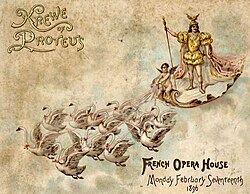
The term "krewe" is believed to have been coined in the early 19th century by the New Orleans-based Ye Mistick Krewe of Comus. The group used the spelling as an archaic affectation, and over time, it became the standard term for Carnival organizations in the region. The Mistick Krewe of Comus drew inspiration from the Cowbellion de Rakin Society, a mystic society founded in 1830 that organizes annual parades in Mobile, Alabama.
As the tradition grew, the krewe system spread from Mobile and New Orleans to other cities with French Catholic heritage. This expansion included areas with their own unique traditions, such as the Courir de Mardi Gras. In Louisiana, the next-oldest krewes emerged primarily near Lafayette, which crowned its first Rex-style monarch, King Attakapas, in 1897. Lafayette is also home to the state's oldest surviving children's krewe, Oberon, established in 1928.
How Krewes Operate
Krewes function as private social clubs that fund their festivities through member assessments. The cost of membership varies wildly depending on the scale of the organization's ambitions. Fees can range from as little as $20 per year for small clubs to thousands of dollars for those staging the most elaborate parades.
Membership criteria are equally diverse. Some krewes are highly exclusive, limiting membership to relatives of previous members, while others are open to anyone capable of paying the annual dues.
Production and Traditions
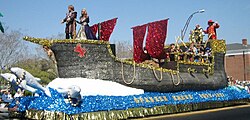
The level of member involvement often depends on the cost of the krewe. In organizations with lower fees, members are frequently required to contribute labor, helping to build and decorate parade floats and sewing their own costumes. In contrast, high-priced krewes typically hire professional designers and builders to handle these tasks.
Regardless of the krewe's budget, parading members are traditionally responsible for purchasing their own throws—items such as beads and coins that are tossed to spectators during the parade.
Social Structure and Community Impact
Beyond the main Carnival events, many krewes host private parties and dances for their members throughout the year. Some organizations also dedicate themselves to philanthropy, supporting various charities and good causes.
Membership demographics vary by organization. Some krewes are co-ed, while others are restricted by sex. For instance, the Krewe of Endymion in New Orleans and the Ye Mystic Krewe of Gasparilla in Tampa are men-only. Conversely, female-only organizations include the Krewe of Cleopatra and Krewe of Muses in New Orleans, as well as the Krewe of Venus in Tampa.
Key Facts
- Definition: A krewe is a social organization that organizes Carnival parades and balls.
- Etymology: Coined by Ye Mistick Krewe of Comus in the 19th century as an archaic stylistic choice.
- Geographic Reach: Common in New Orleans, Mobile, Tampa, and other cities with French Catholic roots.
- Funding: Supported by member fees ranging from $20 to several thousand dollars.
- Traditions: Members provide "throws" (beads, coins) to the public during parades.
Summary of Krewe Characteristics
| Feature | Low-Fee Krewes | High-Fee Krewes |
|---|---|---|
| Annual Dues | As low as $20 | Thousands of dollars |
| Float Construction | Member-built and decorated | Professionally produced |
| Costumes | Often handmade by members | Professionally made |
| Membership | Often more open | Can be highly exclusive/hereditary |
Frequently Asked Questions
What is the difference between a krewe and a regular club?
While they are social organizations, krewes specifically focus on the staging of Carnival season events, such as parades and balls, and often follow specific traditions regarding "throws" and royal courts.
Where did the term "krewe" come from?
It was created by Ye Mistick Krewe of Comus in New Orleans during the early 19th century as a stylized, archaic version of the word "crew."
Are all krewes based in New Orleans?
No. While New Orleans is the most famous hub, krewes exist in Mobile, Alabama; Lafayette, Shreveport, and Baton Rouge, Louisiana; Tampa and DeLand, Florida; and as far north as La Crosse, Wisconsin.
Can anyone join a krewe?
It depends on the organization. Some krewes are open to anyone who can pay the membership fee, while others are exclusive and limited to family members of existing krewes.
Are there gender-specific krewes?
Yes. Some krewes are co-ed, some are men-only (such as the Krewe of Endymion), and some are women-only (such as the Krewe of Muses).