Kieron Dyer: A Career of Early Brilliance and Injury Struggles
Kieron Dyer emerged in the late 1990s as one of the most promising talents in English football. Born in Ipswich to an Antiguan father and English mother, Dyer's journey took him from his hometown club to the heights of the Premier League, though his later years were defined by a persistent battle with injuries.
The Rise at Ipswich Town
Dyer began his professional journey with Ipswich Town, signing as a 17-year-old trainee in 1996. He quickly broke into the first team, earning a reputation as one of the finest young players in England playing outside the top flight. After three years at Portman Road, Dyer requested a transfer in 1999 to improve his international prospects after Ipswich failed to secure promotion via the play-offs.
Success and Controversy at Newcastle United
In July 1999, Newcastle United signed Dyer for £6 million, a club record for Ipswich at the time. He was notably the only English player signed by manager Ruud Gullit. While his start was marked by a 2–1 defeat to local rivals Sunderland, Dyer flourished under subsequent manager Bobby Robson.
During the early 2000s, Dyer was a pivotal figure in a Newcastle side that consistently challenged the top of the table, finishing fourth, third, and fifth in the 2001–02, 2002–03, and 2003–04 Premier League seasons, respectively.
However, his tenure was not without drama. On 2 April 2005, Dyer was involved in a high-profile on-pitch brawl with teammate Lee Bowyer during a match against Aston Villa. Both players received red cards. Dyer was handed a three-match ban by the FA, while Bowyer faced a more severe penalty, including a four-match ban and a fine of approximately £200,000 from the club.
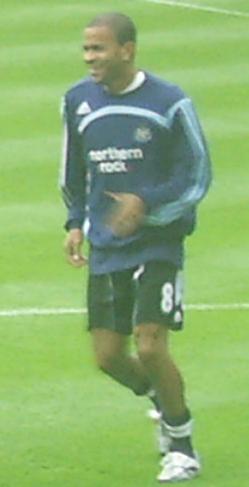
Despite injuries and managerial changes, Dyer experienced a resurgence in 2006. He became the first Newcastle player to score at the Emirates Stadium during a 1–1 draw with Arsenal on 18 November 2006. His versatility allowed him to operate as a central, right, or attacking midfielder, supporting striker Obafemi Martins.
The Injury-Plagued Years at West Ham United
Dyer moved to West Ham United on 16 August 2007 for £6 million on a four-year contract. His time at Upton Park was tragically defined by physical setbacks. Just ten days after his debut, a tackle by Joe Jacobson in a League Cup match against Bristol Rovers resulted in Dyer breaking his right leg in two places, sidelining him for the remainder of the 2007–08 season.
After a 17-month absence, Dyer returned on 3 January 2009, but recurring hamstring injuries limited his impact. By 2010, club owner David Sullivan expressed frustration over Dyer's lack of availability, noting that Dyer—earning £60,000 per week—had played only 18 matches in three years. Reports later suggested his earnings had risen to £83,000 per week, including image rights and loyalty fees. He was released at the end of the 2010–11 season.
Final Chapters: QPR, Middlesbrough, and Retirement
Dyer's later career saw brief stints at other clubs. He joined Queens Park Rangers (QPR) in July 2011, but was stretchered off with a foot injury just three minutes into his debut. He managed only seven minutes of play in the 2011–12 season. He scored his only goal for QPR in an FA Cup tie against West Bromwich Albion in January 2013, shortly before being released by manager Harry Redknapp.
His final professional spell came at Middlesbrough in early 2013. He scored against Cardiff City and, on 16 April, completed a full 90-minute match for the first time since 2010. Following his departure from Middlesbrough, Dyer returned to Ipswich Town as an academy coach and eventually retired from professional playing.
Key Facts
- Record Transfer: His £6 million move to Newcastle was an Ipswich Town record until the sale of Connor Wickham.
- Emirates Milestone: First Newcastle United player to score a goal at the Emirates Stadium.
- Injury Toll: Missed 17 months of action during his West Ham tenure due to a broken leg.
- Financial Impact: Cost West Ham approximately £450,000 for every match he played.
- Final Full Game: Did not play a full 90 minutes in a competitive match between 2010 and April 2013.
| Club | Period | Key Highlight/Note |
|---|---|---|
| Ipswich Town | 1996–1999 | Broke through as a top young English talent. |
| Newcastle United | 1999–2007 | Key player in top-five Premier League finishes. |
| West Ham United | 2007–2011 | Career severely hampered by a broken leg. |
| Queens Park Rangers | 2011–2013 | Limited appearances due to foot injuries. |
| Middlesbrough | 2013 | Final professional club before retirement. |
Frequently Asked Questions
Why did Kieron Dyer leave Ipswich Town in 1999?
Dyer requested a transfer to further his international prospects after Ipswich Town failed to gain promotion to the Premier League through the play-offs in 1999.
What happened during the brawl between Dyer and Lee Bowyer?
During a match against Aston Villa on 2 April 2005, Dyer and teammate Lee Bowyer engaged in an on-pitch fight. Both were sent off, and Dyer received a three-match FA ban.
How severe was Dyer's injury at West Ham?
Dyer suffered a break in his right leg in two places during a League Cup match against Bristol Rovers, which caused him to miss the rest of the 2007–08 season and led to a 17-month recovery period.
How much was Kieron Dyer earning at West Ham?
While initially earning £60,000 per week, later reports indicated he was the club's top earner at £83,000 per week, which included loyalty fees and image rights.
When did Kieron Dyer officially retire?
Dyer retired from professional playing after his stint at Middlesbrough and a period of training with Ipswich Town, subsequently transitioning into a role as an academy coach at Ipswich.