Manchester UnitedOld TraffordPremier LeagueSir Alex FergusonMatt Busby

Manchester United: A Legacy of Excellence in English Football

Manchester United: A Legacy of Excellence in English Football Known globally as the Red Devils, Manchester United Football Club stands as one of the most iconic institutions in profession...

Manchester United: A Legacy of Excellence in English Football

Known globally as the Red Devils, Manchester United Football Club stands as one of the most iconic institutions in professional sports. From its humble beginnings in the late 19th century to its status as a global commercial powerhouse, the club has defined eras of English football through resilience, tactical innovation, and an unwavering commitment to success.

The club's journey is marked by dramatic peaks and challenging valleys, evolving from a railway workers' team into a dominant force in the Premier League and European competitions.
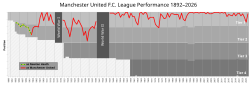
refer to caption
A chart showing the progress of Manchester United through the English football league system, from joining as Newton Heath in 1892–93 to the present

Key Facts

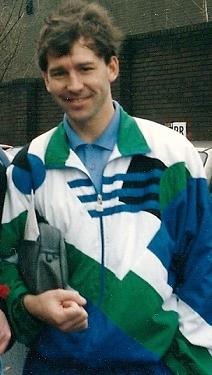
A smiling man with dark hair wearing a white, green, and blue tracksuit top over a blue shirt. He is holding a washbag under his right arm.
Bryan Robson was the captain of Manchester United for 12 years, longer than any other player.[36]
  • Founded: 5 March 1878 (as Newton Heath LYR F.C.); renamed Manchester United F.C. on 24 April 1902.
  • Home Ground: Old Trafford, with a capacity of 74,158.
  • Ownership: Jointly owned by Manchester United plc (71.06%) and Ineos (28.94%).
  • Major Achievement: Won a historic Treble (League, FA Cup, and UEFA Champions League) in the 1998–99 season.
  • Current Head Coach: Michael Carrick.

The Evolution of a Giant: Club History
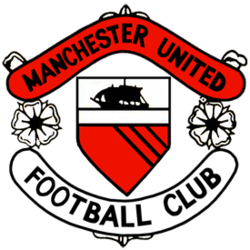
A football crest. In the centre is a shield with a ship in full sail above a red field with three diagonal black lines. On either side of the shield are two stylised roses, separating two scrolls. The upper scroll is red and reads "Manchester United" in black type, while the lower scroll is white with "Football Club" also written in black
Manchester United badge in the 1960s

Early Years and the Busby Era (1878–1969)

The club began as Newton Heath LYR F.C. before transitioning to Manchester United in 1902. The mid-20th century saw the rise of Matt Busby, whose vision created the "Busby Babes," a team of talented young players who revolutionized the game.
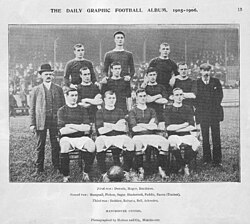
A black-and-white photograph of a football team lining up before a match. Four players, wearing dark shirts, light shorts and dark socks, are seated. Four more players are standing immediately behind them, and three more are standing on a higher level on the back row. Two men in suits are standing on either side of the players.
The Manchester United team at the start of the 1905–06 season, in which they were runners-up in the Second Division
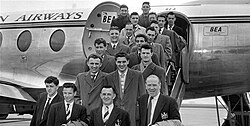
A black-and-white photograph of several people in suits and overcoats on the steps of an aircraft.
The Busby Babes in 1955. Manager Matt Busby is pictured front right.

This era was tragically interrupted by the Munich air disaster, which claimed the lives of several players and staff. However, the club rebuilt with determination, eventually securing European glory.
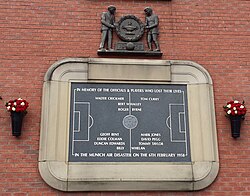
A stone tablet, inscribed with the image of a football pitch and several names. It is surrounded by a stone border in the shape of a football stadium. Above the tablet is a wooden carving of two men holding a large wreath.
A plaque at Old Trafford in memory of those who died in the Munich air disaster, including players' names

The Ferguson Dynasty (1986–2013)

The appointment of Alex Ferguson in 1986 ushered in the most successful period in the club's history. Ferguson transformed United into a domestic juggernaut and a European contender, culminating in the 1998–99 Treble.
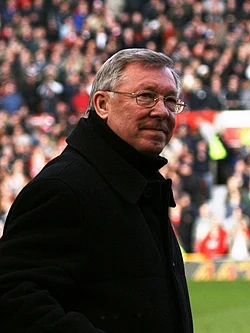
The torso and head of a grey-haired white man. He is wearing spectacles and a black coat.
Alex Ferguson managed the team between 1986 and 2013.
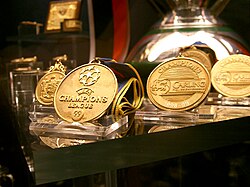
Front three: Manchester United's treble medals of the 1998–99 season are displayed at the club's museum.

During this time, legendary figures such as George Best, Denis Law, and Bobby Charlton—known as the United Trinity—cemented the club's prestige, while later stars like Ryan Giggs and Wayne Rooney set new records for appearances and goals.
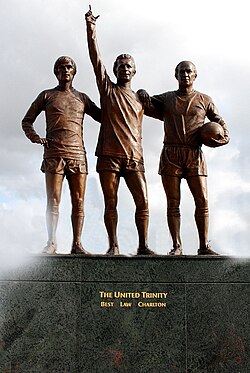
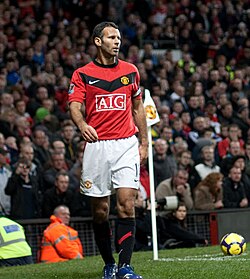
The United Trinity statue of George Best (left), Denis Law (centre) and Bobby Charlton (right) outside Old Trafford
A white football player with short, dark, greying hair. He is wearing a red shirt, white shorts, white socks, and white football boots. He is running and has puffed-out cheeks.
Ryan Giggs is the most decorated player in English football history.[52]
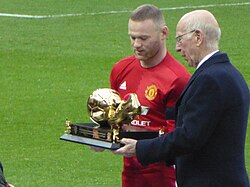
Wayne Rooney receiving an award for becoming the club's record goalscorer from previous record holder Sir Bobby Charlton in January 2017

Modern Era and Transition (2013–Present)

Following Ferguson's retirement in 2013, the club entered a period of transition. While experiencing occasional surges in form, the team has worked to regain its consistent dominance in the Premier League under various managers, including Louis van Gaal, José Mourinho, and Ole Gunnar Solskjær.
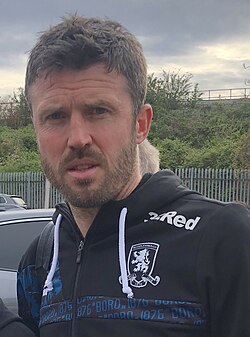
Michael Carrick is the current head coach of Manchester United.

Stadium and Global Brand

Old Trafford, the club's home since 1910, is one of the most famous stadiums in the world. It has seen its attendance grow steadily over decades, serving as a fortress for the Red Devils.
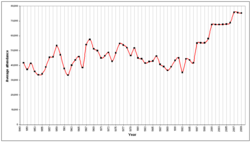
Average Old Trafford Manchester United attendance, 1949–2009
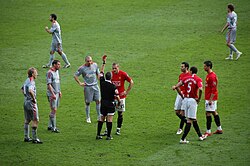
Liverpool v Manchester United at Old Trafford on 14 March 2009

Beyond the pitch, Manchester United is a global brand. This is evidenced by high-profile partnerships with companies like Snapdragon and Turkish Airlines, and a massive international supporter base.
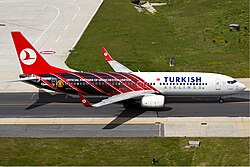
An official partner of the club, Turkish Airlines, in Manchester United livery

Club Overview and Honors

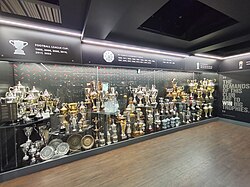
The club's trophy cabinet is among the most decorated in football, featuring multiple league titles and European trophies.

Category Details
Full Name Manchester United Football Club
League Premier League
Stadium Old Trafford (74,158 capacity)
Key Honors Treble (1998–99), Multiple League & Champions League titles
Current Captain Bruno Fernandes
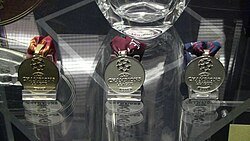
A photograph of three medals sitting on a stand. One medal is gold and two are silver.
Winner's and runners'-up medals from Manchester United's UEFA Champions League final appearances in 2008, 2009 and 2011
Trophies won by Manchester United on display in the club museum

Frequently Asked Questions

When was Manchester United founded?

The club was founded on 5 March 1878 as Newton Heath LYR F.C. and was later renamed Manchester United F.C. on 24 April 1902.

What is the 'Treble' achieved by the club?

The Treble refers to winning the Premier League, the FA Cup, and the UEFA Champions League all in a single season, which Manchester United accomplished in 1998–99.

Who is the current head coach?

As of the current records, Michael Carrick is the head coach of Manchester United.

Who are the current owners of the club?

The club is owned by Manchester United plc (71.06%) and Ineos (28.94%), with Joel and Avram Glazer serving as co-chairmen.

What is the capacity of Old Trafford?

Old Trafford has a seating capacity of 74,158 spectators.