Kermes Dye: The Ancient Crimson of the Mediterranean
For millennia, the quest for a vivid, lasting red has driven human innovation in art and textile production. Long before the arrival of synthetic pigments, one of the most prized colors in the ancient and medieval worlds was kermes. This rich crimson dye is derived from the dried bodies of female scale insects in the genus Kermes, most notably Kermes vermilio.
Native to the Mediterranean region, these insects are parasites that feed on the sap of host plants, specifically the Kermes oak (Quercus coccifera) and the Palestine oak (Quercus calliprinos). The resulting dye produces a deep, luxurious red that has adorned the garments of royalty, priests, and nobility for thousands of years.
Key Facts
- Source: Dried female scale insects (primarily Kermes vermilio and Kermes echinatus).
- Color: A rich crimson or scarlet-orange.
- Best Application: Animal-based fibers such as silk and wool.
- Chemical Base: High concentrations of kermesic acid (C16H10O8) and flavokermesic acid.
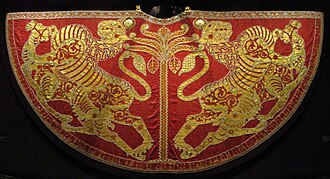
- Historical Status: Once more desirable than Tyrian purple in medieval Italy and Sicily.
- Replacement: Largely superseded by Mexican cochineal after the Columbian exchange.
Etymology and Origins
The word "kermes" has a linguistic journey that mirrors the trade of the dye itself. It originates from the Sanskrit word kṛmija, meaning "worm-made." This term was adopted into Persian and Arabic as qermez, eventually entering the English language via the French term kermès.
Archaeological evidence suggests the dye's use dates back to the Neolithic era, with jars of kermes discovered in a cave-burial at Adaouste in France. It was widely utilized by the ancient Egyptians, Mesopotamians, Indians, Greeks, Romans, and Iranians.
The Role of Kermes in History and Culture
Medieval Luxury and the "Grain" Dye
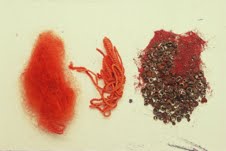
During the Middle Ages, kermes was the gold standard for luxury textiles. In the silk-weaving centers of Sicily and Italy, kermes-dyed silks were often more esteemed than the legendary Tyrian purple. Because the desiccated insects resembled small grains of wheat or sand, the dyestuff was referred to as "grain" (grana) in most Western European languages. Consequently, high-end textiles were described as being "dyed in the grain."
While kermes produced a brilliant scarlet on its own, medieval dyers often used it in combination with other colors. For example, wool was frequently dyed blue with woad before being piece-dyed in kermes, creating a spectrum of purples, browns, and deep blacks.
Biblical and Ritual Significance
In the Hebrew Bible, the term tolaʻat šanī (literally "scarlet worm") refers to this insect-based dye. Scarlet was one of the three primary pigments used for the Temple curtain and sacred vestments. It also played a role in purification rituals, such as the healing of lepers and the ceremony of the Red Heifer.
In Jewish tradition, scarlet was used to decorate bridal chambers, where scarlet sheets overlaid with gold were hung. It also held symbolic weight during the Yom Kippur service, where a scarlet thread was tied to the horns of the scapegoat.
The Science of Dye Production
Producing kermes dye is a precise process that depends heavily on timing. The female Kermes echinatus produces the pigment in her body and eggs only at the peak of adulthood, a window lasting roughly one month during July and August.
The Extraction Process
- Harvesting: Insects are collected and dried in the shade for one week.
- Processing: The dried insects are ground into a fine powder.
- Extraction: The powder is steeped in water and heated to between 60°C and 80°C (140°F to 176°F). Temperatures exceeding this range can destroy the pigment.
- Mordanting: To achieve a bright reddish-orange hue and ensure the color is fast (permanent), the fabric is treated with alum, which acts as a mordant (a substance used to set dyes on fabrics).

Chemical Composition and Yield
The primary active component of the dye is kermesic acid. Chemical analysis shows that the final color is influenced by the pH of the bath; an acid bath produces a red-orange hue, while the absence of acid results in a brick red. In terms of yield, approximately 50,000 to 60,000 scale insects are required to produce just one kilogram of dried dyestuff.
| Feature | Detail |
|---|---|
| Primary Chemical | Kermesic acid (C16H10O8) |
| Optimal Temperature | 60°C – 80°C |
| Required Mordant | Alum (for bright red-orange) |
| Insect Yield | 50,000–60,000 insects per 1kg dried dye |
| Weight Loss | Fresh insects lose ~2/3 weight when dried |
Frequently Asked Questions
What is the difference between kermes and cochineal?
While both are derived from scale insects, cochineal comes from the Americas and produces a stronger dye that can be used in smaller quantities. Following the Spanish conquest of the Aztec Empire, cochineal largely replaced kermes in Europe.
Why was kermes called "grain"?
The dried female insects and their eggs looked like small grains of sand or wheat. Because people originally mistook them for plant seeds, the dye became known as "grain" (grana).
Which fabrics work best with kermes dye?
Kermes adheres best to animal-based fibers, such as wool and silk. It is significantly less effective on plant-based fibers like cotton or linen.
What is the significance of the "Cave of Skulls" discovery?
In 2016, researchers found a woven fabric in the Judaean Desert dated to the Middle Bronze Age. A 2024 study confirmed it was colored with Kermes vermilio, making it the earliest known example of this dye in Israel.
How is the color of kermes dye altered?
The hue is changed using different bath solutions. Alum creates a bright reddish-orange, while an acid bath produces red-orange. Without acidic additions, the dye typically results in a dark or brick red.