Kererū: The Iconic New Zealand Pigeon
The kererū (Hemiphaga novaeseelandiae), also known as the New Zealand pigeon, is one of Aotearoa's most recognizable and beloved native birds. Known for its impressive size and striking iridescent plumage, this bird plays a critical role in the health of New Zealand's forests. From its deep cultural significance to its modern-day status as a suburban favorite, the kererū is a symbol of the natural heritage of the islands.
These birds are primarily found in the forests of New Zealand, including regions like the Waitākere Ranges, where they thrive among the native canopy.
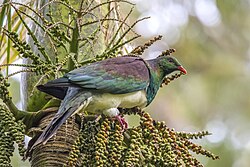
Key Facts
- Scientific Name: Hemiphaga novaeseelandiae
- Conservation Status: Least Concern (IUCN 3.1)
- Distinctive Feature: Iridescent green and bronze feathers on the head and neck.
- Ecological Role: Vital seed disperser for large-fruited native trees.
- Cultural Status: Featured on New Zealand banknotes and winner of the 2018 Bird of the Year.
Taxonomy and Classification
The kererū belongs to the order Columbiformes and the family Columbidae. While it was historically classified under synonyms such as Columba novaeseelandiae and Carpophaga novaeseelandiae, it is now recognized within the genus Hemiphaga.
The species has a complex history of classification, including the extinct Norfolk pigeon (H. n. spadicea), which was a subspecies of the New Zealand pigeon.
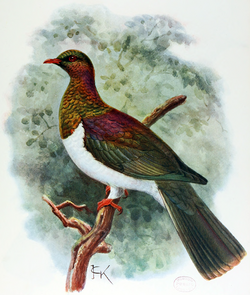
Physical Description and Characteristics
The kererū is a large, heavy pigeon characterized by its beautiful metallic sheen. The feathers on its head and neck exhibit a vivid iridescence, shifting between green and bronze depending on the light.
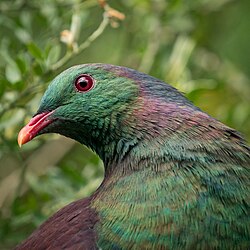
Beyond their appearance, these birds are known for their social behaviors, which can include territorial disputes as they compete for resources or mating rights.
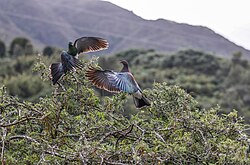
Diet and Ecological Importance
The kererū is primarily a frugivore, meaning its diet consists mainly of fruit. It is one of the few remaining native birds with a gape large enough to swallow the big seeds of native trees, such as the miro. By consuming these fruits and excreting the seeds elsewhere, the kererū acts as a primary seed disperser, ensuring the regeneration of New Zealand's podocarp and hardwood forests.
Breeding and Life Cycle
Kererū breeding typically involves small clutches. The development of the chicks occurs in nests where they are cared for by their parents until they are ready to fledge.
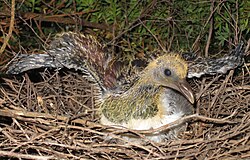
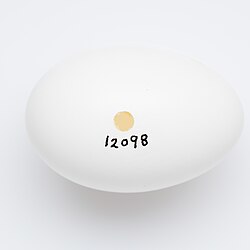
Museum specimens provide insight into their early life stages, including the appearance of their eggs.
Conservation and Population Trends
Currently listed as Least Concern by the IUCN, the kererū has shown a remarkable recovery in recent years. This is particularly evident in suburban areas, where sightings increased by 79% between 2010 and 2020.
The Great Kererū Count, a citizen science project, tracked this recovery. In its final count held from September 17–26, 2021, 24,562 birds were recorded, with 28% of those sightings coming from Auckland.
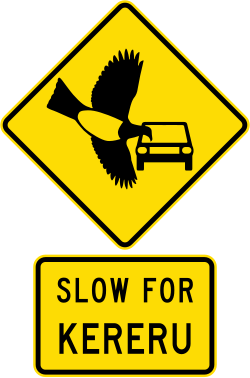
Despite this success, the birds still face threats, including collisions with glass windows and vehicle traffic, leading to the installation of caution signs on some New Zealand roads.
Cultural and Human Relationship
The kererū holds a deep place in Māori culture and has been found in various archaeological sites, indicating a long history of interaction between humans and the bird. Historically, the birds were harvested using traditional methods such as snaring.
In modern times, the bird's popularity is widespread. It appeared on the reverse of New Zealand's twenty-dollar notes from 1967 to 1991. Its global reach extended to the stars in 2019, when the exoplanet HD 137388 b was renamed "Kererū" in its honor.
| Attribute | Detail |
|---|---|
| Scientific Name | Hemiphaga novaeseelandiae |
| Conservation Status | Least Concern |
| Primary Diet | Fruit/Seeds |
| Key Habitat | Native forests and suburban gardens |
| Notable Achievement | 2018 Bird of the Year winner |
Frequently Asked Questions
Why is the kererū important for the forest?
The kererū is a vital seed disperser. Because it can swallow large fruits that other birds cannot, it helps spread the seeds of native trees across the landscape, allowing the forest to regenerate.
How has the kererū population changed recently?
The population has seen a significant recovery in suburban areas, with a 79% increase in sightings recorded between 2010 and 2020.
What is the Great Kererū Count?
It was a citizen science project that involved the public in counting kererū to monitor population trends. The final count in 2021 recorded 24,562 birds.
Is the kererū featured on any currency?
Yes, the kererū was featured on the reverse side of the New Zealand twenty-dollar note in both the series 3 (1967–1981) and series 4 (1981–1991) banknotes.
What threats do kererū face today?
Common threats include collisions with windows and road traffic, as well as the historical impact of introduced mammals on breeding success.