Joseph-Philibert Girault de Prangey: Pioneer of Middle Eastern Photography
Long before photography was recognized as a standalone art form, a French scholar and draughtsman named Joseph-Philibert Girault de Prangey (1804–1892) was capturing the world in a way that would eventually rewrite the visual history of the Mediterranean. An amateur archaeologist with a passion for ancient architecture, Girault de Prangey utilized the emerging technology of the 19th century to document the Middle East with unprecedented precision.
His work is now celebrated as some of the earliest surviving photographic evidence of several nations, providing a rare window into the landscapes and cultures of the 1840s.
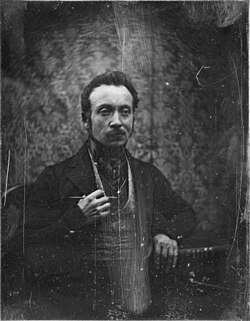
Key Facts
- Earliest Records: Produced the earliest surviving photographs of Greece, Palestine, Italy, Egypt, Syria, and Turkey.
- Prolific Output: Created over 900 daguerreotypes between 1841 and 1844.
- Hidden Legacy: His photographs remained undiscovered in his attic until the 1920s.
- Record Value: A single daguerreotype sold for a world-record £565,250 ($922,488) in 2003.
- Academic Background: Studied painting at the École des Beaux-Arts in Paris.
The Intersection of Art and Science
Girault de Prangey was a man of significant means and intellectual curiosity. After studying painting at the École des Beaux-Arts, he dedicated himself to historical archaeology. To enhance the accuracy of his architectural drawings, he adopted daguerreotypy—the first publicly available photographic process, which involved capturing an image on a silver-plated copper sheet.
It is believed he learned this complex craft from either the process's inventor, Louis Daguerre, or from Hippolyte Bayard. For Girault de Prangey, the camera was not an end in itself, but a sophisticated tool to ensure his artwork remained faithful to the original structures he studied.
The Grand Tour (1841–1844)
Between 1841 and 1844, Girault de Prangey embarked on a self-financed journey through Italy and the eastern Mediterranean. During this expedition, he produced more than 900 daguerreotypes. His subjects were diverse, ranging from sweeping landscapes and intricate architectural views to portraits of local residents captured within their own cultural environments.
From Private Study to Public Recognition
Upon returning to France, Girault de Prangey used his photographs as references to create watercolor and pen-and-ink studies. He eventually published a small-edition book of lithographs based on these images. However, the publication received little encouragement, leading him to pivot his interests toward botany and the study of exotic plants on his estate.
Because photography was not viewed as an art form during his lifetime, he made no effort to publicize his photographic plates. Instead, he stored them in wooden boxes in his attic, where they remained untouched until the 1920s, decades after his death in 1892.
Modern Rediscovery and Exhibition
The world only began to realize the immense historical value of these images eighty years after his passing. His work eventually entered the high-end art market, culminating in a record-breaking sale to Sheikh Saud Al Thani of Qatar in 2003.
In January 2019, the Metropolitan Museum of Art, in collaboration with the Bibliothèque Nationale de France, hosted "Monumental Journey: The Daguerreotypes of Girault de Prangey." This landmark exhibition featured approximately 120 photographs, including iconic images of the Parthenon in Athens, the Dome of the Rock in Jerusalem, and the Khayrbak Mosque in Cairo.
| Category | Details |
|---|---|
| Primary Medium | Daguerreotypes (early silver-plate photography) |
| Regions Documented | Greece, Palestine, Italy, Egypt, Syria, Turkey |
| Key Subjects | Ancient architecture, landscapes, and cultural portraits |
| Major Works | Parthenon, Dome of the Rock, Khayrbak Mosque |
| Discovery Period | 1920s (found in attic) |
Frequently Asked Questions
What is a daguerreotype?
A daguerreotype is an early photographic process that creates a unique, detailed image on a silver-plated copper sheet. It was the first commercially successful photographic method.
Why did Girault de Prangey use photography?
He used photography primarily as a tool for accuracy. As a scholar and draughtsman, the photographs allowed him to create more precise architectural drawings and paintings.
When were his photographs discovered?
His collection was discovered in the attic of his estate in the 1920s, several decades after his death in 1892.
Which famous landmarks did he photograph?
His work includes some of the earliest images of the Parthenon in Athens, the Dome of the Rock in Jerusalem, and the Khayrbak Mosque in Cairo.
How much is his work worth today?
His work is highly valued in the art world; one of his daguerreotypes sold for a world-record price of £565,250 (approximately $922,488) in May 2003.