Jongno: The Historic Heart and Political Center of Seoul
Jongno-gu, often simply called Jongno, serves as the historic and cultural soul of Seoul, South Korea. As one of the city's 25 autonomous districts, it acts as a bridge between Korea's storied past and its dynamic present. From the grand royal palaces of the Joseon dynasty to the bustling modern business districts, Jongno is widely regarded as the "face and heart" of the nation.
The name 'Jongno' translates to Bell Street, a nod to the famous Bosingak belfry located at the Jonggak intersection. This area has remained a central pillar of Korean life for over 600 years, evolving from the capital of the Joseon dynasty into a vital hub of modern politics and commerce.

Key Facts
- Meaning: Jongno translates to "Bell Street," named after the Bosingak belfry.
- Historical Significance: Former site of the Joseon dynasty capital, Hanyang.
- Major Landmarks: Gyeongbokgung Palace, Changdeokgung Palace, and Gwanghwamun Plaza.
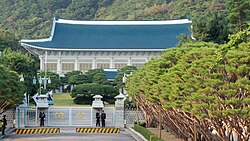
- Political Importance: Former home of the Blue House (Cheong Wa Dae) and a key political bellwether.
- Economic Role: A major business district hosting global corporations and diplomatic missions.
A Journey Through History
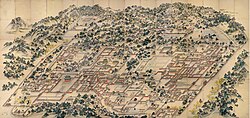
The history of Jongno is deeply intertwined with the rise of the Joseon dynasty. In October 1394, King Taejo moved the capital from Gaegyeong to Hanyang (the historical name for the area including Jongno). This relocation was driven by strategic military geography and the necessity of efficient water transport for rice.
Following the establishment of the new capital, the government prioritized the construction of essential landmarks, including the Jongmyo shrine and the major royal palaces. By the era of King Sejong, the city had flourished into a major urban center with a population of approximately 200,000 people.
The Joseon Legacy
Jongno remains a treasure trove of heritage sites. It houses several significant palaces, including Gyeongbokgung, the primary palace of the Joseon dynasty, as well as Changdeokgung, Changgyeonggung, and Unhyeongung. These sites offer a window into the architectural and cultural sophistication of Korea's imperial past.
Politics and Governance
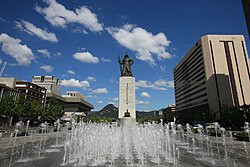
Jongno is arguably the most politically significant district in South Korea. Because it sits at the center of the capital, it is often the first constituency analyzed in national election statistics and exit polls. The district has been represented in the National Assembly by three South Korean presidents: Yun Posun, Roh Moo-hyun, and Lee Myung-bak.
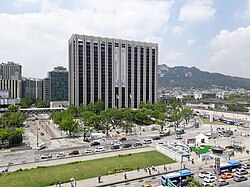
Until 2022, the district was home to Cheong Wa Dae (the Blue House), the official presidential residence. Today, the area continues to host significant government functions, including the headquarters of the Ministry of Security and Public Administration and the Ministry of Foreign Affairs.
Culture, Tourism, and Economy
Tourism is a cornerstone of the Jongno economy. Visitors flock to the restored Cheonggyecheon stream and the traditional neighborhood of Insa-dong. For those seeking a taste of local life, Gwangjang Market (formerly Dongdaemun Market) is one of the country's oldest traditional markets, welcoming roughly 65,000 visitors every day.
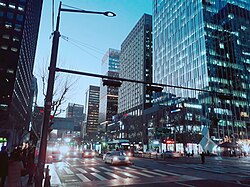
Beyond its historical charm, Jongno is a powerhouse of modern industry. It serves as a major business district, hosting the headquarters of prominent groups such as Lotte, SK, and Hyundai Engineering & Construction. The district's skyline is a mix of historic gates and high-rise office buildings, reflecting its dual identity.
Summary of Jongno District Profile
| Category | Details |
|---|---|
| Total Area | 23.92 km² |
| Population (Sept 2024) | 138,879 |
| Population Density | 5,806/km² |
| Time Zone | UTC+9 (KST) |
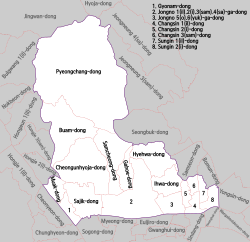
| Administrative Divisions | 19 dongs |
Frequently Asked Questions
What does the name "Jongno" mean?
Jongno means "Bell Street." It is named after Jongno Road, which features the Bosingak belfry at its center.
Which major palaces are located in Jongno?
The district contains several major royal palaces, most notably Gyeongbokgung, Changdeokgung, and Changgyeonggung.
Is Jongno a good place for traditional food and shopping?
Yes, Jongno is home to Insa-dong for traditional culture and Gwangjang Market, one of Korea's oldest and most famous traditional markets.
Why is Jongno politically important?
Jongno is considered a political bellwether because of its central location and historical significance. It has been represented by three different South Korean presidents in the National Assembly.
What is the Blue House (Cheong Wa Dae)?
Cheong Wa Dae was the official presidential residence of South Korea, located within the Jongno District until 2022.