Cheong Wa Dae: The History and Architecture of South Korea's Blue House
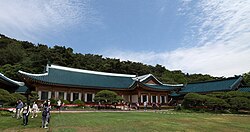
Cheong Wa Dae, widely known as the Blue House, is the historic executive office and official residence of the president of South Korea. Located in the Jongno District of Seoul, directly behind the former Gyeongbokgung palace, this site has served as the nerve center of South Korean presidential administration and state diplomacy since 1948. Its name, which literally translates to "Cyan-tile Pavilion," refers to the distinctive blue tiles that adorn its roof.
The complex is more than just a political hub; it is a site of deep historical layers, built upon the grounds of a royal garden from the Joseon period (1392–1910). While it remained one of the most heavily protected official residences in Asia for decades, it has recently transitioned through a period of public accessibility before returning to its original purpose.
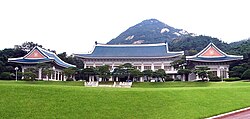
Key Facts
- Location: 1 Cheongwadae-ro, Jongno-gu, Seoul, South Korea.
- Architectural Style: Traditional Korean.
- Total Land Area: 253,505 square meters.
- Key Transition: Opened as a public park from May 10, 2022, to December 28, 2025.
- Current Status: Reinstated as the presidential office as of December 29, 2025.
Historical Evolution
Goryeo and Joseon Eras
The site's history is intertwined with Gyeongbokgung Palace. After the palace was destroyed during Japanese invasions (1592–1598), it remained neglected for years. During the reign of King Gojong, the palace was rebuilt, and support structures were established in the area now occupied by Cheong Wa Dae. This included the Gyeongmudae, which consisted of 32 buildings, including the Oungak (a royal resting place) and the Yoongmundang, used for military training and festivals.
Foreign Occupation (1910–1948)
Following the Japanese annexation of Korea in 1910, the Imperial Japanese governor used the Gyeongbokgung grounds for the Government-General Building. By July 1939, the Japanese constructed an official residence and office for the governor-general on the current Cheong Wa Dae site. After liberation in 1945, the site was used by the United States Army Military Government in Korea, specifically by General John Hodge, until 1948.
The Presidential Era (1948–2022)
With the establishment of the South Korean government in 1948, President Syngman Rhee named the residence Gyeongmudae. In 1960, President Yun Po-sun renamed it Cheong Wa Dae to distance the residence from associations with authoritarianism. For over seven decades, it served as the primary seat of power until May 2022, when President Yoon Suk Yeol relocated the executive offices to the Ministry of National Defense building.
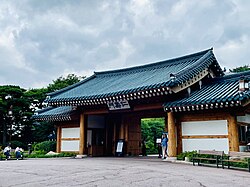
Public Transition and Restoration (2022–Present)
From May 2022 to late 2025, the grounds were converted into a museum and urban park, allowing the general public to visit the once-secretive complex. However, following political changes in December 2024, calls grew to return the presidency to its historic home. President Lee Jae Myung officially returned to Cheong Wa Dae on December 29, 2025.
Architectural Highlights and Amenities
The Main Building and Official Spaces
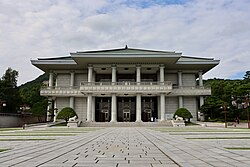
The Main Building houses the core of the presidential administration, including the Presidential Office, the Cabinet meeting room, and the Presidential Reception Room. The complex also features the Chunchugwan, which serves as the press briefing center.
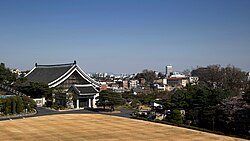
Yeongbingwan and Guest Houses
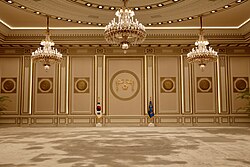
The Yeongbingwan is the primary guesthouse used for greeting state guests. Because early administrations lacked sufficient space for international receptions, they initially relied on hotels like the Chosun and Walkerhill. The current Yeongbingwan was completed in 1978 to provide a venue befitting the nation's status.
Traditional Structures and Gardens
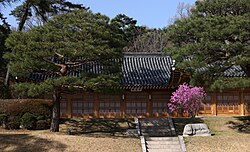
- Sangchunjae: A traditional hanok (Korean house) with a natural slate roof, used for hosting foreign guests. Its name means "a house where spring always continues."
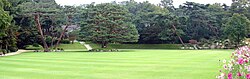
- Nokjiwon: A lush garden featuring over 120 species of trees. Originally the governor-general's garden during the colonial era, it now hosts events like Children's Day and Parents' Day.
- Mugunghwa Dongsan: A civic park created in 1993 on the site of former KCIA safe houses.
Other Notable Facilities
The Cheong Wa Dae Sarangchae is a cultural complex that was formerly the residence of the presidential chief of staff. It now provides public attractions and information centers. Additionally, the Presidential Residence serves as the private living quarters for the head of state.
Summary of Cheong Wa Dae Specifications
| Feature | Detail |
|---|---|
| Address | 1 Cheongwadae-ro, Jongno-gu, Seoul |
| Land Area | 253,505 m² |
| Floor Count | 2 floors above ground, 1 basement |
| Primary Style | Traditional Korean |
| Key Facilities | Main Building, Yeongbingwan, Sangchunjae, Nokjiwon, Chunchugwan |
Security and Protection
Security is a multi-layered operation managed by the Presidential Security Service and the Seoul Metropolitan Police Agency. The 101st Guards protect the interior, while the 202nd Guards manage the exterior. Additionally, the Capital Security Command provides outer security with approximately 2,000 troops, including armored and air defense units.
Frequently Asked Questions
What does the name "Cheong Wa Dae" mean?
The name translates to "Cyan-tile Pavilion" or "Blue House," referring to the traditional blue tiles used on the roof of the main building.
Why was the Blue House opened to the public in 2022?
President Yoon Suk Yeol relocated the presidential office and residence to the Ministry of National Defense building, allowing the grounds to be converted into a public park and museum.
What is Sangchunjae?
Sangchunjae is a traditional Korean hanok located within the grounds, used specifically for hosting foreign guests. It is built with 200-year-old Chunyangmok wood.
Who currently occupies Cheong Wa Dae?
As of December 29, 2025, President Lee Jae Myung has returned to Cheong Wa Dae, reinstating it as the official presidential office and residence.
What is the significance of Nokjiwon?
Nokjiwon is the complex's primary garden, containing over 120 tree species. It serves as a venue for various national celebrations and public events.