John Rhodes Cobb: The Life and Legacy of the Fastest Man Alive
John Rhodes Cobb was a pioneering English racing motorist whose pursuit of velocity defined the early to mid-20th century. A man of immense courage and financial means, Cobb dedicated his life to pushing the boundaries of mechanical speed, eventually becoming a three-time holder of the World Land Speed Record. His journey took him from the banked curves of Brooklands to the shimmering salt flats of Utah, and finally to the deep waters of Scotland.
Key Facts
- World Land Speed Records: Set records in 1938, 1939, and 1947.
- Top Land Speed: Reached 394.19 mph in 1947 at Bonneville Speedway.
- Brooklands Legacy: Set an unsurpassed ultimate lap record of 143.44 mph in 1935.
- Military Service: Served as a Squadron Leader in the Royal Air Force and Air Transport Auxiliary during WWII.
- Final Attempt: Died in 1952 while attempting the World Water Speed Record on Loch Ness.
Early Life and Foundations
Born on December 2, 1899, in Esher, Surrey, John Cobb grew up in the shadow of the Brooklands motor racing track. The son of Rhodes Cobb, a wealthy London furs broker, John was afforded an elite education at Eton College and Trinity Hall, Cambridge. While he successfully managed several companies within his father's trade, his true passion lay in high-speed racing and large-capacity motors.
Cobb's fascination with speed extended to the skies; in 1924, he earned a Royal Aero Club aviator's certificate, qualifying as a pilot in a Sopwith Grasshopper.
The Racing Career: From Brooklands to Bonneville
Cobb's competitive career began in 1925 with a 10-litre Fiat. By 1928, he had acquired a 10.5-litre Delage, which he used to break the flying start outer lap record at Brooklands three times between 1929 and 1933, hitting a top speed of 138.88 mph in July 1932. He also secured the British Empire Trophy that same year.
In 1933, Cobb commissioned the 24-litre Napier Railton. This machine became legendary, allowing Cobb to set the ultimate lap record at Brooklands on October 7, 1935, with an average speed of 143.44 mph (230.84 km/h)—a record that remains unsurpassed. He also won the International 500 Miles Race at Brooklands in 1935 and again in 1937.
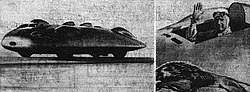
Cobb eventually transitioned from track racing to the pursuit of absolute speed on the Bonneville salt flats in Utah, USA. Driving the piston-engined, wheel-driven Railton Special, he broke the World Land Speed Record twice in the late 1930s: first on September 15, 1938, at 350 mph, and again on August 23, 1939, at 369 mph.
War Service and the "Fastest Man Alive"
The outbreak of World War II paused Cobb's record-breaking pursuits. He served as an officer in the Royal Air Force and later with the Air Transport Auxiliary from 1943 to 1945, eventually being demobilised as a Squadron Leader. He even made an uncredited appearance in the 1941 propaganda film Target for Tonight.
Returning to Bonneville in 1947, Cobb achieved his greatest land triumph. On September 16, he reached 394.19 mph (634.39 km/h), though he was clocked at 403 mph during one of his runs. This feat earned him the title "The Fastest Man Alive," and his record stood until 1963.
The Final Challenge: Loch Ness
Having conquered the land, Cobb sought to dominate the water. He commissioned the Crusader, a jet-engine powered speedboat, and chose Loch Ness in Scotland for his trials. On September 29, 1952, while piloting the Crusader at speeds exceeding 200 mph (320 km/h), the boat lost stability and disintegrated.
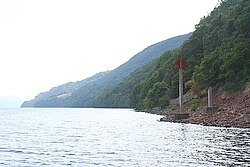
The boat's designer, Reid Railton, later determined that an undamped oscillation—a repetitive vibration that grew in intensity—caused the loss of control. Cobb was thrown 50 yards from the wreckage and killed instantly at the age of 52. His body was returned to Esher and buried at Christ Church.
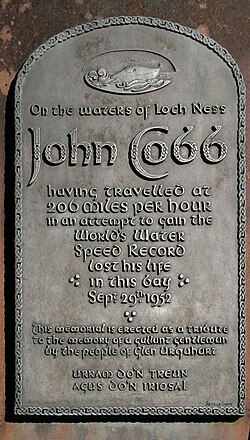
In 2002, the remains of the Crusader were discovered 200 metres (656 ft) deep on the bed of Loch Ness. The site was designated as a scheduled monument in 2005.
Summary of Achievements
| Year | Vehicle | Location | Achievement |
|---|---|---|---|
| 1932 | Delage | Brooklands | Top speed of 138.88 mph |
| 1935 | Napier Railton | Brooklands | Ultimate lap record: 143.44 mph |
| 1938 | Railton Special | Bonneville | World Land Speed Record: 350 mph |
| 1939 | Railton Special | Bonneville | World Land Speed Record: 369 mph |
| 1947 | Railton Special | Bonneville | World Land Speed Record: 394.19 mph |
Frequently Asked Questions
What was John Cobb's highest recorded land speed?
John Cobb's official World Land Speed Record was 394.19 mph, set in 1947, although he was clocked at 403 mph during one of his runs.
What caused the crash of the Crusader speedboat?
Designer Reid Railton concluded that the crash was caused by an undamped oscillation, which led to a loss of control authority and the subsequent disintegration of the boat.
Where can you find memorials to John Cobb today?
A memorial stands on the shores of Loch Ness, and a Blue plaque was unveiled in 2017 at Cranmere Primary School in Esher, which sits on the site of his former home, The Grove.
Which awards did John Cobb receive?
Cobb was awarded the British Empire Trophy (1932), the Segrave Trophy (1947), and a posthumous Queen's Commendation for Brave Conduct (1953).
When was Cobb's land speed record finally broken?
His 1947 record remained unbeaten for 16 years until it was surpassed by American driver Craig Breedlove in 1963.