Italian Cuisine: A Journey Through Tradition, Region, and Flavor
Italian cuisine is a cornerstone of Mediterranean gastronomy, blending ingredients, recipes, and techniques developed since Roman times. Renowned for its simplicity and reliance on high-quality raw materials, it has evolved from local peasant traditions into one of the most appreciated and copied culinary styles worldwide. In 2025, its global significance was formally recognized when it was listed as intangible cultural heritage by UNESCO.
The essence of Italian cooking lies in the quality of the ingredients rather than the complexity of the preparation. Many of the most beloved recipes were created by ordinary people rather than professional chefs, ensuring that the food remains accessible for home cooking while respecting the seasonality and origin of the produce.
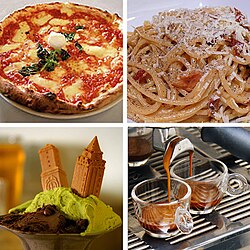
Key Facts
- UNESCO Status: Recognized as intangible cultural heritage in 2025.
- Economic Impact: Generated an estimated €251 billion in global foodservice revenue in 2024.
- Core Philosophy: Prioritizes simplicity, seasonality, and the quality of raw materials.
- Global Influence: Significant impact on cuisines in the United States (Italian-American) and East Africa (Italian Eritrean).
- Key Evolutions: The colonization of the Americas introduced essential staples like tomatoes, potatoes, maize, and capsicums.
The Evolution of Italian Gastronomy

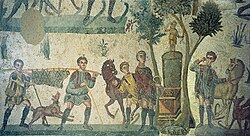
The history of Italian food is a story of adaptation and integration. From the banquets of antiquity to the structured kitchens of the Middle Ages, the cuisine has always reflected the socio-political landscape of the peninsula.
During the early modern era, the introduction of New World crops fundamentally altered the Italian palate. The tomato, now synonymous with Italian food, was a later addition that eventually became a staple in dishes like the Pizza Margherita and various pasta sauces.
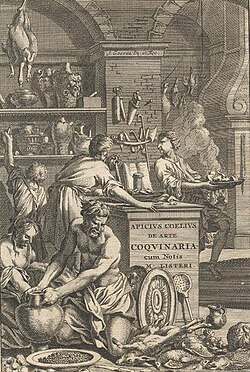
From Medieval Kitchens to Papal Chefs
The transition from rustic medieval cooking to more refined styles is evident in the records of the era. Figures like Bartolomeo Scappi, the personal chef to Pope Pius V, helped document and elevate the art of cooking, bridging the gap between domestic tradition and professional gastronomy.


Foundational Ingredients and Staples
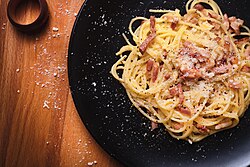
Italian cuisine is built upon a few primary pillars: pasta, pizza, meats, and cheeses. The variety within these categories is immense, often dictated by the geography of the region.
Pasta and Pizza
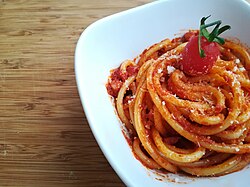
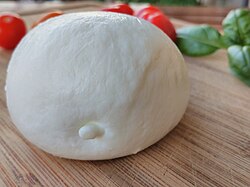
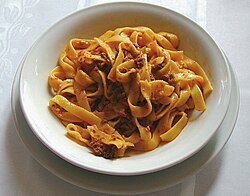
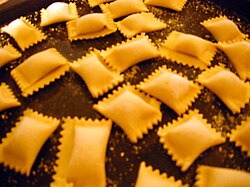
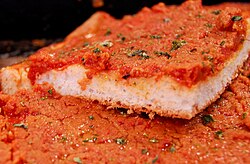
Pasta is used in various forms, including pastasciutta (pasta cooked and served with a sauce). While dry pasta is common, fresh pasta is a staple in many households. Pizza, particularly the Neapolitan style, remains a global icon, with the Margherita variety reflecting the colors of the Italian flag through tomato, mozzarella, and basil.
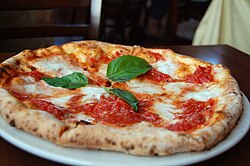
![The ingredients of pizza Margherita—tomatoes (red), mozzarella (white), and basil (green)—are said to be inspired by the Italian flag.[48]](/images/a4/d3/a4d364c0cad910b26b7c0fb13fbcf81b68c563b76dafe30c7585e5e1c14ef002.jpg)
Meats and Salumi
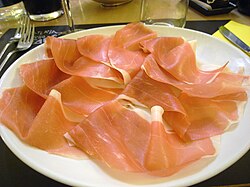
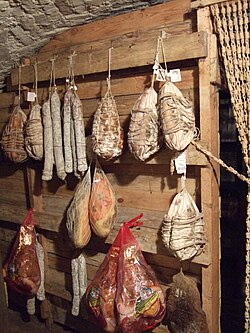
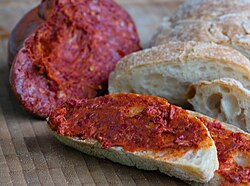
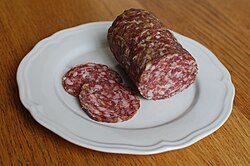
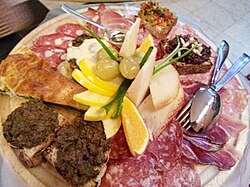
Cured meats, or salumi, are a vital part of the Italian diet. From the renowned Prosciutto di Parma to the spicy 'Nduja of Calabria, these products showcase the art of preservation and regional seasoning.
Regional Diversity
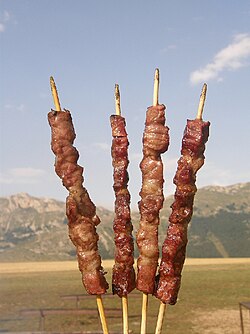
Italy's culinary landscape is highly fragmented, with each region offering distinct flavors based on local agriculture and climate.
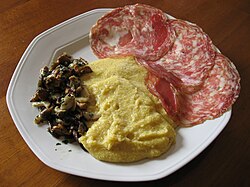
- North: Characterized by the use of butter, rice (risotto), and corn (polenta). South Tyrol shows strong Alpine and Austrian influences.
- Central: Known for hearty meats like Bistecca alla fiorentina in Tuscany and the use of olive oil.
- South: Heavily reliant on olive oil, durum wheat, and seafood, with Sicily showcasing North African influences.
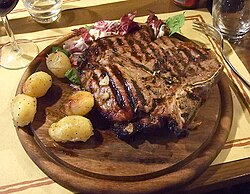
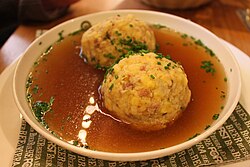
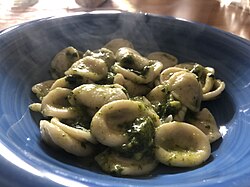
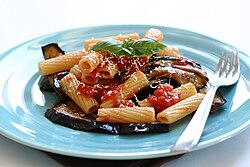
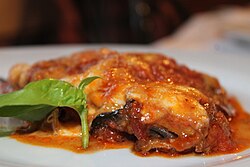
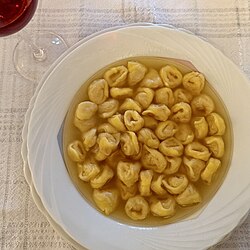
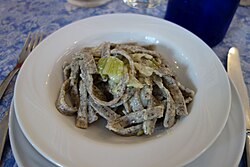
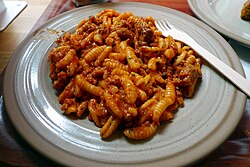
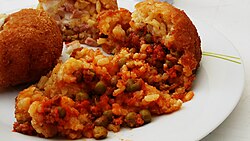
Regional specialties range from the Orecchiette of Apulia to the Pizzoccheri of the north and the Pasta alla Norma of Sicily.
The Italian Dining Experience
Dining in Italy is a structured ritual. A full traditional meal is divided into several stages, ensuring a balanced progression of flavors.
| Meal Stage | Description |
|---|---|
| Aperitivo | Pre-dinner drink and light snack to stimulate the appetite. |
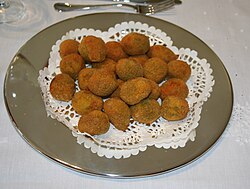
| Antipasto | Starter course, often consisting of cured meats, olives, and cheeses. |
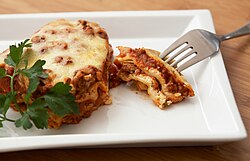
| Primo | First course, typically a carbohydrate-based dish like pasta, risotto, or soup. |
| Secondo | Second course, featuring a protein such as meat or fish. |
| Contorno | Side dish, usually vegetables or a salad, served with the secondo. |
| Formaggio e frutta | A course of cheese and fresh fruit. |
| Dolce | Dessert, such as Tiramisu or Cannoli. |
| Caffè | A strong espresso to conclude the meal. |
| Digestivo | An after-dinner liqueur to aid digestion. |

Food Establishments
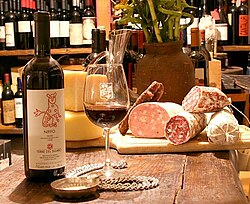
Italy offers a diverse array of dining venues. While a Ristorante provides a full-service experience, a Trattoria is typically more informal. Other specialized spots include the Enoteca (wine shop), Gelateria (ice cream shop), and Pasticceria (pastry shop).
![The oldest restaurant in Italy, Antica trattoria Bagutto in Milan, dates to at least 1284.[40]](/images/5e/e4/5ee4550d634ca07aeaf2c174187104c14602e6aa2bc4765afe082280f87bb8d9.jpg)
Beverages and Desserts
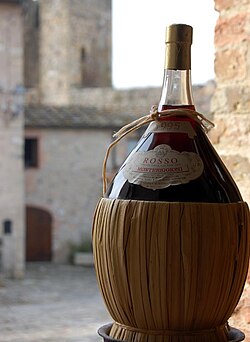
Italian drinks are as iconic as the food. Espresso—coffee brewed by forcing boiling water under pressure through ground beans—is the quintessential Italian beverage. In terms of alcohol, Italy is a leading producer of wine, with varieties like Chianti and Prosecco being world-famous.
![Espresso is a coffee brewed by forcing a small amount of nearly boiling water under pressure through finely ground coffee beans. The term espresso comes from the Italian esprimere, which means 'to express', and refers to the process by which hot water is forced under pressure through ground coffee.[224]](/images/0d/77/0d77ec224638d6b247e1593123e68e300685da4fd65ed9db071f8fb8e4775586.jpg)

Desserts often balance richness with freshness. Tiramisu, Cannoli, and Sfogliatelle are staples, while Gelato provides a refreshing end to any meal.

Global Influence and Diaspora
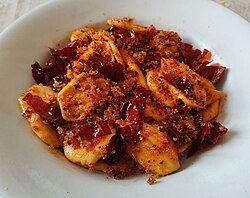
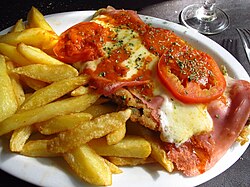
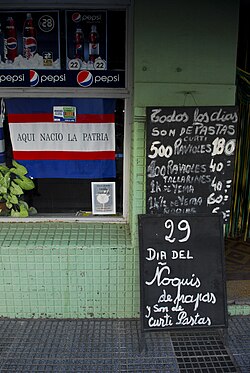
The Italian diaspora has spread these culinary traditions across the globe. In South America, dishes like the Milanesa a la napolitana in Argentina or the tradition of eating Gnocchi on the 29th in Uruguay demonstrate how Italian roots have merged with local cultures.
Frequently Asked Questions
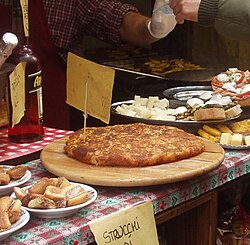
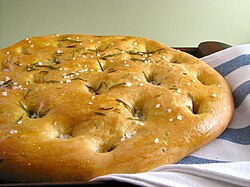
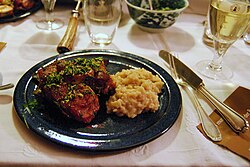
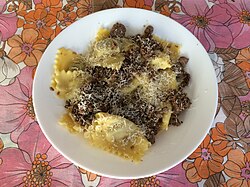




![Bustrengo, a traditional Christmas dish in the Republic of San Marino[259]](/images/85/27/85270c31e05a8a4abffb455418cfa3564e1fd0c64006ea2983daf4db35b70ab4.jpg)
What makes Italian cuisine unique?
Its uniqueness stems from a commitment to simplicity and the use of high-quality, seasonal, and regional ingredients, rather than complex cooking techniques.
How did the Americas influence Italian food?
The colonization of the Americas introduced essential ingredients that are now central to Italian cooking, including tomatoes, potatoes, maize, and capsicums.
What is the difference between a Trattoria and a Ristorante?
Generally, a Ristorante is a more formal establishment with a full menu, while a Trattoria is a more casual, family-style eatery often focusing on regional specialties.
What is the traditional order of an Italian meal?
A traditional meal typically follows a sequence: Aperitivo, Antipasto, Primo (pasta/rice), Secondo (meat/fish) with a Contorno (vegetables), followed by cheese/fruit, Dolce, Caffè, and finally a Digestivo.
Why is Italian cuisine considered a UNESCO Intangible Cultural Heritage?
It was recognized in 2025 because it represents a profound cultural identity, blending sustainability, biocultural diversity, and centuries of social tradition.