Hurling: The Ancient and High-Speed Sport of Ireland
Hurling is more than just a game; it is a cornerstone of Irish identity and a sport of breathtaking speed and skill. With pre-medieval origins, it is one of the oldest field games in the world. Today, it is administered by the Gaelic Athletic Association (GAA) and is recognized by UNESCO as an element of intangible cultural heritage. Its intensity is legendary, with the All-Ireland Senior Hurling Championship final frequently cited as one of the most spectacular sporting events to witness live.
From its deep roots in Irish history to its modern global reach, hurling combines physical contact, strategic precision, and incredible athleticism. A 2024 survey highlighted its enduring popularity, finding that 25% of Irish people consider it their favorite sport.
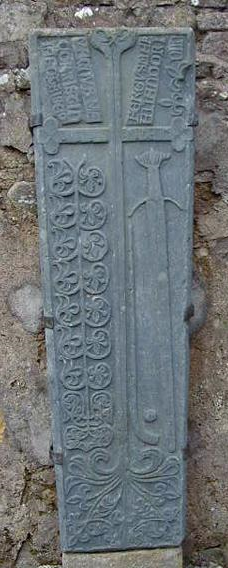
Key Facts
- Governing Body: Gaelic Athletic Association (GAA).
- Equipment: A hurley (wooden stick) and a sliotar (leather-covered ball).
- Speed: A powerful strike can propel the ball over 150 km/h (93 mph).
- Distance: The ball can travel over 110 metres (361 ft) in a single hit.
- Safety: Helmets have been compulsory for all players since January 1, 2010.
- Female Variant: The women's version of the sport is known as Camogie.
Equipment and Technical Specifications
The game relies on two primary pieces of equipment. The hurley (or hurl) is a wooden stick typically measuring between 24 and 36 inches (61 to 91 cm) in length. The ball, called a sliotar, features a cork center and a leather cover, weighing between 110 and 120 g with a diameter of 69 to 72 mm.
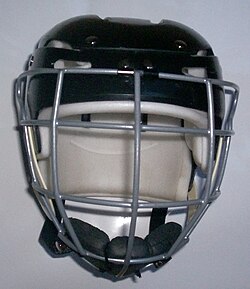
Safety is paramount in the modern game. A standard hurling helmet consists of a rigid plastic shell with foam cushioning that protects the forehead, temples, crown, and nape of the neck, complemented by a wire grille faceguard.
The Playing Field and Match Structure
Hurling is played on a rectangular grass pitch that is larger than a rugby pitch, measuring 130–145 metres in length and 80–90 metres in width. At each end stand H-shaped goalposts. These consist of two posts (6–7 metres high) connected by a crossbar 2.5 metres above the ground, with a net attached below the bar.
The pitch is shared with Gaelic football to allow for dual usage. Matches vary in length based on the level of competition: senior inter-county matches last 70 minutes (two 35-minute halves), while most other matches last 60 minutes. Referees have the discretion to add stoppage time, and water breaks are implemented after the first 15 minutes of each half.
Rules and Gameplay
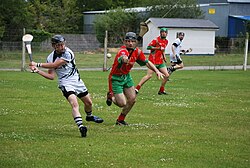
A hurling team consists of 15 players on the field. The game is fast-paced and allows for significant physical contact, including the shoulder barge, where a player shoves an opponent's shoulder to gain advantage.
Technical Fouls
To maintain the integrity of the game, several "fouling the ball" rules are enforced. Players cannot pick the ball directly off the ground; instead, it must be flicked up using the hurley. Additionally, players cannot throw the ball (it must be "hand-passed" by slapping it with an open hand) or take more than four steps while holding the ball in their hand.
Scoring System
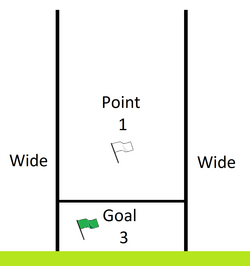
Hurling uses a unique dual-scoring system. If the ball is hit over the crossbar, it counts as one point (signaled by a white flag). If the ball goes under the crossbar into the net, it is a goal, which is worth three points (signaled by a green flag).
Scores are recorded as {goals}–{points}. For example, a score of 1–13 represents one goal and thirteen points, totaling 16 points. In verbal shorthand, this is read as "one thirteen."
Restarting Play and Penalties
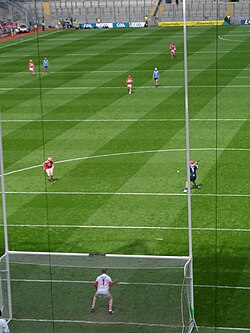
Matches begin with the referee throwing the sliotar between four midfielders at the halfway line. If a defender commits a foul inside the large rectangle (the square), the opposing team is awarded a penalty. This is taken from the ground behind the 20-metre line, with only the goalkeeper defending the goal.
Global Reach and History
While deeply rooted in Ireland, hurling has spread globally via the Irish diaspora. The GAA was founded in 1884 in Thurles, County Tipperary, which helped codify the rules and reverse the sport's decline. Since then, the game has established a presence in several continents:
- North America: References date back to the 1780s. The first GAA-rule match outside Ireland took place on Boston Common in 1886. Today, the Milwaukee Hurling Club is the largest club outside Ireland.
- Argentina: Promoted by William Bulfin around 1900, leading to the formation of the Hurling Club in Buenos Aires.
- Australia: Matches were recorded as early as 1844 in Melbourne.
- South Africa: Played by soldiers during the Anglo-Boer War and later by immigrants in KwaZulu-Natal and Johannesburg.
- Great Britain: Administered by British GAA, with London notably winning the All-Ireland Senior Hurling Championship in 1901.
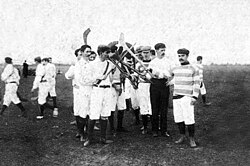
The sport even appeared on the world stage as a demonstration sport at the 1904 Summer Olympics in St. Louis, where a match between two American clubs took place.
Hurling Summary Table
| Feature | Detail |
|---|---|
| Team Size | 15 players (plus 11 substitutes) |
| Ball (Sliotar) | Cork center, leather cover, 110–120g |
| Stick (Hurley) | Ash wood, 24–36 inches long |
| Goal Value | 3 points |
| Point Value | 1 point |
| Pitch Size | 130–145m x 80–90m |
| Governing Body | Gaelic Athletic Association (GAA) |
Frequently Asked Questions
What is the difference between a goal and a point in hurling?
A point is scored when the ball goes over the crossbar, earning one point. A goal is scored when the ball goes under the crossbar into the net, earning three points.
Can a player pick the ball up from the ground?
No, picking the ball directly off the ground is a technical foul. Players must use their hurley to flick the ball up into their hand.
Is hurling played by women?
Yes, the female variant of the sport is called Camogie, which shares many similarities with hurling.
Why are helmets mandatory in hurling?
Due to the high speed of the sliotar and the physical nature of the contact, helmets became compulsory for all players at all levels on January 1, 2010, to reduce injury risk.
How is a hurling score read aloud?
Scores are read by stating the goals and then the points. For example, a score of 1–13 is read as "one thirteen," omitting the words "goals" and "points."