Understanding the International Monetary Fund: History, Governance, and Global Impact
The International Monetary Fund (IMF) stands as one of the world's most influential international financial institutions. Headquartered in Washington, D.C., the IMF plays a central role in the global economy by fostering monetary cooperation, securing financial stability, and facilitating international trade. With a membership spanning 191 countries, its reach is truly worldwide.
The Origins of the IMF
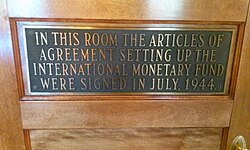
The foundation of the IMF dates back to July 1944 during the historic Bretton Woods Conference. It was during this period that the framework for the modern international monetary system was established. The institution was officially formed to help prevent the kind of economic instability that had plagued the early 20th century.

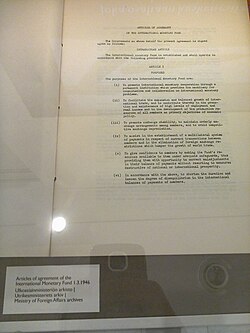
Following the conference, the Articles of Agreement—the fundamental rules governing the organization—were finalized, leading to the official commencement of its operations. Today, the IMF operates as a specialized agency of the United Nations, working alongside other global entities to maintain economic order.
Key Facts
- Founded: 22 July 1944
- Headquarters: Washington, D.C., USA
- Membership: 191 countries (including 190 UN member states and Kosovo)
- Current Managing Director: Kristalina Georgieva
- 2023 Budget: $1,295 million
- Total Staff: Approximately 3,100
Core Functions and Operations
The IMF operates through three primary pillars designed to maintain the health of the global financial ecosystem:
1. Surveillance of the Global Economy
The IMF monitors the economic and financial policies of its member countries. This surveillance helps identify potential risks to stability and provides policy advice to prevent economic crises before they occur.
2. Conditionality of Loans
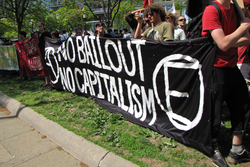
When countries face financial distress, the IMF provides loans to help them stabilize their economies. However, these loans often come with conditionality—specific policy requirements that the borrowing nation must implement to ensure it can repay the debt and restore growth.
3. Structural Adjustment
Structural adjustment refers to the long-term economic reforms required to improve a country's economic efficiency. Common conditions for structural adjustment may include:
- Trade liberalization (lifting import and export restrictions)
- Devaluation of currencies
- Balancing national budgets and reducing overspending
- Privatization of state-owned enterprises
- Removing price controls and state subsidies
- Improving governance and combating corruption
Governance and Voting Power
The IMF is governed by its members through a complex structure of voting power. Unlike many international organizations where each country has one vote, the IMF uses a quota system. A country's quota—and consequently its voting power—is determined by its relative position in the world economy.
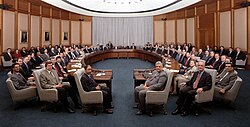
This system means that larger economies hold more influence over the organization's decisions. The Board of Governors serves as the main organ, while the Executive Board manages day-to-day operations. The Executive Board is composed of directors who represent various constituencies (groups of countries).
Top 5 IMF Members by Quota and Voting Power
| Rank | Country | Quota (Millions of XDR) | Total Votes | % of Total Votes |
|---|---|---|---|---|
| 1 | United States | 82,994.2 | 831,394 | 16.49% |
| 2 | Japan | 30,820.5 | 309,657 | 6.14% |
| 3 | China | 30,482.9 | 306,281 | 6.08% |
| 4 | Germany | 26,634.4 | 267,796 | 5.31% |
| 5 | France | 20,155.1 | 203,003 | 4.03% |
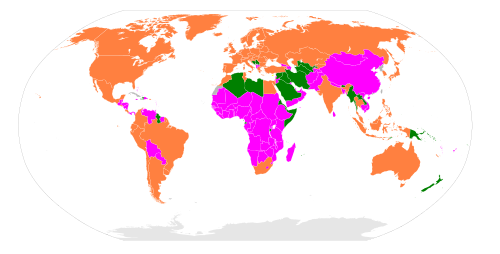
![IMF member states IMF member states not accepting the obligations of Article VIII, Sections 2, 3, and 4[60] Former IMF states/non-participants/no data available](/images/82/4f/824f10064f9adf3f6df8d3b1e8313588dab760292d4dac622fe1d3621ea0de0f.webp)
Leadership and Data Systems
The IMF is led by a Managing Director, who oversees the organization's strategic direction. The current Managing Director is Kristalina Georgieva. Supporting the leadership are the First Deputy Managing Director and the Chief Economist, who provide technical and economic expertise.
To ensure transparency, the IMF utilizes various Data Dissemination Systems. These systems allow member states and non-member entities (such as the European Central Bank or the Hong Kong authorities) to share and access vital economic statistics.
Frequently Asked Questions
What is the difference between the IMF and the World Bank?
While both were created at the Bretton Woods Conference, they have different focuses. The IMF focuses on global monetary cooperation and financial stability, whereas the World Bank primarily focuses on long-term economic development and poverty reduction.
How is voting power determined in the IMF?
Voting power is determined by a quota system. Each member is assigned a quota based on its relative size in the global economy, which dictates how many votes it holds in the organization.
What is "conditionality" in IMF loans?
Conditionality refers to the specific economic policies and structural reforms that a country must agree to implement in exchange for receiving financial assistance from the IMF.
Who leads the IMF?
The IMF is led by a Managing Director. The current Managing Director is Kristalina Georgieva.
Does every country have an equal say in IMF decisions?
No. Because the IMF uses a quota-based voting system, countries with larger economies and higher quotas hold more voting power than smaller economies.