OECD: Driving Global Economic Expansion and World Trade
The Organisation for Economic Co-operation and Development (OECD) stands as a vital intergovernmental organisation dedicated to fostering sound economic growth and expanding international trade. By bringing together member nations, the OECD facilitates high-level cooperation to address complex global issues and promote prosperity in both member and non-member countries.
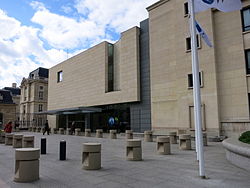
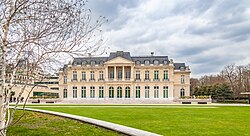
Headquartered at the historic Château de la Muette in Paris, France, the organisation serves as a central hub for economic research, policy analysis, and multilateral surveillance. Through its extensive network of experts and data, the OECD provides the foundational insights necessary for navigating the modern global economy.
Key Facts
- Established: Originally founded as the OEEC on 16 April 1948; transitioned to the OECD on 30 September 1961.
- Membership: Comprises 38 member countries across various continents.
- Headquarters: Château de la Muette, Paris, France.
- Leadership: Currently led by Secretary-General Mathias Cormann.
- Budget: Approximately €903.02 million (US$ 1.07 billion) for the 2023 period.
- Official Languages: English and French.
A History of Economic Cooperation
The roots of the OECD trace back to the Organisation for European Economic Co-operation (OEEC), established in 1948. Following a significant transition in 1961, the organisation evolved into its current form, expanding its scope beyond Europe to include a diverse group of global economies. Over the decades, the OECD has undergone continuous enlargement, including significant expansion into Central Europe and the recent inclusion of countries like Costa Rica.
Core Objectives and Mandates
The fundamental mission of the OECD is defined by its Convention. The primary aims are to:
- Contribute to sound economic expansion in both member and non-member countries.
- Contribute to the expansion of world trade.
To achieve these goals, the organisation engages in multilateral surveillance—a process of monitoring economic trends and policies across borders—and plays a critical role in international taxation frameworks, including the development of Pillar 1 and Pillar 2 standards for multinational corporations.
Organizational Structure and Expertise
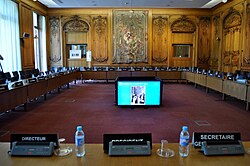
The OECD operates through a sophisticated structure designed to provide specialized expertise across numerous sectors. This structure is comprised of three main elements: the Secretariat, various Committees, and high-level Meetings.
The Secretariat and Specialized Directorates
The Secretariat is the engine of the organisation, organized into various directorates that focus on specific areas of global importance. These include:
- Economics Department: Providing core economic analysis.
- Centre for Tax Policy and Administration: Managing international tax standards.
- Directorate for Education and Skills: Focusing on human capital development.
- Environment Directorate: Addressing ecological and sustainability challenges.
- Trade and Agriculture Directorate: Supporting global commerce and food security.
- Directorate for Science, Technology, and Innovation: Driving technological advancement.
Specialized Bodies and Committees
Beyond its core directorates, the OECD hosts several specialized bodies that address niche but critical global sectors. Notable examples include the International Energy Agency, the Nuclear Energy Agency, and the International Transport Forum. These bodies allow for focused collaboration on energy security, nuclear safety, and global logistics.
Data, Statistics, and Publications
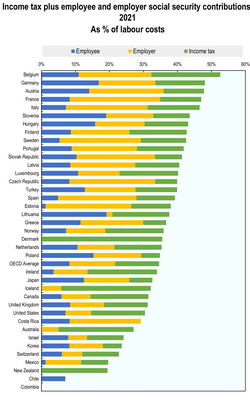
One of the OECD's most significant contributions to the global community is its vast repository of data. The organisation provides high-quality statistics that are essential for policymakers, researchers, and businesses worldwide. These resources are available through several channels:
- OECD Data Portal: Featuring interactive charts for easy visualization.
- iLibrary: Providing interactive databases alongside comparative country tables.
- OECD Statistics Portal: Offering both static files and dynamic database views.
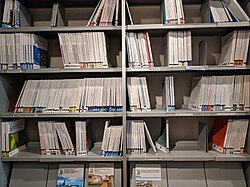
In addition to raw data, the OECD publishes extensive reference works, papers, and magazines to disseminate its findings and policy recommendations. These publications help shape the global discourse on economic and social issues.
Summary of OECD Overview
| Category | Details |
|---|---|
| Type | Intergovernmental organisation |
| Member Countries | 38 (including USA, UK, Japan, Germany, etc.) |
| Current Secretary-General | Mathias Cormann |
| Primary Languages | English, French |
| Key Focus Areas | Economic growth, trade, taxation, education, environment |
Frequently Asked Questions
What is the main purpose of the OECD?
The OECD aims to promote sound economic expansion and the growth of world trade by facilitating cooperation between member nations and providing expert policy analysis.
How many countries are members of the OECD?
As of the most recent records, there are 38 member countries, including nations such as Australia, Canada, France, Japan, and the United States.
Where is the OECD located?
The headquarters of the OECD is located at the Château de la Muette in Paris, France.
What kind of data does the OECD provide?
The OECD provides a wide range of economic, social, and environmental statistics through interactive charts, databases, and comparative country tables via its Data Portal and iLibrary.
Who is the current Secretary-General?
The current Secretary-General of the OECD is Mathias Cormann, who took office on 1 June 2021.