Incipits: The History of Naming Texts by Their Opening Words
Before the standardization of modern titles and table of contents, scholars and scribes relied on a practical method for identifying documents: the incipit. Derived from the Latin for "it begins," an incipit is the first few words of a text used as its identifying title. This system allowed users to locate specific works in archives or manuscripts where formal titles were either absent or inconsistent.
Key Facts
- Definition: An incipit is a title derived from the opening words of a document.
- Ancient Use: Sumerian scribes used incipits on clay tablets to catalog archives.
- Religious Tradition: This method is prevalent in the Hebrew Bible, the Quran, and the Vedas.
- Rabbinic Terminology: In Jewish tradition, this is known as dibur ha-matḥil ("beginning phrase").
- Formal Documents: Papal bulls and encyclicals are traditionally referenced by their Latin incipits.
Ancient Origins and Early Archives
Sumerian Clay Tablets
In the ancient archives of Sumer, official scribes maintained catalogs of documents using special tablets. Because clay tablets had limited width and resolution, long entries were impossible. Instead, scribes recorded the incipits of the collections to identify the contents. For example, one such catalog entry reads: "Honored and noble warrior Where are the sheep Where are the wild oxen And with you I did not In our city In former days."
Incipits in Sacred Texts
The Hebrew Bible and Rabbinic Tradition
The Hebrew Bible frequently employs incipits for naming books. Genesis is called Bereshit ("In the beginning..."), and Lamentations is known as Eykha ("How"). A prominent example is the Shema (or Shema Yisrael), named after the first words of the proclamation of monotheism found in Deuteronomy 6:4: "Hear O Israel..." Similarly, the Lord's Prayer is often referred to as the "Our Father," based on the opening words of the King James Version.
Within the Torah, all Parshiyot (weekly portions) are named using incipits from the first two verses. This naming convention extends to the books themselves, which share the name of their first Parashah.
In the Talmud, the chapters of the Gemara are identified by their first words. For instance, the first chapter of Mesekhet Berachot ("Benedictions") is titled Me-ematai ("From when"), a word that appears at the head of every page within that chapter.
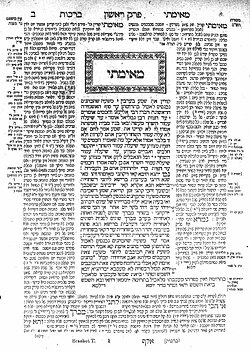
In rabbinic usage, the term dibur ha-matḥil ("beginning phrase") refers to section headings in monographs or commentaries that quote or paraphrase a classic passage. This practice is also seen in the ma'amarim (mystical and exegetical discourses) of the Chabad-Lubavitch rebbes, which derive their titles almost exclusively from the dibur ha-matḥil of the first chapter.
The New Testament and the Quran
The Book of Revelation is often called the Apocalypse, based on the first word of the original Greek text, apokalypsis ("revelation"). This term has since become synonymous with the eschaton, or the End of Days.
In Classical Arabic, many surahs of the Quran are named after their incipits. Examples include Ta-Ha (#20), Ya-Seen (#36), Abasa ("He frowned", #80), and Alam Nashrah ("Bared We not", #94). During the lifetime of Muhammad, surahs were frequently referred to by these opening words rather than formal titles.
Medieval and Formal Applications
European Manuscripts
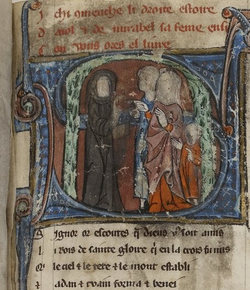
In medieval European manuscripts, incipits were often written in red ink. They frequently preceded a miniature (a small illustration) or an illuminated or historiated letter (a decorative initial letter containing a scene).
Papal and Vedic Texts
The tradition of using incipits persists in formal ecclesiastical documents. Papal bulls and encyclicals—official documents issued by the Pope—are traditionally referenced by their Latin incipits. Similarly, certain mantras and suktas (hymns) from the Vedas in Hindu tradition follow this naming convention.
Summary of Incipit Usage Across Cultures
| Culture/Tradition | Example Name | Meaning/Source |
|---|---|---|
| Hebrew Bible | Bereshit | "In the beginning" (Genesis) |
| Quran | Abasa | "He frowned" (Surah 80) |
| Greek (NT) | Apocalypse | apokalypsis ("revelation") |
| Talmud | Me-ematai | "From when" (Berachot, Ch. 1) |
| Catholic Church | Papal Bulls | Latin opening phrases |
Frequently Asked Questions
What is an incipit?
An incipit is the first few words of a text used as its title or identifier, a common practice in ancient and medieval manuscripts before standardized titles were used.
What is the difference between an incipit and a dibur ha-matḥil?
While both refer to opening words, dibur ha-matḥil is the specific Hebrew term for a "beginning phrase" used in rabbinic literature to mark section headings in commentaries or monographs.
How were incipits used in Sumerian archives?
Sumerian scribes created separate catalog tablets containing the incipits of other tablets in the archive, allowing them to identify documents despite the limited space available on clay.
Are incipits still used today?
Yes, they are still used traditionally to reference papal bulls and encyclicals, and they remain the primary way many religious texts, such as the Parshiyot in the Torah, are named.
How were incipits visually distinguished in medieval manuscripts?
They were generally written in red ink and often appeared alongside illuminated letters or miniatures.