Hebrew Bible: History, Structure, and the Tanakh
The Hebrew Bible, commonly referred to in Jewish tradition as the Tanakh, serves as the foundational sacred text of Judaism. Spanning a vast chronological range from the 8th century BCE to the 1st century BCE, these writings provide the religious, legal, and historical framework for the Jewish faith. While often used interchangeably with the term "Old Testament" in Christian contexts, the Hebrew Bible has its own distinct structure and history of transmission.
Central to the modern understanding of these texts is the Masoretic Text, a medieval version compiled by Jewish scribes and scholars between the 7th and 10th centuries CE. While the Masoretic Text is the authoritative version in Rabbinic Judaism today, it is one of several historical versions, including the Greek Septuagint (produced by Hellenized Jews in Alexandria) and the Samaritan Pentateuch, both of which differ significantly from the medieval Masoretic tradition.

Key Facts
- Composition: Consists of 24 books in the authoritative Rabbinic tradition.
- Languages: Written primarily in Biblical Hebrew, with small sections of Biblical Aramaic (found in Daniel, Ezra, and Jeremiah 10:11).
- Structure: Divided into three main sections: Torah, Nevi'im, and Ketuvim.
- Vocabulary: Contains 8,679 distinct words, including 1,480 hapax legomena (words that appear only once).
- Timeline: Developed during the Second Temple Period as divine origin was determined for various texts.
The Structure of the Tanakh
The term "Tanakh" is an acronym derived from the three divisions of the Hebrew Bible: Torah, Nevi'im, and Ketuvim.
Torah (The Law)
The Torah consists of the first five books, often called the Pentateuch. While tradition ascribes authorship to Moses, scholars note that Hebrew writing had not yet developed during the 2nd millennium BCE when Moses would have lived. The texts are dated to the 1st millennium BCE, though they likely incorporate extensive oral traditions of songs and stories.
- Genesis (Bərē'šīṯ)
- Exodus (Šəmōṯ)
- Leviticus (Vayyīqrā')
- Numbers (Bəmīḏbar)
- Deuteronomy (Dəvārīm)
Nevi'im (The Prophets)
The Prophets are divided into the Former Prophets (historical narratives) and the Latter Prophets (oracular writings).
- Former Prophets: Joshua, Judges, Samuel, and Kings.
- Latter Prophets: Isaiah, Jeremiah, and Ezekiel.
- The Twelve: A single book comprising the Minor Prophets (Hosea, Joel, Amos, Obadiah, Jonah, Micah, Nahum, Habakkuk, Zephaniah, Haggai, Zechariah, and Malachi).
Ketuvim (The Writings)
The Ketuvim contains a diverse array of lyrical, wisdom, and historical literature.
- Lyrical Books: Psalms, Proverbs, and Job.
- Five Scrolls: Song of Songs, Ruth, Lamentations, Ecclesiastes, and Esther.
- Other Books: Daniel, Ezra-Nehemiah, and Chronicles.
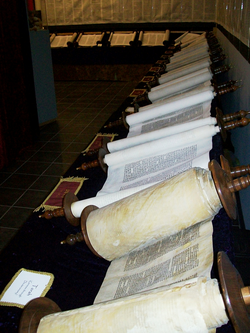
Historical Development and Scholarship
The development of the Hebrew Bible is closely tied to the emergence of ancient Israel. Modern scholars, such as Israel Finkelstein, suggest that the ancient Israelites originated from within Canaan, as evidenced by the fact that Hebrew was a Canaanite dialect. Archaeological data indicates that Israel began as loosely organized tribal villages between 1250 and 1000 BCE.
Certain traditions, such as the Jacob cycle in Genesis, are estimated to have been written down in the 8th century BCE, likely at the religious center of Bethel. This predates the centralization of worship in Jerusalem pushed by King Josiah (r. 640–609 BCE). While tradition credits King David with 73 Psalms and King Solomon with Proverbs, Ecclesiastes, and the Song of Solomon, some historians view the descriptions of their "golden age" as retrospective extrapolations of the conditions under King Jeroboam II (r. 781–742 BCE).
Summary of the Hebrew Bible
| Section | Common Name | Primary Content | Key Books |
|---|---|---|---|
| Torah | The Law | Origins, Law, and Covenant | Genesis, Exodus, Deuteronomy |
| Nevi'im | The Prophets | History and Prophecy | Isaiah, Jeremiah, Joshua |
| Ketuvim | The Writings | Poetry, Wisdom, and History | Psalms, Proverbs, Daniel |
Frequently Asked Questions
What is the difference between the Hebrew Bible and the Masoretic Text?
The Hebrew Bible (or Tanakh) refers to the overall collection of sacred texts, while the Masoretic Text is a specific medieval version of those texts compiled between the 7th and 10th centuries CE, which is now the authoritative version in Rabbinic Judaism.
How many books are in the Hebrew Bible?
The traditional Rabbinic count is 24 books. However, this number is somewhat arbitrary; for example, the twelve minor prophets are counted as a single book. Other early non-rabbinic sources have cited 22 books.
Is the entire Hebrew Bible written in Hebrew?
Almost all of it is written in Biblical Hebrew, but there are specific passages in Biblical Aramaic, specifically in the books of Daniel and Ezra, and one verse in Jeremiah (10:11).
What are hapax legomena in the context of the Bible?
Hapax legomena are words or expressions that occur only once within the entire text. In the Hebrew Bible, there are 1,480 such instances out of 8,679 distinct words.
Who is traditionally credited with writing the Torah?
Religious tradition ascribes the authorship of the Torah to Moses, though the text itself only credits him with writing specific sections.