Imperial Brazilian Navy: The Maritime Power of the Empire
The Imperial Brazilian Navy (Portuguese: Armada Imperial Brasileira) served as the primary maritime defense and power projection force for the Empire of Brazil from 1822 to 1889. Established during the nation's break from the United Kingdom of Portugal, Brazil, and the Algarves, the navy evolved from a collection of inherited Portuguese assets into one of the most formidable naval forces in the world by the late 19th century.
The navy played a pivotal role in securing Brazilian sovereignty, managing regional conflicts in the Rio de la Plata basin, and maintaining the territorial integrity of the constitutional monarchy.
Key Facts
- Active Period: 1822 to November 15, 1889.
- Peak Global Standing: Ranked as the 5th or 6th most powerful navy in the world by 1889.
- Command Structure: Subordinate to the Emperor as commander-in-chief, overseen by a civilian Minister of the Navy.
- Major Conflicts: War of Independence, Cisplatine War, Platine War, Uruguayan War, and the Paraguayan War.
- Technological Peak: Deployment of state-of-the-art ironclad battleships like the Riachuelo and Aquidabã.
Creation and Early Development
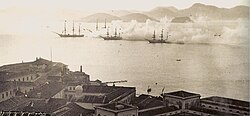
The Imperial Navy was born out of necessity in 1822 to expel Portuguese troops following Brazil's declaration of independence. Its foundation was laid in 1808 when the Portuguese monarchy moved to Brazil during the Napoleonic Wars, bringing a significant portion of the Portuguese Navy's ships, personnel, and infrastructure.
The new navy incorporated existing institutions, including the Naval Hospital, the Academy of Navy Guards, and the Navy Arsenal (shipyard). Initially, the crews were a diverse mix of Brazilians, Portuguese loyalists to the independence cause, and foreign mercenaries. Captain Luís da Cunha Moreira was appointed as the first Minister of the Navy on October 28, 1822.
The War of Independence
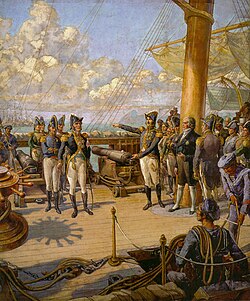
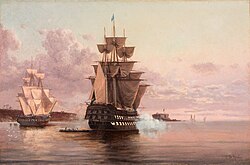
Under the leadership of British officer Thomas Cochrane, the navy initially struggled with sabotage from Portuguese-born crew members. However, by 1823, the force was reorganized, replacing unreliable elements with native Brazilians, freed slaves, pardoned prisoners, and experienced British and American mercenaries. This reformed fleet successfully cleared the coast of Portuguese forces and pursued remaining enemy ships across the Atlantic toward Portugal.
Organizational Structure
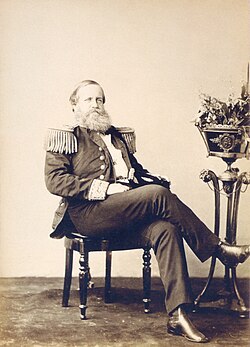
According to the Constitution, the Brazilian Armed Forces were subordinate to the Emperor. While the Emperor held the title of commander-in-chief, daily oversight was typically managed by the prime minister and the Minister of the Navy. Following the British parliamentary and Anglo-American models, the military maintained strict obedience to the civilian government and remained distanced from political decision-making.
Naval Expansion and Regional Conflicts
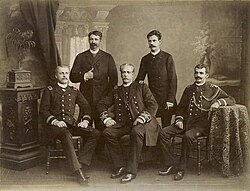
Throughout the 19th century, the navy underwent several phases of expansion to meet the challenges of regional instability in South America.
The First Reign and Cisplatine War (1822–1831)
The fleet grew rapidly from 38 ships in 1822 to 96 warships by 1825. During the Cisplatine War, the navy blockaded the Río de la Plata estuary to isolate rebels and the United Provinces of the Río de la Plata (modern-day Argentina). By the time Emperor Pedro I abdicated in 1831, he left behind a powerful force of at least 80 warships, including ten frigates and two ships of the line.
The Regency and Platine Wars (1831–1864)
During the Regency period and the early years of Pedro II's reign, the navy continued to modernize. In the Platine War, a force of 17 warships commanded by John Pascoe Grenfell successfully breached the Argentine defenses at Tonelero Pass. By 1851, Brazil had consolidated its position as the dominant naval power in South America, ensuring hegemony over the Rio de la Plata region.
The Paraguayan War: A Turning Point
The Paraguayan War (1864–1870) represented the most significant test for the Imperial Navy. The fleet's primary strategic objective was to block Paraguayan access to the Plata basin, cutting off the nation from external supplies.
The Battle of Riachuelo
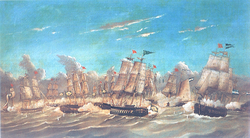
On June 11, 1865, Admiral Francisco Manoel Barroso da Silva led the Brazilian fleet to a decisive victory at the Battle of Riachuelo. By using ironclads (ships protected by iron or steel armor) to ram and break the wooden ships of the Paraguayan navy, Brazil secured control of the river systems, a victory that largely determined the war's outcome.
The Passage of Humaitá
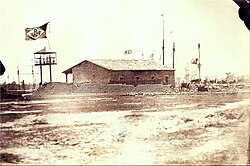
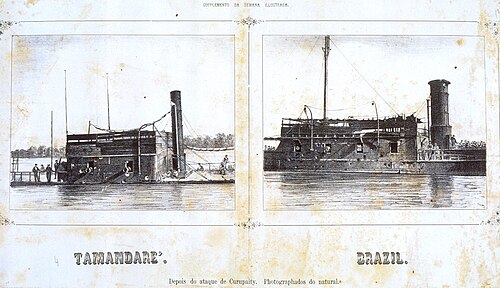
In February 1868, the navy executed the "Passage of Humaitá," a daring riverine operation where six armored vessels dashed past the heavy guns of the Fortress of Humaitá. This feat restored the Empire's financial credit and forced the Paraguayan evacuation of their capital, Asunción.
Industrial Base and Final Years
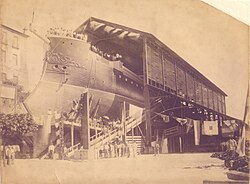
Brazil developed a robust naval industrial base, utilizing arsenals in Rio de Janeiro, Bahia, Pernambuco, Pará, and Mato Grosso. While the government-run arsenals focused on smaller vessels, private enterprises like the Mauá Shipyard (originally Ponta d'Areia) became major contributors, producing 72 vessels between 1849 and 1869.
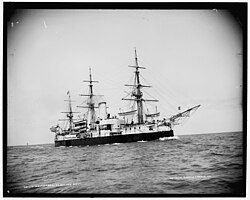
In the 1870s and 1880s, the navy transitioned fully to steam power and armored hulls. The creation of the Practical School of Torpedoes in 1883 signaled a shift toward modern naval technology. The fleet reached its zenith with the launch of the Riachuelo (1884) and Aquidabã (1885), two of the most powerful battleships in the world at the time.
By 1889, the navy consisted of 60 warships. However, the fall of the monarchy on November 15, 1889, marked the end of the Imperial Brazilian Navy, as it was transitioned into the navy of the new Republic.
Summary of Naval Strength
| Year | Number of Ships | Key Context |
|---|---|---|
| 1822 | 38 | Independence from Portugal |
| 1825 | 96 | Cisplatine War peak |
| 1831 | 80 | End of Pedro I's reign |
| 1840 | 90 | Start of Pedro II's reign |
| 1851 | 59 | Platine War conclusion |
| 1864 | 40 | Start of Paraguayan War |
| 1870 | 94 | Post-Paraguayan War modernization |
| 1889 | 60 | End of the Empire |
Frequently Asked Questions
Who was the most influential foreign officer in the early Imperial Navy?
British officer Thomas Cochrane was instrumental in the early years, leading the navy during the War of Independence and reforming the fleet to clear the coast of Portuguese presence.
What was the significance of the Battle of Riachuelo?
The Battle of Riachuelo was the decisive naval engagement of the Paraguayan War. By destroying the Paraguayan navy, Brazil gained total control of the Río de la Plata basin, effectively isolating Paraguay.
How did the navy's technology evolve over time?
The navy began with wooden sailing ships and transitioned to steam-powered vessels and ironclads. By the 1880s, it incorporated state-of-the-art torpedo launchers and steel hulls.
Was the Imperial Navy controlled by the military or civilians?
While the Emperor was the commander-in-chief, the navy followed a model where it remained subordinate to the civilian government, with the Minister of the Navy usually being a civilian.
What were the most powerful ships in the fleet's history?
The ironclad battleships Riachuelo and Aquidabã, launched in 1884 and 1885 respectively, were considered among the most powerful warships in the world at the time.