Brazilian War of Independence: The Struggle for Sovereignty
The Brazilian War of Independence was a pivotal armed conflict that severed the ties between Brazil and the United Kingdom of Portugal, Brazil and the Algarves. Spanning from August 1, 1822, to August 29, 1825, this struggle was not merely a political separation but a military campaign fought across the vast landscapes of Brazil, including the northern provinces and the southern region of Cisplatina (modern-day Uruguay).
Unlike many of its neighbors in the Americas, Brazil transitioned from a colony to a constitutional monarchy, establishing the Empire of Brazil under the leadership of Emperor Pedro I. This unique path to sovereignty ensured territorial unity during a period when other Spanish American colonies were fragmenting into smaller republics.
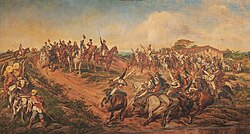
Key Facts
- Duration: August 1, 1822 – August 29, 1825.
- Outcome: Independentist victory and the recognition of the Empire of Brazil.
- Key Figure: Pedro I, who proclaimed independence and became the first Emperor.
- Final Agreement: The Treaty of Rio de Janeiro (1825).
- Casualties: Approximately 3,000–5,000 killed and 6,000–10,000 wounded or captured.
- Naval Success: 62 Portuguese ships were captured by Brazilian forces.
Origins of the Conflict
The roots of the war lay in the political instability of the early 19th century. Following the Liberal Revolution of 1820, King John VI was forced to return to Portugal in 1821. During his previous decade-long stay in Rio de Janeiro, he had elevated Brazil from a colony to a kingdom, granting it government institutions and the right to trade globally.
However, the Portuguese Cortes (the legislative assembly in Lisbon) sought to reverse these privileges and restore Brazil to its former colonial status. This attempt to reduce political autonomy sparked fierce resistance among Brazilian elites. The tension reached a breaking point on September 7, 1822, when Prince Regent Pedro of Braganza issued the "Cry of Ipiranga," declaring Brazil's complete independence.

Military Campaigns and Strategy
While Rio de Janeiro supported independence, several northern provinces—including Bahia, Maranhão, and Pará—remained loyal to Portugal. These regions were strategic hubs where Portuguese garrisons maintained control over key port cities like Salvador and Belém.
The Land War
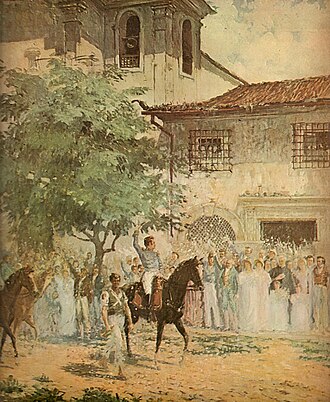
The Brazilian Army was a diverse force comprising regular troops, local militias, and volunteers. In a notable social move, slaves were recruited into the militias and promised freedom in exchange for their military service. Under the guidance of French General Pierre Labatut, Brazilian forces gradually isolated Portuguese strongholds. The most intense combat occurred in Bahia, culminating in the siege of Salvador, where roughly 10,000 Portuguese troops surrendered on July 2, 1823.
The Naval War
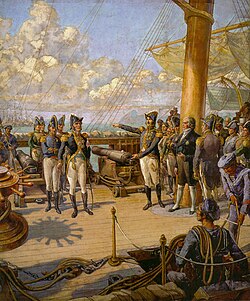
Control of the Atlantic coast was essential for victory. Initially, the Brazilian navy was in disrepair, consisting of rotten hulls left behind by the Portuguese court. To build a professional fleet, Emperor Pedro I personally funded and organized a public offering to purchase equipped warships from abroad.
Led by British Admiral Thomas Cochrane, the Imperial Navy recruited British and American mercenaries to replace unreliable crews. This naval force successfully disrupted Portuguese supply lines, prevented European reinforcements from arriving, and eventually pursued Portuguese ships across the Atlantic toward the shores of Portugal.
The Path to Peace
Military victory did not immediately result in diplomatic recognition. Portugal spent years attempting to block European powers from recognizing Brazil's sovereignty. The United States was among the first to recognize the new empire in 1824.
Under pressure from the United Kingdom, Portugal finally conceded. On May 13, 1825, King John VI issued Letters Patent transferring sovereignty to his son, Pedro I. This was followed by the Treaty of Rio de Janeiro on August 29, 1825. To secure this recognition, Brazil agreed to pay Portugal an indemnity of 2 million pounds—a sum funded by a loan from the British.
| Feature | Independentists (Empire of Brazil) | Loyalists (Portugal) |
|---|---|---|
| Primary Leaders | Pedro I, Thomas Cochrane, Pierre Labatut | John VI, Jorge de Avilez, Madeira de Melo |
| Estimated Strength | 30,000–40,000 Army/Militia; 65 ships (by 1825) | ~20,000 Army; 55 ships |
| Key Strategy | Naval blockade and provincial sieges | Defense of strategic port cities |
| Final Result | Victory and territorial unity | Loss of American territory |
Frequently Asked Questions
Why did some Brazilian provinces remain loyal to Portugal?
Provinces like Pará and Maranhão had stronger direct ties to Lisbon than to the government in Rio de Janeiro, making them more resistant to the independence movement led by Pedro I.
What was the significance of the "Cry of Ipiranga"?
The Cry of Ipiranga refers to the moment on September 7, 1822, when Prince Pedro declared Brazil's independence, marking the formal break from Portuguese rule.
How did the Brazilian Navy overcome its initial weaknesses?
The navy was rebuilt through a public offering funded by the Emperor and the recruitment of experienced British and American officers and sailors, most notably under Admiral Thomas Cochrane.
What were the terms of the Treaty of Rio de Janeiro?
Portugal recognized Brazil as an independent empire, and in return, Brazil paid an indemnity of 2 million pounds to compensate for seized Portuguese state properties.
Did the war affect the social structure of Brazil?
Yes, the conflict saw the enlistment of slaves into the military, with many being promised their freedom in exchange for fighting for the independence of the new empire.