I Indian Corps: The British Indian Army's Role in World War I
The I Indian Corps was a pivotal field corps of the British Indian Army during World War I. Formed at the outbreak of the conflict, it represented a significant mobilization of troops from British India to support Allied efforts across two vastly different theaters of war: the muddy trenches of the Western Front in France and the arid landscapes of Mesopotamia.
Because the British Indian Army lacked a pre-war corps structure, this formation was initially titled simply the "Indian Corps." It maintained this designation until the creation of subsequent corps, eventually becoming the I Indian Corps during its later service.
Key Facts
- Origin: Formed from troops of the British Indian Army sent to the Western Front.
- Primary Divisions: Comprised the 3rd (Lahore) and 7th (Meerut) Divisions.
- Major Theaters: Served on the Western Front (1914–1915) and in Mesopotamia (1916–1918).
- Notable Commanders: Lieutenant General Sir James Willcocks and Lieutenant General Alexander Cobbe.
- Key Transitions: Withdrawn from France in December 1915 due to heavy casualties and supply failures.
Deployment to the Western Front
In 1914, the Indian Expeditionary Force A was dispatched to reinforce the British Expeditionary Force (BEF) in France. This force was split into the Indian Cavalry Corps and the Indian Corps. To avoid confusion with existing British units, the 3rd and 7th Divisions were referred to simply as the "Lahore" and "Meerut" Divisions while serving in France.
The arrival of these troops was fraught with difficulty. German raiders, specifically the Emden and Königsberg, operated in the Indian Ocean, delaying dispatches. Furthermore, the slow speed of transport vessels hindered the timeline. When the Lahore Division finally landed at Marseille on September 26, 1914, they faced additional delays while being re-armed with modern rifles and organizing a supply train using locally procured tradesmen's vans.
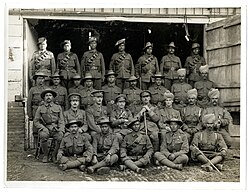
Early Engagements and Operations
Despite the logistical hurdles, the corps entered active combat between October and November 1914. Their early contributions were marked by intense fighting in several key engagements:
- The Battles of La Bassée, 1st Messines, and Armentières: The corps' first major actions in late 1914.
- Winter Operations 1914–15: Sustained combat during the harsh winter months.
- The Battle of Neuve Chapelle: A significant engagement where the corps played a central role.
- The Battles of Aubers Ridge and Festubert: During this phase, the corps was reinforced by the 51st (Highland) Division of the Territorial Force.
- The Battle of Loos: One of the final major actions for the corps on the Western Front.
Transition to Mesopotamia
By August 1915, the situation for the Indian Corps in France had become unsustainable. The system for supplying reinforcements (drafts) had collapsed, leaving battalions severely weakened by heavy casualties. Simultaneously, General Sir John Nixon, commanding Indian Expeditionary Force D in Mesopotamia, requested infantry reinforcements for his advance on Baghdad.
While the Secretary of State for War, Lord Kitchener, opposed the withdrawal, the Secretary of State for India, Austen Chamberlain, sought to move the troops before they faced another European winter. Orders were issued on October 31, 1915, for the Lahore and Meerut Divisions to embark from Marseilles.
The transition was not immediate; fear of submarine attacks delayed their departure. The 3rd (Lahore) Division did not arrive in Mesopotamia until April 1916. Upon arrival, they joined the Tigris Corps, though they arrived too late to assist the 6th (Poona) Division at Kut-al-Amara.
Summary of I Indian Corps Structure and Service
| Category | Details |
|---|---|
| Core Divisions | 3rd (Lahore) Division, 7th (Meerut) Division |
| Key Commanders | Lt-Gen Sir James Willcocks, Lt-Gen Alexander Cobbe |
| Western Front Period | September 1914 – December 1915 |
| Mesopotamia Period | December 1915 – End of War |
| Notable Attachments | 51st (Highland) Division, 9th (Secunderabad) Cavalry Brigade |
Frequently Asked Questions
Why were the divisions called 'Lahore' and 'Meerut' in France?
They were referred to by these names to distinguish them from the 3rd and 7th British divisions already operating in the theater.
What caused the delay in the corps reaching France in 1914?
Delays were caused by the activities of German raiders (the Emden and Königsberg) in the Indian Ocean and the slow speed of the transport ships.
Why was the I Indian Corps withdrawn from the Western Front?
The withdrawal was driven by a breakdown in the reinforcement system, heavy casualties among the battalions, and a desire to avoid another winter in France, combined with a need for troops in Mesopotamia.
Did the I Indian Corps arrive in time to help at Kut-al-Amara?
No. Due to delays in departing Marseilles caused by the threat of submarine attacks, the 3rd (Lahore) Division arrived in Mesopotamia in April 1916, which was too late to relieve the 6th (Poona) Division.