Hurrians: The Forgotten Architects of the Ancient Near East
The Hurrians were a significant yet often overlooked civilization of the Ancient Near East, exerting a profound influence on the cultural and political landscape of Mesopotamia and Anatolia for over two millennia. From their early strongholds in the Khabur River valley to the rise of the powerful Mitanni empire, the Hurrians acted as a cultural bridge between the great powers of the Bronze Age.
Their legacy is preserved not only in the ruins of their city-mounds, known as tells, but also in the religious and linguistic fingerprints they left upon the Hittites and Assyrians. By examining their migration, governance, and spiritual life, we can reconstruct the story of a people who shaped the foundations of early Western Asian civilization.
Key Facts
- Heartland: The Khabur River valley served as the primary center of Hurrian settlement for a thousand years.
- Major Power: The Mitanni kingdom emerged as a dominant force before 1550 BC, recognized by Egyptian pharaohs.
- Language: They used the Hurrian language, adopting Akkadian cuneiform (wedge-shaped writing) around 2000 BC.
- Religious Influence: Their deities, such as Teshub and Hebat, were later integrated into the Hittite pantheon.
- Archaeological Marker: "Khabur ware" pottery is the primary tool used by archaeologists to identify Hurrian occupation layers.
The Rise of Hurrian Civilization
Early Bronze Age Beginnings
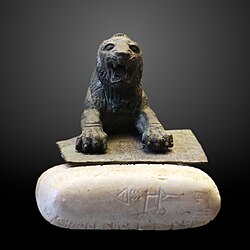
The first known Hurrian kingdom appeared during the third millennium BC around the city of Urkesh (modern Tell Mozan). Early evidence suggests a strategic alliance with the Akkadian Empire of Mesopotamia. By the reign of Naram-Sin of Akkad (c. 2254–2218 BC), the Hurrians had established a firm grip on their territory. This period of cultural exchange is evidenced by royal names; for instance, King Tupkish of Urkesh had a queen named Uqnitum, an Akkadian name meaning "girl of lapis lazuli."
Expansion in the Middle Bronze Age
During the Middle Bronze Age, the Hurrians migrated westward. By 1725 BC, they had established a presence in northern Syria, including Alalakh. This expansion led to the creation of the mixed Amorite–Hurrian kingdom of Yamhad, which clashed with the early Hittite king Hattusilis I around 1600 BC. Hurrian settlers also reached the coastal region of Adaniya in Kizzuwatna, southern Anatolia.
While the Hittites eventually weakened Yamhad, the interaction opened Anatolia to Hurrian cultural influences. Over several centuries, the Hittites adopted various Hurrian customs and beliefs. Additionally, sites like Tell Billa (possibly the city of Šimānum) indicate Hurrian activity during the middle of the second millennium BC.
![Foundation tablet. Dedication to God Nergal by Hurrian king Atalshen, king of Urkish and Nawar, Habur basin, circa 2000 BC. Louvre Museum AO 5678."Of Nergal the lord of Hawalum, Atal-shen, the caring shepherd, the king of Urkesh and Nawar, the son of Sadar-mat the king, is the builder of the temple of Nergal, the one who overcomes opposition. Let Shamash and Ishtar destroy the seeds of whoever removes this tablet. Shaum-shen is the craftsman."[4]](/images/d3/9d/d39de0f47a0ba4ee167458b176d6eabea73b86844831b053aca90814abe731e1.jpg)
The Era of Mitanni and Late Bronze Age Power
The Hurrian entity known as Mitanni rose to power before 1550 BC. The kingdom was significant enough to be recorded by Egyptian pharaohs Thutmose I and Thutmose III, with the latter associating the region with the Battle of Megiddo. The Egyptians typically referred to this kingdom as Naharin, while the Assyrians called it Hanigalbat.
Mitanni's influence is documented in the Amarna Letters during the reign of Pharaoh Akhenaten (1353–1336 BC). Domestic records of the Mitanni have been unearthed across various sites, including Nuzi, Alalakh, Tell Bazi, and Mardaman.
The Legacy of Shubaru and Urartu
Following the destruction of Mitanni by the Hittites (c. 1350–1325 BC), the remnants of the population in the upper Tigris valley were referred to as Shubaru in Assyrian sources. These people frequently revolted against Assyrian rule throughout the late second millennium BC.
The region of Shubria, located between Urartu and Assyria, remained an independent kingdom until its conquest in 673–672 BC. Scholars, including Karen Radner, describe Shubria as a linguistically and culturally Hurrian state. Evidence includes the worship of the Hurrian god Teshub and royal correspondence written in the Hurrian language during the time of Sargon II.
Culture, Religion, and Language
The Hurrian Pantheon
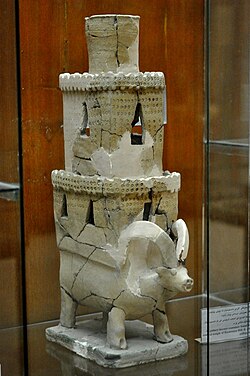
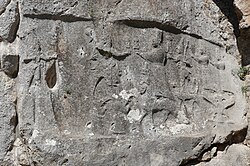
The Hurrian religion was characterized by a complex pantheon that deeply influenced neighboring cultures. The primary deities included Teshub (the storm god) and his wife Hebat (the mother goddess). Hebat was later equated with the primary sun goddess of the Hittites.
Writing and Literacy
Around 2000 BC, the Hurrians adopted the Akkadian language and the cuneiform script. While many texts were written in Akkadian, original Hurrian language texts have been found at Ugarit and Hattusa. One of the most significant discoveries was a multi-tablet collection of Hurrian literature with Hittite translations found at Hattusa in 1983. Another notable example is a long letter from King Tushratta of Mitanni to Pharaoh Amenhotep III.
Archaeological Insights
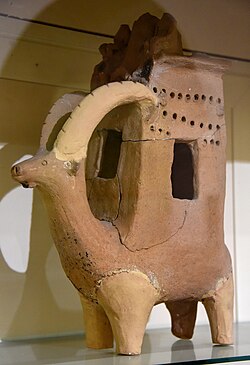
Major excavations began in the 1920s and 1930s, led by figures such as Edward Chiera and Max Mallowan. Modern research is a collaborative international effort involving teams from the US, Europe, and the Syrian Department of Antiquities. Because Hurrian sites are often built upon older Neolithic settlements, archaeologists use Khabur ware—a distinct style of pottery—to identify the specific strata of Hurrian occupation.
| Site/Entity | Modern Location/Context | Significance |
|---|---|---|
| Urkesh (Tell Mozan) | Syria | First known Hurrian kingdom |
| Mitanni (Naharin) | Northern Syria/Iraq | Major Late Bronze Age empire |
| Nuzi (Yorghan Tepe) | Iraq | Key administrative and residential site |
| Shubria | Upper Tigris Valley | Last remnant of Hurrian civilization |
| Hattusa | Turkey | Site of Hurrian-Hittite bilingual texts |
Frequently Asked Questions
Who were the Hurrians?
The Hurrians were an ancient people of the Near East who established powerful kingdoms, most notably the Mitanni empire, and influenced the culture, religion, and language of the Hittites and Assyrians during the Bronze Age.
What is "Khabur ware"?
Khabur ware is a characteristic type of pottery used by the Hurrians. It serves as a vital diagnostic tool for archaeologists to identify Hurrian settlement layers within city mounds (tells).
How did the Hurrians influence the Hittites?
The Hurrians influenced the Hittites through migration and political interaction, leading the Hittites to adopt Hurrian deities (like Teshub and Hebat) and incorporate Hurrian literary and religious traditions into their own.
What was the significance of the city of Urkesh?
Urkesh, located at modern Tell Mozan, is recognized as the first known Hurrian kingdom, emerging in the third millennium BC and maintaining early diplomatic ties with the Akkadian Empire.
What language did the Hurrians speak and write?
They spoke the Hurrian language. For writing, they adopted the Akkadian language and the cuneiform script around 2000 BC, though original Hurrian texts have since been discovered.