Hungary: A Comprehensive History and Profile of the Carpathian Basin
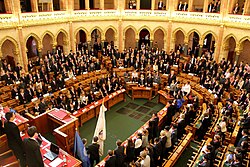
Located in the heart of Central Europe, Hungary (Magyarország) is a nation defined by its unique linguistic roots, a turbulent historical trajectory, and a resilient cultural identity. From its origins as a nomadic people to its current status as a unitary parliamentary republic and member of the European Union, Hungary has served as a strategic crossroads between East and West.
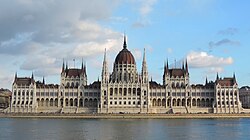
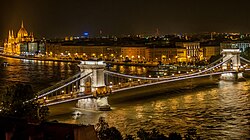
The nation is anchored by its capital, Budapest, a sprawling metropolis on the banks of the Danube, and is characterized by the fertile plains of the Carpathian Basin. Today, Hungary balances a rich heritage of monarchy and revolution with a modern economy driven by technology and industry.
Key Facts
- Capital: Budapest, the largest and most populous city.
- Official Language: Hungarian (Magyar).
- Government: Unitary parliamentary republic.
- Currency: Forint (HUF).
- Population: Approximately 9.49 million (2026 estimate).
- Key Geography: Dominated by the Carpathian Basin and Lake Balaton.
- Global Standing: Very high Human Development Index (0.870).
Historical Evolution
Early Origins and the Middle Ages
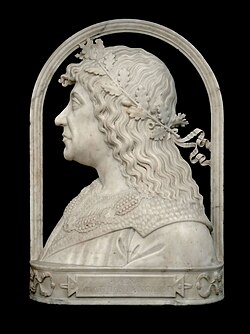
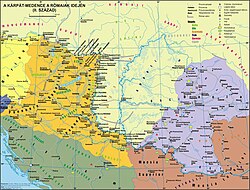
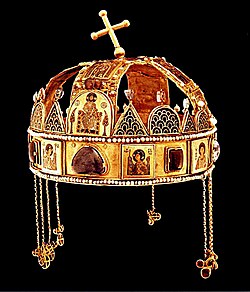
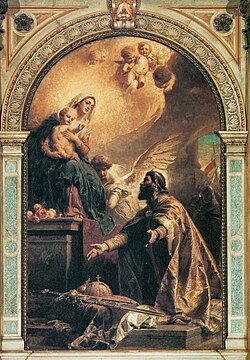
The formation of the Hungarian state began with the conquest of the Carpathian Basin between 862 and 895 AD. By 895, the Principality of Hungary was established. A pivotal moment occurred on December 25, 1000, when the nation became a Christian Kingdom under Saint Stephen, who converted the nation to Christianity.
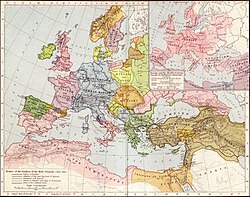
During the early Middle Ages, the Magyars were known for their expansive raids across Europe. Between 899 and 970, researchers have documented 47 raids, 38 to the West and 9 to the East, the vast majority of which were successful.
![Hungarian raids in the 9–10th centuries: Between 899 and 970, the researchers count 47 (38 to West and 9 to East)[42] raids in different parts of Europe. From these campaigns only 8 were unsuccessful and the others ended with success.[43]](/images/d2/cd/d2cd91a230fd8d7713952538ea13738afdfab9fdf789b3a84b2af38cf5c4fe0e.jpg)
The Holy Crown (Szent Korona) remains one of the most significant symbols of the state, representing the legitimacy of the Hungarian monarchy and the legacy of Saint Stephen.
Ottoman Conflict and the Habsburg Era
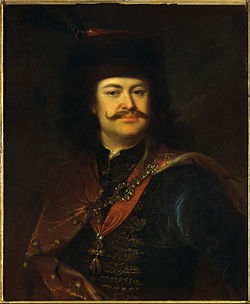
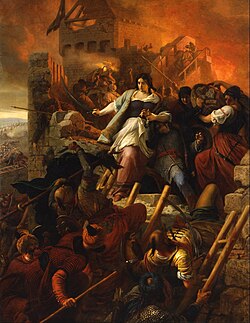
The trajectory of the kingdom shifted dramatically following the Battle of Mohács on August 29, 1526, which led to prolonged Ottoman wars. The liberation of Buda on September 2, 1686, marked a turning point in reclaiming the territory. By the 18th century, Hungary came under the influence of the Habsburgs, leading to various struggles for autonomy, including the war of independence led by Francis II Rákóczi between 1703 and 1711.
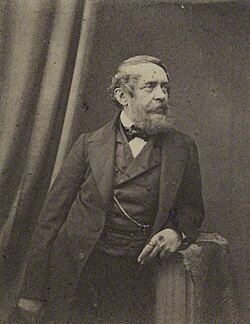
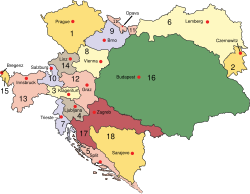
The 19th century saw a surge in nationalism, culminating in the Revolution of 1848 led by figures such as Lajos Kossuth. This eventually led to the Austro-Hungarian Compromise of 1867, creating the dual monarchy of Austria-Hungary.
The 20th Century: Conflict and Transition
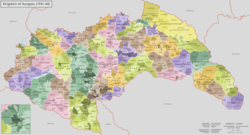
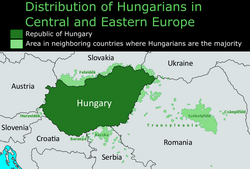
Following the restoration of independence in 1918, Hungary suffered a devastating territorial loss. The 1920 Treaty of Trianon stripped the country of 72% of its territory and its sea ports, leaving 3,425,000 ethnic Hungarians outside the new borders.
![With the 1920 Treaty of Trianon, Hungary lost 72% of its territory, its sea ports, and 3,425,000 ethnic Hungarians.[83][84] Majority Hungarian areas (according to the 1910 census) detached from Hungary](/images/ea/28/ea280fb375b90ccc4bc4e19282a3711fc9e02469b972b967eea160c9d72f3df7.png)
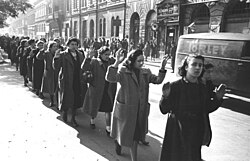
The mid-20th century was marked by the horrors of World War II and the Holocaust, followed by decades of Communist rule under the Hungarian Socialist Workers' Party. A significant uprising occurred during the Revolution of 1956, where freedom fighters challenged Soviet influence, though the country remained under socialist leadership until the Third Republic was established on October 23, 1989.
![A destroyed Soviet tank in Budapest during the Revolution of 1956. Time's Man of the Year for 1956 was the Hungarian freedom fighter.[117]](/images/04/41/044191b804d41dfa6d22f91e3c2d3bec2bab2e2a6afc0c6c861a3b44715459af.jpg)
Geography and Administration
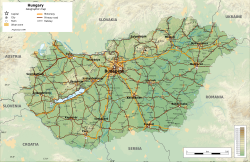
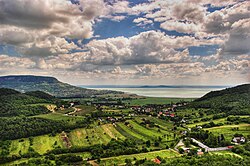
Hungary is a landlocked country with a total area of 93,030 km², of which 3.7% is water. Its landscape is dominated by the Great Plain and the Transdanubian hills, with Lake Balaton serving as a major geographic and recreational landmark.
Administrative Structure
The country is divided into counties (vármegye) and districts. Budapest serves as both the capital and a distinct administrative entity.
| County | Administrative Centre | Population | Region |
|---|---|---|---|
| Borsod-Abaúj-Zemplén | Miskolc | 684,793 | Northern Hungary |
| Hajdú-Bihar | Debrecen | 565,674 | Northern Great Plain |
| Bács-Kiskun | Kecskemét | 524,841 | Southern Great Plain |
| Győr-Moson-Sopron | Győr | 449,967 | Western Transdanubia |
| Budapest (Capital) | Budapest | 1,744,665 | Central Hungary |
Economy, Science, and Infrastructure
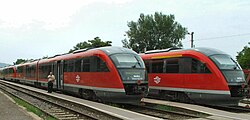
Hungary possesses a diversified economy with a nominal GDP estimated at $271.122 billion (2026). The nation is known for its high-density railway network and a strong emphasis on science and technology.
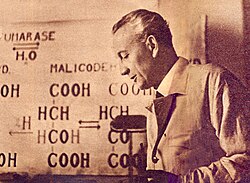
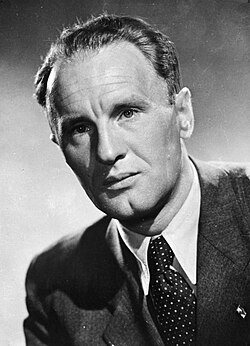
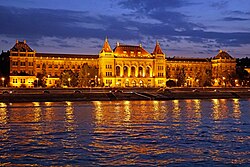
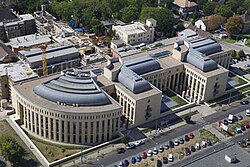
The country has a distinguished record in scientific achievement, with 15 Nobel Prizes awarded to Hungarians. A notable example is Albert Szent-Györgyi, who won the Nobel Prize in Physiology or Medicine for the discovery of Vitamin C. Education is also a cornerstone of society, exemplified by the Budapest University of Technology and Economics, the world's oldest institute of technology, founded in 1782.
Culture and Society
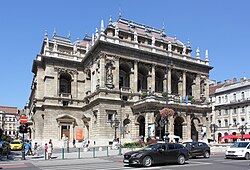
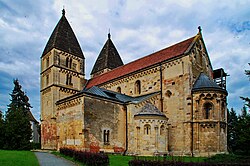
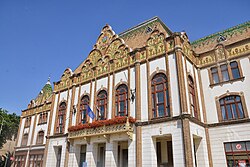
Hungarian culture is a blend of Central European influences and unique Magyar traditions. Architecture ranges from the Romanesque Ják Abbey to the ornate Art Nouveau details found in town halls and the world-renowned Hungarian State Opera House.
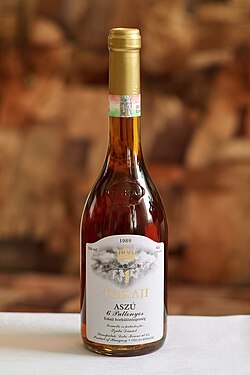
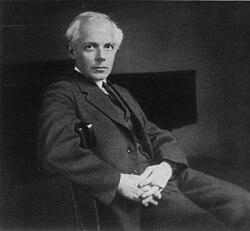
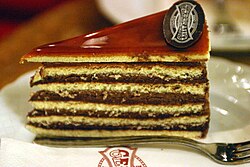
In the arts, composer Béla Bartók remains a global icon of 20th-century music. The nation's culinary identity is equally strong, featuring the famous Tokaji wine—once called the "Wine of Kings, King of Wines" by Louis XIV—and the traditional Dobos torte.
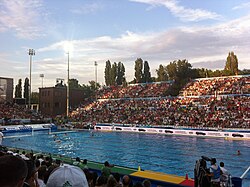
Sport is a point of national pride, particularly water polo, where the men's national team holds world records for Olympic gold medals.
Frequently Asked Questions



What was the impact of the Treaty of Trianon on Hungary?
The 1920 Treaty of Trianon was a defining moment in modern Hungarian history, resulting in the loss of 72% of the country's territory, its access to sea ports, and leaving over 3.4 million ethnic Hungarians living outside the national borders.
Who was Saint Stephen and why is he important?
Saint Stephen was the first King of Hungary, who converted the nation to Christianity on December 25, 1000. He is credited with establishing the Christian Kingdom and is symbolized by the Holy Crown.
What is the Visegrád Group?
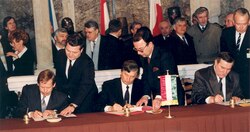
The Visegrád Group is a cultural and political alliance of four Central European states, including Hungary, aimed at fostering regional cooperation and coordination within the European Union.
Which scientific achievements is Hungary most famous for?
Hungary is renowned for its high number of Nobel laureates (15) and pioneers in medicine and technology, including the discovery of Vitamin C by Albert Szent-Györgyi and the establishment of the world's oldest technical university in Budapest.