Danube River Cities: A Comprehensive Guide to the Major Settlements
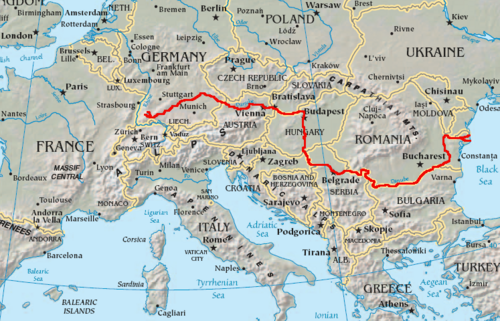
The Danube is one of Europe's most vital waterways, serving as a historical artery for trade, culture, and political development. From the Black Forest in Germany to the Black Sea, the river sustains a diverse array of urban centers, ranging from sprawling national capitals to ancient Roman outposts. These settlements have evolved over millennia, shaped by the river's strategic importance for transport and defense.
Key Facts
- Vienna is the most populous city on the Danube, with over 2 million inhabitants.
- Four national capitals are located on the river: Vienna (Austria), Budapest (Hungary), Bratislava (Slovakia), and Belgrade (Serbia).
- Belgrade is one of the oldest settlements on the river, established in 279 BC.
- Giurgiulești is the only settlement on the Danube located within Moldova.
- The river passes through multiple countries, including Germany, Austria, Slovakia, Hungary, Croatia, Serbia, Romania, Bulgaria, Moldova, and Ukraine.
Major Urban Centers of the Danube
The distribution of cities along the Danube reflects the river's role as a connector of nations. The largest urban centers are primarily concentrated in Central Europe, where the river flows through several capital cities.
The Primary Capitals
The most significant cities by population are the national capitals. Vienna leads the list, followed by Budapest and Belgrade. Bratislava completes the group of capitals, serving as a critical hub in Slovakia. These cities have historically leveraged the river for economic growth and administrative control.
Regional Hubs and Industrial Centers
Beyond the capitals, the Danube supports numerous regional centers. In Germany, Regensburg stands as the largest Danubian city, while Linz serves as a major center in Austria. Romania hosts a significant number of Danubian towns, with Galați being the largest, followed by Brăila and Drobeta-Turnu Severin.
Ancient and Historical Settlements
Many towns on the Danube have roots in antiquity. Several locations, such as Ruse and Giurgiu, were originally established as Roman towns. Belgrade and Vidin also boast ancient origins, dating back to the 3rd and 2nd centuries BC respectively, highlighting the river's long-standing importance as a frontier and trade route.
Comparative Data of Major Danubian Cities
The following table provides a detailed overview of the most populous cities and towns along the Danube, sorted by their inhabitant counts.
| Rank | City/Town | Country | Population | Established |
|---|---|---|---|---|
| 1 | Vienna | Austria | 2,031,870 | ~100 AD |
| 2 | Budapest | Hungary | 1,671,004 | 1873 |
| 3 | Belgrade | Serbia | 1,298,661 | 279 BC |
| 4 | Bratislava | Slovakia | 475,503 | 907 AD |
| 5 | Novi Sad | Serbia | 325,551 | 1748 |
| 6 | Galați | Romania | 217,851 | 1445 |
| 7 | Linz | Austria | 212,538 | ~150 AD |
| 8 | Regensburg | Germany | 157,443 | 179 AD |
Frequently Asked Questions
Which is the largest city on the Danube?
Vienna, the capital of Austria, is the largest city on the Danube with a population of approximately 2,031,870 as of July 2025.
How many national capitals are located on the Danube?
There are four national capitals on the river: Vienna (Austria), Budapest (Hungary), Bratislava (Slovakia), and Belgrade (Serbia).
Which city on the Danube is the oldest?
Based on the provided records, Belgrade is one of the oldest, established in 279 BC, followed closely by Vidin (~250 BC).
Which country has the most Danubian cities listed?
Romania has a high concentration of Danubian settlements, including major cities such as Galați, Brăila, and Drobeta-Turnu Severin.
Does Moldova have any settlements on the Danube?
Yes, Giurgiulești is the only Danubian settlement located in Moldova.