Honeywell Aerospace: Engineering the Future of Aviation and Space
From the precision of World War II bomber flights to the complex systems of the International Space Station, Honeywell Aerospace has remained a cornerstone of aviation and space exploration for nearly nine decades. Originally a core division of the Honeywell International conglomerate, the business transitioned into an independent, publicly traded entity on June 29, 2026. Today, it stands as a global leader in the aerospace industry, specializing in aircraft engines, avionics, and spacecraft technology.
The company's influence extends across nearly every facet of flight. Whether it is providing the critical backup power that saved passengers during the "Miracle on the Hudson" or developing the ruggedized black boxes that solve aviation mysteries, Honeywell's engineering is woven into the fabric of modern transport.
Key Facts

- Founded: 1936
- Headquarters: Phoenix, Arizona, United States
- 2024 Revenue: US$15 billion
- Workforce: Approximately 40,000 employees
- Market Presence: Component of the Nasdaq-100, S&P 100, and S&P 500
- Space Legacy: Contributed to nearly 90% of United States space missions
Corporate Evolution and History
The path to becoming a modern aerospace giant was marked by strategic mergers and acquisitions. The company's lineage includes the Garrett Corporation, which merged with Signal Oil & Gas Company in 1963 to avoid a hostile takeover. By 1985, these entities formed Allied-Signal Inc., which later became Honeywell International in 1999.
A pivotal moment occurred in 1986 when Honeywell Inc. acquired Sperry Aerospace for $1.025 billion. This move allowed the company to integrate flight control and navigation systems, sparking years of double-digit growth. This synergy was evident in the 1995 Boeing 777, which featured a suite of avionics developed by 1,200 Honeywell engineers over four years.
Pioneering Flight Control and Avionics
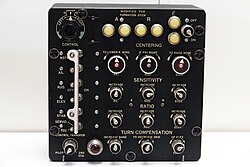
Honeywell's contributions to flight safety and precision began during World War II. To solve the problem of bomber oscillation at high altitudes, the company installed the C-1 autopilot on B-17 aircraft in 1942, ensuring bombs could hit precise targets.
Navigation and the Ring Laser Gyroscope
In 1958, Honeywell developed the ring laser gyroscope (RLG), a device used in inertial navigation systems to measure altitude, position, velocity, and rotation. Despite a protracted legal battle with Litton Industries over mirror coatings—which eventually settled for $440 million in 2001—the RLG became a commercial success, with 45,000 units sold by 1991.
Modern Cockpit Technology
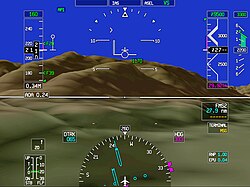
Today, the company focuses on synthetic vision—a system that provides pilots with a computer-generated image of the outside world during low visibility. Their SV-PFD systems have been installed in numerous Gulfstream aircraft since 2008. Additionally, the company is a key partner in the FAA's NextGen program in the U.S. and the SESAR modernization framework in the European Union.
Propulsion and Engine Technology
Honeywell's expertise in turbine engines spans from small aircraft to heavy-duty military helicopters. The company's TFE731 family of turbofans has accumulated nearly 90 million service hours since 1972, with over 8,500 engines currently in service for business aviation.
Military and Commercial Applications
- Fixed-Wing: The ALF502 and LF507 power the British Aerospace 146, while the HTF7000 series is used in the Gulfstream G280 and Bombardier Challenger 300.
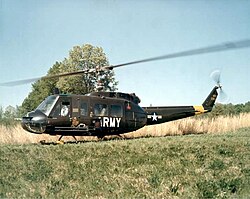
- Helicopters: The Lycoming T53 and T55 power the Bell UH-1H Huey and Boeing CH-47 Chinook.
- Joint Ventures: Through a partnership with Rolls-Royce, Honeywell produces the T800 turboshaft engine for military and commercial use.
Critical Safety Systems
Beyond propulsion, Honeywell produces the "unsung heroes" of aviation: Auxiliary Power Units (APUs) and flight data recorders.
The Role of the APU
An APU is a small turbine engine that provides power to a plane's systems when the main engines are off. The Honeywell 131-9 APU was critical during the 2009 "Miracle on the Hudson" (US Airways Flight 1549), providing essential electrical power after the main engines failed due to bird strikes.
Flight Data Recorders (Black Boxes)
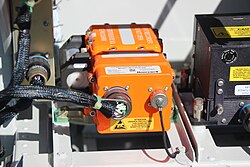
Honeywell manufactures the cockpit data recorders used to diagnose accidents. A notable example of their durability occurred during the investigation of Air France Flight 447. A Honeywell black box survived for two years at a depth of 13,000 feet—far exceeding its design specification of 20,000 feet for only 30 days—allowing investigators to recover intact data.
Summary of Honeywell Aerospace Operations
| Segment | Key Products/Technologies | Notable Applications |
|---|---|---|
| Avionics | Synthetic Vision, RLG, SmartPath | Gulfstream, Boeing 777, NextGen |
| Propulsion | TFE731, HTF7000, T800 | Business Jets, Bell Huey, Chinook |
| Safety Systems | 131-9 APU, Flight Data Recorders | Airbus A320, Boeing 737NG |
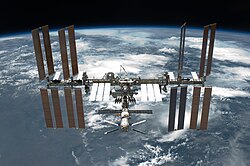
| Space | Spacecraft Controls, Satellites | International Space Station (ISS) |
Frequently Asked Questions
What is a ring laser gyroscope (RLG)?
An RLG is a high-precision navigation device developed by Honeywell that allows aircraft and spacecraft to measure their rotation, velocity, and position without needing external references.
How did Honeywell contribute to the "Miracle on the Hudson"?
The Honeywell 131-9 Auxiliary Power Unit (APU) provided critical backup electrical power to the aircraft after both main engines failed, allowing the pilots to maintain essential systems during the emergency landing.
What is synthetic vision in aviation?
Synthetic vision is a cockpit display technology that uses a database of terrain and obstacles to create a 3D image of the outside world, helping pilots navigate safely during poor visibility or night flights.
How durable are Honeywell's flight data recorders?
While designed to withstand depths of 20,000 feet for 30 days, Honeywell recorders have proven even more resilient; one unit survived for two years at 13,000 feet underwater during the Air France Flight 447 recovery.
What is the difference between the NextGen and SESAR programs?
NextGen is the U.S. Federal Aviation Administration's (FAA) program to modernize the national airspace system, while SESAR is the European Union's equivalent framework for air traffic management modernization.