Homs: The Historic City of Black Stones
Known poetically as the Mother of the Black Stones, Homs is a city of profound historical depth and strategic importance in Syria. From its early settlements around 2000 BC to its role as a modern urban center, Homs has served as a crossroads of civilizations, blending Roman, Byzantine, Islamic, and Ottoman influences into a unique cultural tapestry.
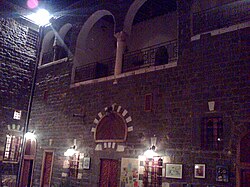
The city is also recognized by several other nicknames, including al-ʻAdhīyah, the City of Ibn Al-Walid, and the House of Peace. Its identity is inextricably linked to the dark volcanic rock used in its traditional architecture, giving the city its distinctive visual character.
Key Facts
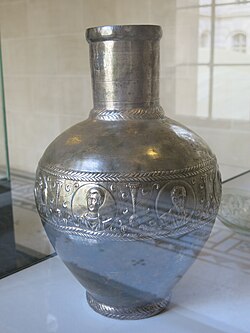
- First Settled: Approximately 2000 BC.
- Nicknames: Mother of the black stones, al-ʻAdhīyah, City of Ibn Al-Walid, House of Peace.
- Estimated Population: 775,404 (2017).
- Elevation: 501 meters (1,644 feet).
- Climate: Csa (Mediterranean), characterized by milder temperatures than nearby Hama.
- Key Landmark: Khalid ibn al-Walid Mosque.
Historical Evolution
Roman Rule and the Emesene Dynasty
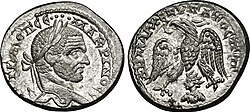
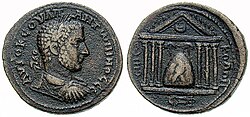
In antiquity, Homs was known as Emesa. It became a significant center under the Roman Empire, particularly through the influence of the Emesene dynasty. The city's wealth and status were reflected in its monuments and the minting of coins, such as those produced by Macrinus.
![The Emesa helmet found in the necropolis of Tell Abu Sabun. Its owner was likely buried in the first half of the 1st century AD[42]](/images/c7/97/c7978c9572d7f569a7e8e0cc66a93430c32c5103aff7cdbcef51b34a7431e1b4.jpg)
![The Tomb of Sampsigeramus, photographed 1907; it may have been built in 78–79[43] by a relative of the Emesene dynasty[44]](/images/04/7c/047c7f21590199993e71fb08ec8422fd1f83d8e01f75cc1dc52b8c11c196666d.jpg)
Islamic Conquests and Medieval Eras
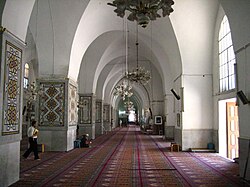
Following the Roman era, Homs transitioned through various Arab caliphates. The city became closely associated with Khalid ibn al-Walid, a pivotal military leader in early Islamic history. However, the city also faced periods of instability; in October 968, the Byzantines under Nikephoros II Phokas raided the city, leading to widespread plunder and the temporary conversion of the Great Mosque of al-Nuri into a church.
Mamluk and Ottoman Influence
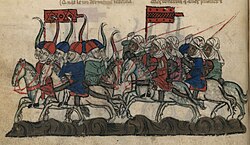
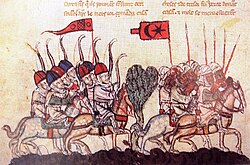
The city later came under the rule of the Saljuqids, Ayyubids, and Mamluks. The Mamluk period was marked by significant military engagements, including the Battles of Homs in 1281 and 1299.
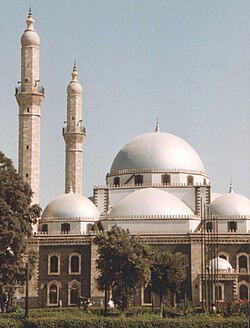
During the Ottoman era, Homs continued to develop its architectural identity. The Khalid ibn al-Walid Mosque stands as a prominent example of Ottoman architecture, though it was completed in the early 20th century.
The Modern Era
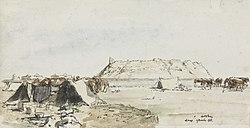
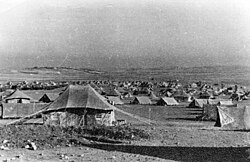
The 20th century brought significant geopolitical shifts. Homs saw the presence of the Australian Light Horse in 1918 and the Polish Independent Carpathian Rifle Brigade in 1940. In the mid-20th century, the city expanded its industrial base, notably with the construction of an oil refinery by the Czechoslovak firm Technoexport in 1959.

Geography and Climate
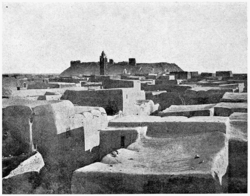
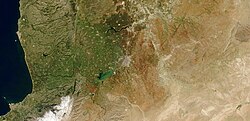
Homs is situated at an elevation of 501 meters. Its geographical position allows it to benefit from Mediterranean breezes, resulting in a milder climate compared to Hama. It receives an average annual rainfall of approximately 18 inches (460 mm), though it is more prone to wind than its neighbors.
| Month | Max Temp (°C) | Mean Temp (°C) | Min Temp (°C) | Precipitation (mm) |
|---|---|---|---|---|
| January | 11.1 | 7.0 | 2.8 | 95.1 |
| April | 21.6 | 15.4 | 9.2 | 33.3 |
| July | 32.3 | 26.1 | 19.8 | 0.2 |
| October | 26.9 | 19.8 | 12.7 | 21.1 |
| Yearly Avg | 22.9 | 17.0 | 11.0 | 429.4 |
Demographics and Culture
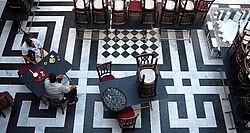
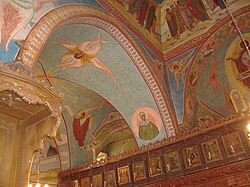
The population of Homs is diverse, consisting primarily of Sunni Muslims (75%), Alawites (15%), and Christians (10%). The city's religious heritage is evident in its landmarks, such as the Saint Mary Church of the Holy Belt, a Syriac Orthodox Church built over an underground structure dating back to 50 AD.
![Saint Mary Church of the Holy Belt is a historical Syriac Orthodox Church in Homs, Syria. The church is built over an underground church dating back to 50 AD. It is the seat of the Syriac Orthodox Archdiocese of Homs. Homs is famous for its black stones and rocks of which this church and many others were built. Photo: Daniel Demeter founder of Syria Photo Guide.[108]](/images/fb/d1/fbd1c0979aebdb16c5c692c3fa4c249f14df6943f8bb0ec8097e436ff3a86329.jpg)
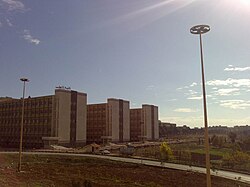
Cultural life is centered around its traditional markets, such as the roofed Souk al-Harir, and its educational institutions, including Homs University and the Al-Andalus University for Medical Sciences.

Notable Landmarks
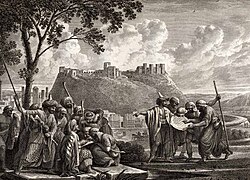
- The Citadel of Homs: A historic fortress that has seen various military uses over centuries.
- Martyrs' Square: Home to the Old Clock.
- Quwatli Square: Home to the New Clock Tower.
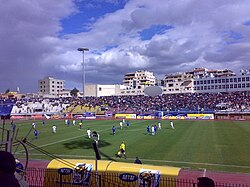
- Khaled Ibn Al Walid Stadium: A major sports venue.
Frequently Asked Questions
Why is Homs called the "Mother of the Black Stones"?
The city earned this nickname because many of its historic buildings and churches were constructed using the local black volcanic stones and rocks found in the region.
What is the significance of the Emesene dynasty?
The Emesene dynasty were client kings under Roman rule who helped establish Homs (Emesa) as a major political and cultural center in the Roman East.
How does the climate of Homs differ from Hama?
Homs has a milder climate than Hama due to Mediterranean breezes and receives higher average annual rainfall (18 inches compared to Hama's 14 inches), although it experiences stronger winds.
What are the primary religious groups in Homs?
The population is predominantly Sunni Muslim (75%), with Alawites making up 15% and Christians accounting for 10% of the demographics.
Which major educational institutions are located in or near Homs?
Key institutions include Homs University, the German University at Wadi al-Nasarah, and the Al-Andalus University for Medical Sciences.