Hominidae: The Evolution and Diversity of Great Apes
The family Hominidae encompasses the great apes, a group of tailless primates that includes humans, chimpanzees, gorillas, and orangutans. Spanning a temporal range from the Miocene epoch to the present (approximately 17 to 0 million years ago), these primates are characterized by their large size, complex social behaviors, and high cognitive abilities.
Within the broader order of Primates, hominids are distinguished from the "lesser apes" (family Hylobatidae, such as gibbons) by several anatomical and genetic markers. The study of hominids blends molecular biology and paleontology to reconstruct a lineage that reveals the deep connections between humans and our closest living relatives.

Key Facts
- Extant Genera: Includes Homo (humans), Pan (chimpanzees and bonobos), Gorilla (gorillas), and Pongo (orangutans).
- Genetic Proximity: Human DNA is approximately 98.4% identical to that of chimpanzees.
- Physical Range: Weights vary from the bonobo (30–40 kg) to the eastern gorilla (140–180 kg).
- Conservation: Most great ape species are currently classified as Endangered or Critically Endangered.
- Dental Formula: Hominids share a dental formula of 2.1.2.3 / 2.1.2.3.
Evolutionary History
The divergence of the great apes occurred in stages over millions of years. Molecular evidence suggests that the lineage of gibbons split from the great apes roughly 18 to 12 million years ago. Following this, the ancestors of orangutans (subfamily Ponginae) diverged from the other great apes about 12 million years ago.
While the fossil record for gibbons is sparse, proto-orangutans are represented by fossils such as Sivapithecus from India and Griphopithecus from Turkey, dating to around 10 million years ago. The common ancestor of gorillas, chimpanzees, and humans may be represented by Nakalipithecus fossils found in Kenya.
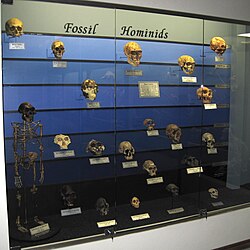
Between 8 and 4 million years ago, the lineage split further: first the gorillas (genus Gorilla) diverged, followed by the chimpanzees (genus Pan), leaving the line that led to modern humans (genus Homo). The fossil record for chimpanzees and gorillas is notably limited, likely due to the acidic soils of rainforests which dissolve bone over time.
Taxonomy and Classification
Hominids are divided into two primary subfamilies: Ponginae and Homininae. The former includes the orangutans, while the latter encompasses gorillas, chimpanzees, bonobos, and humans.
Subfamily Ponginae
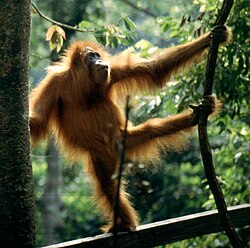
This group consists of the genus Pongo, which includes the Bornean, Sumatran, and Tapanuli orangutans. Fossil relatives include the massive Gigantopithecus and Sivapithecus.
Subfamily Homininae
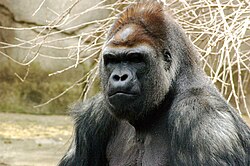
This subfamily is further divided into tribes. The tribe Gorillini contains the Western and Eastern gorillas. The tribe Hominini is split into the subtribe Panina (chimpanzees and bonobos) and the subtribe Hominina (the genus Homo and its extinct ancestors like Australopithecus).
Physical Characteristics and Behavior
Great apes are characterized by the absence of a tail. There is significant sexual dimorphism across the family, meaning males are generally larger and stronger than females, though the extent of this difference varies by species.
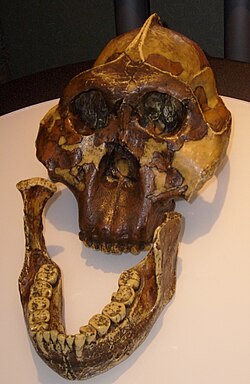
Hominid teeth are similar to those of gibbons and Old World monkeys, though gorillas possess exceptionally large teeth. Humans, however, have markedly smaller jaws and teeth relative to their body size. Scientists suggest this is an adaptation resulting from the use of tools and the consumption of cooked food since the end of the Pleistocene epoch.
Conservation and Legal Status
The majority of great apes face severe threats in the wild. Habitat loss and poaching have pushed several species to the brink of extinction. In response, legal protections have increased; for example, the European Union banned the testing of great apes in 2010, and Spain passed laws in 2008 prohibiting the use of apes in circuses and commercials.
| Species | Estimated Population | Conservation Status |
|---|---|---|
| Bornean orangutan | 104,700 | Critically Endangered |
| Sumatran orangutan | 6,667 | Critically Endangered |
| Tapanuli orangutan | 800 | Critically Endangered |
| Western gorilla | 200,000 | Critically Endangered |
| Eastern gorilla | <5,000 | Critically Endangered |
| Chimpanzee | 200,000 | Endangered |
| Bonobo | 10,000 | Endangered |
| Human | 8,211,817,000 | N/A |
Frequently Asked Questions
How closely related are humans to chimpanzees?
Humans and chimpanzees are very closely related, sharing approximately 98.4% of their DNA when comparing single nucleotide polymorphisms.
What is the difference between a great ape and a lesser ape?
Great apes (Hominidae) include humans, gorillas, chimpanzees, and orangutans, while lesser apes (Hylobatidae) refer to gibbons. Great apes are generally larger and diverged from the lesser ape lineage 12 to 18 million years ago.
Why is the fossil record for gorillas and chimpanzees so poor?
The primary reasons are sampling bias and poor preservation; the acidic soils of the rainforests where these species live tend to dissolve bone, leaving few fossils behind.
Why do humans have smaller teeth than other great apes?
Smaller teeth and jaws in humans are believed to be adaptations to the use of tools for hunting and fighting, as well as the transition to eating cooked food after the Pleistocene.
Which great ape is the most endangered?
Several species are listed as Critically Endangered, but the Tapanuli orangutan has one of the lowest estimated populations, with only about 800 individuals remaining.