Biological Taxonomy and the Complexity of Circumscription
In the complex world of biological taxonomy, scientists strive to organize the vast diversity of life into logical groups. One of the most critical, yet often debated, aspects of this process is circumscription. While the names of organisms are governed by strict rules, the boundaries of the groups they belong to are often subject to intense scientific discussion.
Circumscription refers to the content of a taxon (a specific group of organisms), specifically the delimitation of which subordinate taxa are included within it. For instance, if a scientist decides that species X, Y, and Z belong to Genus A, while species T, U, V, and W belong to Genus B, they have established the circumscriptions for those two genera. However, if another researcher determines that all seven species belong to Genus A, the circumscription has changed. Because agreement on these boundaries is not governed by the formal codes of zoological or botanical nomenclature, it must be reached through scientific consensus.
The Tension Between Stability and Evolutionary Accuracy
Taxonomists face a difficult balancing act. One primary goal is to achieve a stable circumscription for every taxon, providing a consistent framework for scientists. However, this often conflicts with the goal of creating a natural classification—a system that accurately reflects the evolutionary history and divergence of organisms.
This tension has become increasingly prominent due to rapid developments in molecular phylogenetics, the study of evolutionary relationships through genetic data. As new genetic evidence emerges, many taxa that were considered stable for decades are being revised. A major driver for these revisions is the need to eliminate paraphyletic groups. A group is considered paraphyletic if it contains some, but not all, of the descendants of a common ancestor.
Case Study: The Evolution of Primate Classification
A classic example of circumscription revision involves the primates. Historically, the family Pongidae included orangutans (Pongo), chimpanzees (Pan), and gorillas (Gorilla), but excluded humans (Homo), which were placed in Hominidae.
However, molecular phylogenetic data revealed that chimpanzees are more closely related to humans than they are to gorillas or orangutans. This meant that Pongidae was a paraphyletic group. To reflect true evolutionary relationships, the circumscription of Hominidae was updated to include all four extant genera of great apes.
Refining Monophyletic Groups
Not all changes are driven by the need to fix paraphyly. Sometimes, systematists propose new circumscriptions to provide more detail within monophyletic groups (groups consisting of an ancestor and all its descendants). For example, the moth superfamily Pyraloidea is a broadly circumscribed monophyletic group that can be split into two distinct families: Pyralidae and Crambidae, which are recognized as reciprocally monophyletic sister taxa.
Key Facts
- Circumscription defines the boundaries and contents of a biological taxon.
- Taxonomic boundaries are determined by scientific consensus rather than formal nomenclature codes.
- Molecular phylogenetics frequently leads to the revision of long-standing taxonomic groups.
- A paraphyletic group is an evolutionary classification that fails to include all descendants of a common ancestor.
- The classification of great apes was changed to ensure the group was no longer paraphyletic.
Summary of Taxonomic Concepts
| Term | Definition | Contextual Example |
|---|---|---|
| Monophyletic | A group containing an ancestor and all its descendants. | The split of Pyraloidea into Pyralidae and Crambidae. |
| Paraphyletic | A group containing some, but not all, descendants of a common ancestor. | The former definition of Pongidae excluding humans. |
| Circumscription | The delimitation of which subordinate taxa belong to a higher taxon. | Deciding if certain plant families belong within Anacardiaceae. |
Botanical Instability: Anacardiaceae
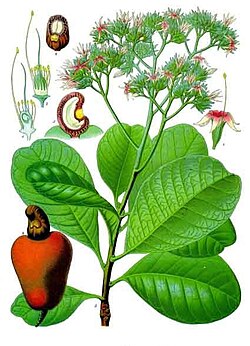
In botany, the family Anacardiaceae (a family of flowering plants) serves as an example of unstable circumscription. Scientific opinion varies on its boundaries; some experts argue that the family should include the families Blepharocaryaceae, Julianaceae, and Podoaceae, while others maintain that these should remain separate families.
Frequently Asked Questions
What is the difference between nomenclature and circumscription?
Nomenclature refers to the formal rules for naming organisms, whereas circumscription refers to the scientific decision regarding which organisms belong within a specific group or taxon.
Why do taxonomic classifications change over time?
Classifications change as new scientific evidence, particularly from molecular phylogenetics, provides a clearer understanding of evolutionary relationships and helps correct paraphyletic groupings.
What makes a group paraphyletic?
A group is paraphyletic if it includes a common ancestor but excludes one or more descendant groups, thereby failing to represent the complete evolutionary lineage.
How is consensus reached in taxonomy?
Since the formal codes of nomenclature do not govern circumscription, scientists must reach a consensus through peer-reviewed research and the evaluation of new biological data.
Is a monophyletic group considered a "natural" classification?
Yes, a major goal of taxonomy is to achieve natural classifications that reflect the actual evolutionary history of organisms, which is best represented by monophyletic groups.