Herbaceous Plants: Botanical Characteristics and Ecological Roles
In the diverse world of botany, plants are often categorized by their structural growth patterns. One of the most significant classifications is the herbaceous plant. Unlike trees or shrubs, these vascular plants are defined by the absence of persistent woody stems above the ground. Instead, they typically feature soft, succulent stems that may die back seasonally.
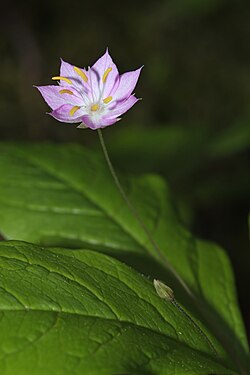
Defining Herbaceous and Herb
While the terms are often used interchangeably in casual conversation, botanical definitions provide specific nuances. According to the Shorter Oxford English Dictionary, an "herb" is a plant whose stem remains soft and succulent rather than becoming woody and persistent, often dying back after flowering. The term "herbaceous" describes the nature of such a plant, specifically referring to those that do not form woody stems and may die down to the root each year.
Botanical authorities offer slightly different perspectives. The Hunt Institute for Botanical Documentation notes that for perennials, the shoot parts may die back seasonally. Other sources, such as the Flora of the Sydney Region, define "herbaceous" as referring to plant parts that are green and soft in texture. Interestingly, some plants like certain Phalaenopsis orchids are classified as herbs even if their leaves remain persistent.
Key Facts
- Non-woody: Herbaceous plants lack persistent woody stems above ground.
- Lignification: They do not produce significant amounts of lignin, the polymer responsible for woodiness and structural rigidity.
- Life Cycles: Approximately 85% of herbaceous plants are perennials, while 15% are annuals.
- Diversity: This category includes graminoids (grass-like plants), forbs (broad-leafed plants), and ferns.
- Ecological Role: In arid climates, herbaceous plants act as catalysts for dew, which is vital for ecosystem survival.
Classification and Structure
Herbaceous plants are broadly categorized into several groups based on their physical appearance and structure:
- Forbs: Generally defined as herbaceous, broad-leafed plants.
- Graminoids: Plants with a grass-like appearance, including true grasses, sedges, and rushes.
- Ferns: A distinct group of herbaceous vascular plants.
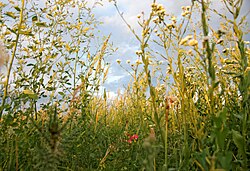
A defining biological difference between herbaceous and woody plants is lignification. Lignin is a complex phenolic polymer deposited in the secondary cell walls of vascular plants, providing mechanical strength and hydrophobicity. Because herbaceous plants do not develop these permanent woody structures, they are often low-growing and ephemeral. However, size is not always a limiting factor; the genus Musa (bananas) consists of herbaceous plants that can grow quite large because their stems lack true woody tissue.
Life Cycles and Survival Mechanisms
The survival strategy of a herbaceous plant depends heavily on its life cycle:
- Annuals: These plants complete their entire life cycle—from germination to seed production—within a single growing season, dying completely afterward.
- Biennials: These plants require two growing seasons to complete their cycle.
- Perennials: These plants live for multiple years. While their above-ground stems may die back, they survive via underground structures.
To survive dormant seasons, many perennials utilize specialized underground organs such as rhizomes, bulbs, corms, tubers, stolons, or a caudex (a thickened stem base). Common examples include potatoes (tubers), mint (rhizomes), and peonies (perennials).
Ecological Importance and Habitat
Herbaceous plants occupy a wide range of niches. Some act as pioneers, being the first to colonize new or disturbed ground due to their rapid growth. Others form the foundation of stable ecosystems, such as the ground layer of forests, meadows, salt marshes, deserts, and grasslands. They are also dominant in aquatic environments like ponds and lakes.
In arid regions, these plants play a critical role in moisture regulation. The surface of an herb can act as a catalyst for dew formation. Since most dew comes from atmospheric water vapor rather than soil, the surface area of the vegetation is a key factor. Taller herbs can produce more dew; consequently, cutting grass too short in arid zones can reduce dew production and contribute to desertification.
| Life Cycle Type | Typical Duration | Survival Method | Examples |
|---|---|---|---|
| Annual | One growing season | Seeds | Most annual wildflowers |
| Biennial | Two growing seasons | Underground parts/Seeds | Carrot, Parsnip, Common ragwort |
| Perennial | Multiple years | Roots, Bulbs, Rhizomes, etc. | Potato, Mint, Peony, Grasses |
Frequently Asked Questions
Are banana plants considered trees?
No. Despite their large size, banana plants are classified as herbaceous plants because their stems do not contain true woody tissue.
What is the difference between a forb and a graminoid?
Forbs are generally herbaceous plants with broad leaves, whereas graminoids are plants that have a grass-like appearance, such as true grasses, sedges, and rushes.
How can you tell the age of a perennial herb?
The age of some perennial herbaceous plants can be determined through herbchronology, which involves analyzing the annual growth rings found in the secondary root xylem.
Why are herbaceous plants important in deserts?
In arid climates, herbaceous plants help generate precipitation in the form of dew. This moisture is essential for the survival of the surrounding vegetation and the broader ecosystem.
What is lignification?
Lignification is the process of depositing lignin into cell walls. This provides the mechanical strength and rigidity required to create woody stems, a feature most herbaceous plants lack.