Heraldic Labels and the System of Cadency
In the intricate world of heraldry, a coat of arms is more than just a family symbol; it is a precise visual record of lineage and status. To distinguish between different members of the same family, heralds use a process known as differencing or cadency. These distinctions allow observers to identify junior branches, known as cadets, and determine the specific position of an individual within the family hierarchy.
The Role of the Label in European Heraldry
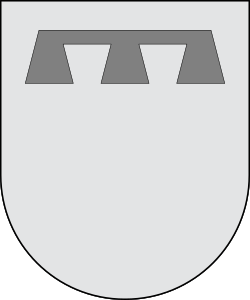
Across European heraldry, the label—a horizontal strip with pendants—serves as a primary mark of difference. It was traditionally used to identify the elder son, a practice particularly common among the princes of royal houses. By adding this mark, the heir could bear the family arms while still acknowledging the authority of the current head of the house.
The British System of Brisures
British heraldry developed a highly structured system of brisures, or specific marks of cadency, to denote the birth order of sons. While the eldest son uses the label during his father's lifetime, subsequent sons are assigned distinct symbols to differentiate their arms from those of their siblings and parents.
- First Son: A label
- Second Son: A crescent
- Third Son: A mullet (a five-pointed star)
- Fourth Son: A martlet (a stylized bird)
- Fifth Son: An annulet (a small ring)
- Sixth Son: A fleur-de-lis
- Seventh Son: A rose
- Eighth Son: A cross moline
- Ninth Son: A double quatrefoil
Upon the death of the father, the eldest son removes the label from his coat of arms, assuming the unmodified family arms as the new head of the house.
Understanding Label Points and Lineage
The number of points on a label can provide further detail regarding the generation of the heir. While the number of points did not always carry a strict meaning, a general convention existed to indicate the relationship to the current patriarch:
- Three points: Represents the heir during the lifetime of his father.
- Five points: Represents the heir during the lifetime of his grandfather.
- Seven points: Represents the heir while the great-grandfather is still living.
Debates on Nested Labels
There is some disagreement among heraldic experts regarding the heir-apparent of an heir-apparent. Some sources suggest that the grandson should place a label upon a label. However, the heraldic authority A. C. Fox-Davies argues that this is incorrect. According to Fox-Davies, because labels are marks of cadency rather than charges, a single label of five points should be used instead of stacking two labels.
Key Facts
- Cadency is the system used to distinguish junior family branches (cadets) from the main line.
- The label is the specific mark used by the eldest son in both European and British heraldry.
- In the British system, there are specific symbols (brisures) for the first through ninth sons.
- The eldest son assumes the unmodified arms only after the death of his father.
- The number of points on a label typically indicates how many generations separate the heir from the current head of the family.
| Son's Order | Heraldic Mark (Brisure) |
|---|---|
| 1st | Label |
| 2nd | Crescent |
| 3rd | Mullet |
| 4th | Martlet |
| 5th | Annulet |
| 6th | Fleur-de-lis |
| 7th | Rose |
| 8th | Cross Moline |
| 9th | Double Quatrefoil |
Frequently Asked Questions
What happens to the label when the father dies?
The eldest son removes the label from his coat of arms and assumes the unmodified family arms, signaling his new status as the head of the family.
What is the difference between a label of three points and five points?
A label of three points generally represents the heir during his father's lifetime, while a label of five points represents the heir during his grandfather's lifetime.
Can a label be placed on top of another label?
This is a point of contention. Some sources say yes, but A. C. Fox-Davies states it is incorrect to place a label upon a label because they are marks of cadency, not charges; he recommends a five-point label instead.
What are brisures in heraldry?
Brisures are the specific marks or symbols added to a coat of arms to differentiate junior members of a family from the head of the house.
Which symbol is used for the fourth son in British heraldry?
The fourth son uses a martlet, which is a stylized representation of a bird.