Hand Axes: The Longest-Used Tools in Human History
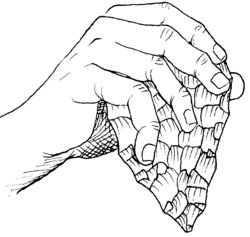
The hand axe, also known as an Acheulean hand axe, stands as the longest-used tool in the history of humanity. These prehistoric stone implements were not merely primitive rocks, but carefully engineered tools shaped through a process called knapping—the act of hitting a stone against another to flake away material and create a sharp edge.
Primarily associated with Homo erectus and other early human ancestors, these tools were dominant from approximately 1.6 million years ago until about 100,000 years ago. While they are characteristic of the lower Acheulean and middle Palaeolithic (Mousterian) periods, they were rarely used by Homo sapiens.
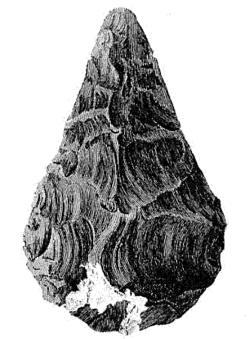
Key Facts
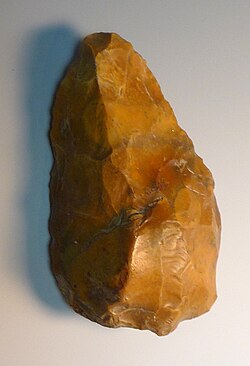
- Technical Name: Biface (meaning "two faces").
- Primary Materials: Flint or chert.
- Timeframe: Roughly 1.6 million to 100,000 years ago.
- Primary Users: Homo erectus and early humans.
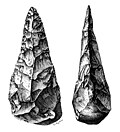
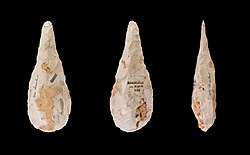
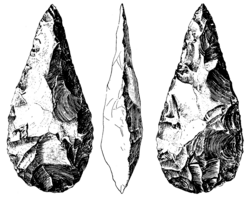
- Defining Shape: Typically almond-shaped (amygdaloid) and symmetrical.
The Anatomy of a Biface
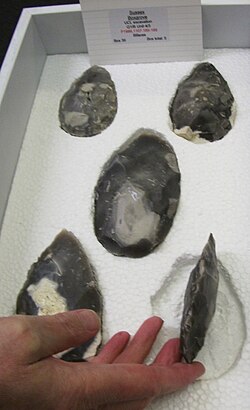
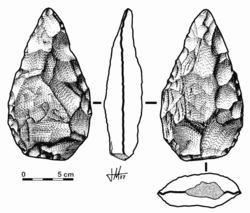
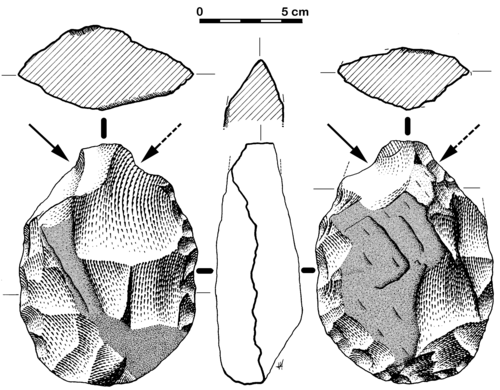
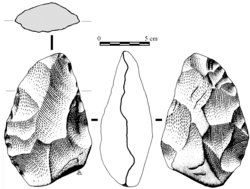
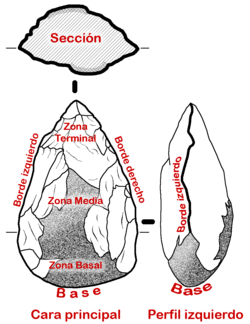
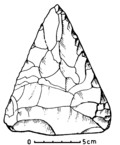
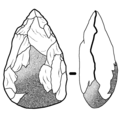
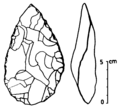
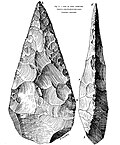
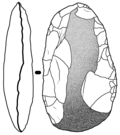
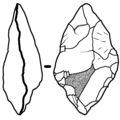
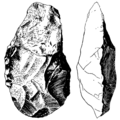
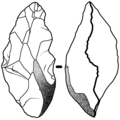
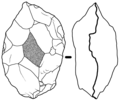
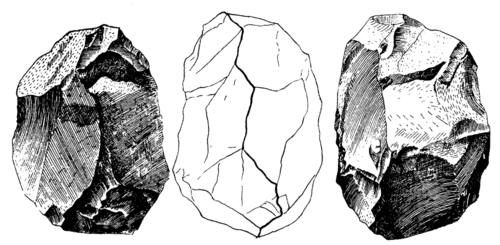
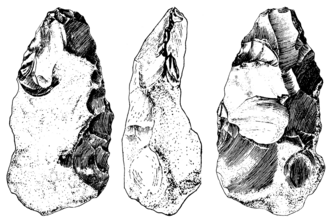
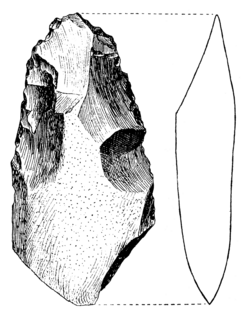
The archetypal hand axe is a biface, meaning it has been worked on both sides to create a symmetrical tool. Most commonly, these tools feature a pointed end and a rounded base, resulting in the classic almond shape. To achieve this, early humans removed the cortex (the weathered outer layer of the stone) to expose the sharp, inner lithic material.
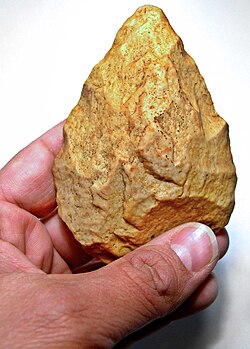
Classification of Hand Axes
Archaeologists categorize hand axes into four primary classes based on their form and refinement:
- Blanks: Large, thick tools reduced from cores or thick flakes.
- Preforms: Crude formalized tools, such as adzes.
- Fine Bifaces: Highly refined tools, including projectile points.
- Formalized Tools: Specialized types with specific intended uses.
Manufacturing and Production
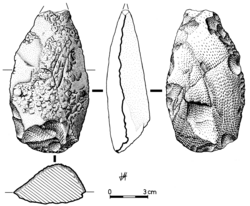
The production of a hand axe evolved in complexity over hundreds of thousands of years. The method of shaping depended heavily on the tool used for striking:
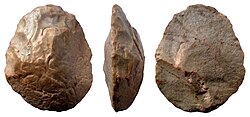
- Hard Hammer Technique: Using a stone to rough out the shape. This often leaves distinct, rugged marks on the faces and edges.
- Soft Hammer Technique: Using materials like bone or antler to refine the edges. This allows for thinner, sharper, and more symmetrical tools.
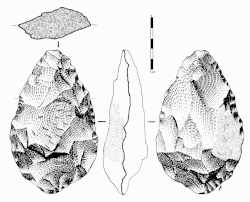
Evidence from the Boxgrove site in England suggests that elephant bone was used as a soft hammer to resharpen these tools, indicating a sophisticated understanding of material properties.
Morphology and Typology
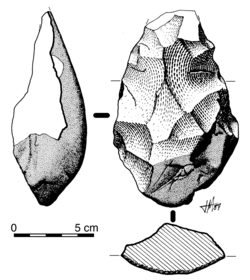
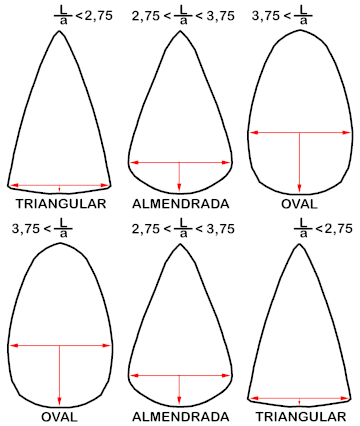
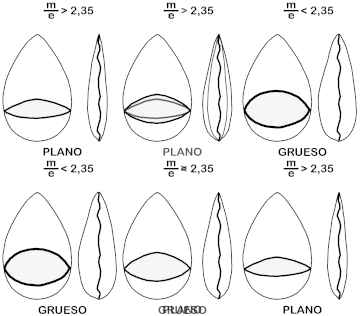
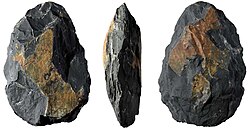
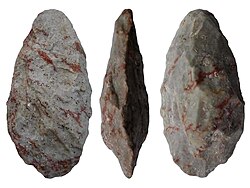
Not all hand axes were created equal. Depending on the region and the era, different shapes emerged. The Bordes typology identifies several distinct forms based on their length, width, and thickness ratios.
| Type | Defining Characteristics | Visual Profile |
|---|---|---|
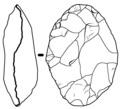
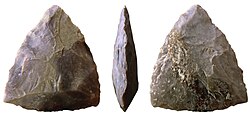
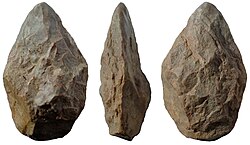
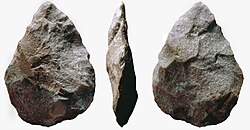
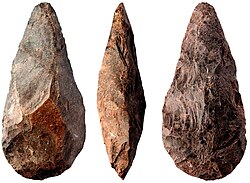
| Amygdaloidal | Almond-shaped, symmetrical, regular length. | Classic almond shape |
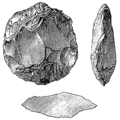
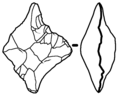
| Cordiform | Similar to amygdaloidal but flatter when viewed from the side. | Heart-shaped profile |
| Lanceolate | Elongated with rectilinear edges and an acute apex. | Spear-like |
| Micoquien | Elongated and thick with concave edges and a sharp point. | Curved edges |
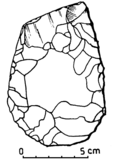
| Cleaver | Wide, transverse terminal edge rather than a point. | Flat-tipped |
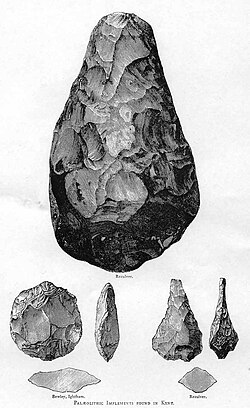
Distribution and History
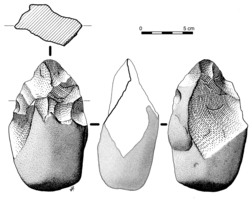
Early humans reached Europe by 1.8 million years ago, with evidence found in Spain's Guadix-Baza basin and Atapuerca. However, the Acheulean tradition—marked by the production of bifaces—did not appear in Europe until roughly 500,000 years ago. In England and France, these tools became prominent after the Beestonian-Mindel Glaciation, approximately 750,000 years ago.
Interestingly, the Acheulean tradition did not spread to Eastern Asia, creating a distinct geographical divide in prehistoric tool technology.
![Map showing the approximate distribution of cultures using bifaces during the Middle Pleistocene (Acheulean)[53] Areas with bifaces Areas without bifaces](/images/63/62/63621cc00f16154d159308fb32521a665a234f728646e72404caf0ace877d875.png)
Usage and Wear Analysis
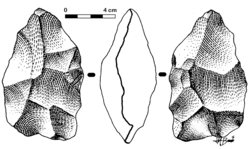
While it has been theorized that hand axes were used as projectiles or for digging, scientific wear analysis provides more specific evidence. At the Boxgrove site, both micro- and macro-traces indicate that these tools were used predominantly for butchery.
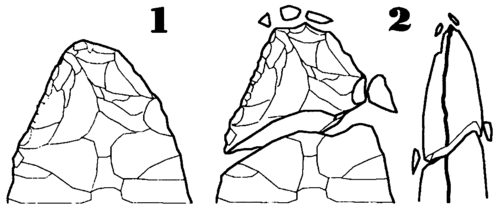
Wear patterns show that the points often fractured during use, and in some cases, early humans reconstructed these points using different knapping techniques to extend the tool's life.
Frequently Asked Questions



![The Sima de los Huesos hand axe15.5 cm (6 in) tall[91] is finely crafted and made out of a rare stone, which may indicate symbolic meaning.[92]](/images/9c/dc/9cdc439a7109ad62f44cb60147cdb72462581d9fe0dabed8345a3b6173eb703f.jpg)
What is the difference between a hand axe and a biface?
A biface is a general category of any stone tool worked on two faces. A hand axe is a specific type of biface, typically characterized by its almond shape and use during the Acheulean period.
Who created the Acheulean hand axe?
These tools were primarily created by Homo erectus and other early human species. They are rarely associated with Homo sapiens.
What materials were used to make them?
Most hand axes were made from flint or chert, though other stones like quartzite were used depending on local availability.
Were hand axes used as weapons?
While some theories suggest they were used as projectiles, wear analysis from major sites like Boxgrove suggests they were primarily used for butchering animals.
Why are they called "amygdaloid"?
The term comes from the Latin word for almond, referring to the characteristic symmetrical, pointed-oval shape of the most common hand axes.