The Stone Age: A Journey Through 99% of Human History
The Stone Age represents a vast prehistoric era defined by the widespread use of stone to create essential tools. Characterized by edges, points, and percussion surfaces, these implements allowed early humans to shape their environment and survive across diverse landscapes. Spanning roughly 3.4 million years, this period encompasses approximately 99% of documented human technological history.
Because of its immense timescale, the Stone Age is not a single monolithic era but a complex progression of technological shifts, ranging from the earliest pebble tools to the sophisticated artistry of the late Paleolithic. It eventually concluded as different global regions transitioned into the Copper and Bronze Ages through the advent of metalworking.
Key Facts
- Duration: Approximately 3.4 million years ago to between 4000 BC and 2000 BC.
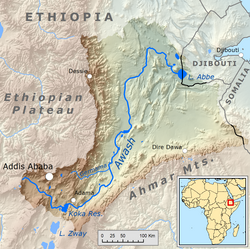
- Earliest Evidence: 3.4-million-year-old fossilized animal bones with tool marks found in Ethiopia.
- Oldest Tools: 3.3-million-year-old "Lomekwian" tools discovered in West Turkana, Kenya.
- Primary Divisions: Paleolithic (Old Stone Age), Mesolithic (Middle Stone Age), and Neolithic (New Stone Age).
- Technological Shift: Transitioned from stone tools to metalworking (Copper, Bronze, and Iron Ages).
The Dawn of Technology: Early Hominin Tool Use
The origins of stone tool manufacture are deeply rooted in the Pliocene epoch. While early evidence of tool use was found in the form of marks on animal bones in Ethiopia's Lower Awash Valley, the discovery of the Lomekwian tools in Kenya has pushed the timeline of actual stone tool manufacture back to 3.3 million years ago.
Before these discoveries, it was widely believed that tool evolution occurred only during the Pleistocene epoch. However, these finds prove that hominins were crafting tools during the Late Pliocene. Early tool users may have included Kenyanthropus platyops, a species dating back 3.2 to 3.5 million years.
The Oldowan Tradition (Mode 1)
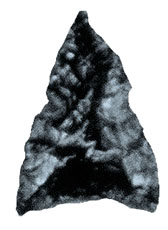
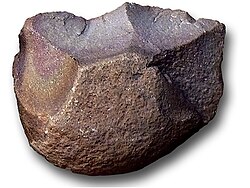
One of the earliest recognized technological stages is the Oldowan industry, often referred to as Mode 1. These tools primarily consisted of pebble core technology—simple stone tools used for various tasks. This tradition is thought to have been utilized by species such as Homo habilis and later Homo erectus.
Mode 1 tools have been documented from roughly 2.6 million years ago to 1.5 million years ago in Africa, and as far as 0.5 million years ago outside the continent. These tools were not just limited to Africa; evidence of pebble tools has been found in Israel, Pakistan, and South China, suggesting early dispersal of these technologies.
The Acheulean Revolution (Mode 2)
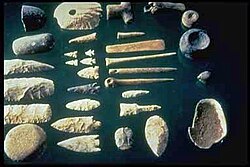
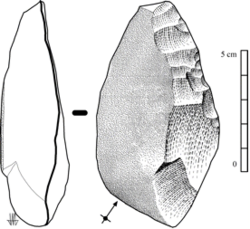
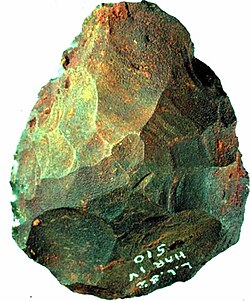
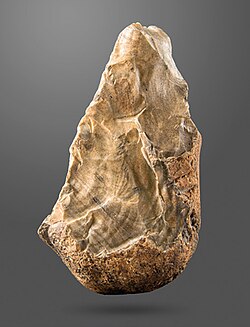
As hominins evolved, so did their craftsmanship. The Acheulean industry, or Mode 2, emerged around 1.7 to 1.6 million years ago, most notably in West Turkana, Kenya. This era saw the introduction of the hand axe—a more sophisticated, bifacial tool (worked on both sides) that provided greater utility for hunters and gatherers.
The Acheulean tradition is closely associated with Homo erectus. This technology spread from Africa into Europe, the Middle East, and Asia. In Europe, the earliest known Acheulean hand axes are found in Spain, dating back to over 0.9 million years ago.
The Later Stone Age: Complexity and Artistry
As the millennia progressed, stone tool technology became increasingly specialized, leading into the Middle and Upper Paleolithic periods.
Middle Paleolithic and Neanderthals
The Middle Paleolithic is famously associated with Neanderthals in Europe and the Near East (c. 300,000–28,000 years ago). Their primary technology was the Mousterian industry, which utilized worked flakes of stone to create more precise implements.
![Stone Age hand axe engraved with human face found from Kiuruvesi, Finland[17]](/images/15/4a/154a479b27e09d65ec12e9ca919a46cf3edaa62569957ec5886916b0d0f19711.jpg)
Upper Paleolithic and Modern Humans
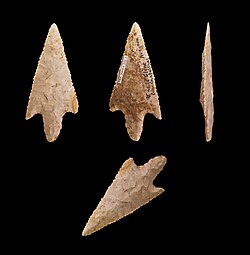
The Upper Paleolithic (50,000 to 10,000 years ago) marked a massive leap in human capability. This era saw the rapid expansion of anatomically modern humans across the globe, including the arrival in Australia between 40,000 and 50,000 years ago. This period is characterized by a surge in complex stone artifacts and the birth of human art, including personal ornaments and rock paintings.



Transitions: Mesolithic and Neolithic Eras
The end of the last ice age roughly 10,000 years ago brought rising sea levels and changing environments, necessitating new survival strategies.
The Mesolithic (Middle Stone Age)
The Mesolithic (or Epipaleolithic) period involved the development of microliths—tiny, highly efficient stone tools used to create composite implements for hunting and fishing. This era also saw the likely domestication of the dog as a hunting companion.
The Neolithic (New Stone Age)
The Neolithic period represents the final stage of the Stone Age, often associated with the transition to settled life and agriculture. This era saw the construction of permanent settlements and monumental structures, such as the Ġgantija temples in Malta.



Summary of Stone Age Chronology
| Period | Approximate Dates | Key Technology/Characteristics |
|---|---|---|
| Lower Paleolithic | 2.6 mya – 200,000 years ago | Oldowan (Mode 1) pebble tools; Acheulean (Mode 2) hand axes. |
| Middle Paleolithic | 300,000 – 28,000 years ago | Mousterian industry; associated with Neanderthals. |
| Upper Paleolithic | 50,000 – 10,000 years ago | Complex artifacts, advanced art, and modern human expansion. |
| Mesolithic | 10,000 – 6,000 years ago | Microliths (Mode 5) and composite tools. |
| Neolithic | Post-10,000 years ago | Settled communities and early agricultural transitions. |

Frequently Asked Questions
When did the Stone Age end?
The end of the Stone Age varied by region. In the Middle East and Southeast Asia, it ended around 6000 BC. Europe and much of Asia transitioned around 4000 BC, while in South America, proto-Inca cultures continued Stone Age practices until approximately 2000 BC.
What is the difference between Mode 1 and Mode 2 tools?
Mode 1 (Oldowan) refers to simpler pebble core technology used by early hominins. Mode 2 (Acheulean) refers to more advanced, bifacial tools, such as the hand axe, which were more sophisticated and widely attributed to Homo erectus.
Did Stone Age people use metal?
No. The defining characteristic of the Stone Age is the reliance on stone for tool manufacture. The transition to metalworking—using copper, bronze, and eventually iron—marks the end of the Stone Age and the beginning of the Metal Ages.
Where were the oldest stone tools found?
The oldest known stone tools, known as Lomekwian tools, were excavated from the Lomekwi 3 site in West Turkana, Kenya, and date back 3.3 million years.
What is the significance of the Mesolithic period?
The Mesolithic was a transitional period following the last ice age. It is significant for the development of microliths (small stone tools) used in composite tools, which allowed for more efficient hunting and fishing as environments changed.