Rock Art: A Global History of Human Expression on Stone
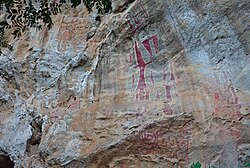
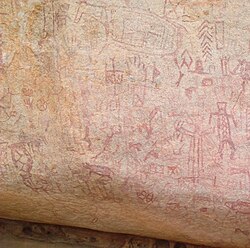
Across every continent and throughout countless eras, humans have left their mark on the natural world. In archaeology, rock art refers to human-made markings placed on natural surfaces, most commonly vertical stone walls. While often associated with deep caverns, this global phenomenon encompasses a wide variety of environments, from open-air cliffs to sheltered overhangs.
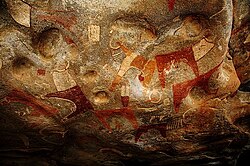
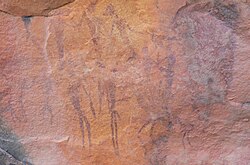
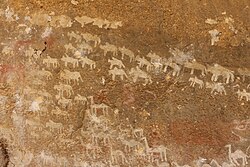
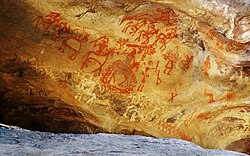
Much of the surviving historic and prehistoric work is found in caves or partly enclosed rock shelters, a specific category known as parietal art (art found on cave walls). These markings serve as a visual record of human history, reflecting the diverse cultures and environments of our ancestors.
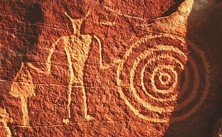
Key Facts
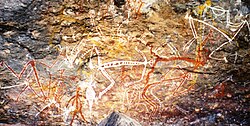
- Global Presence: Rock art is found in culturally diverse regions worldwide, spanning from the Tibetan Plateau to the Australian Outback.
- Ancient Origins: Some evidence suggests markings on the Tibetan Plateau could date back 169,000 to 226,000 years.
- Diverse Techniques: The primary methods include painting, carving (petroglyphs), sculpting (reliefs), and creating earth figures.
- Preservation: In some regions, such as the Kimberley in Australia, biological agents like fungi and bacteria have helped preserve vivid colors over millennia.
Types of Rock Art Techniques
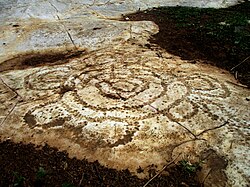
Archaeologists categorize rock art based on the method used to create the image. The four primary groups are:
Paintings and Pictographs
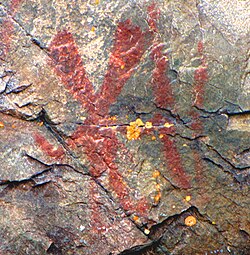
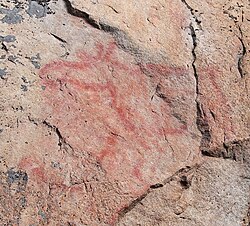
These are images created by applying pigments to the rock surface. They can range from simple stencils to complex narrative scenes.
Petroglyphs
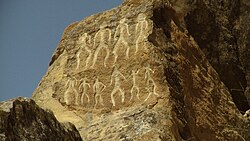
Unlike paintings, petroglyphs are created by removing part of the rock surface through carving, scratching, or pecking.
Rock Reliefs
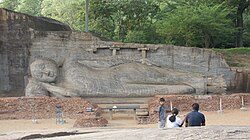
Sculpted rock reliefs involve carving the stone to create a three-dimensional image that projects from the background.
Earth Figures
These are large-scale markings or shapes created on the ground, often visible only from a height.
Regional Variations and Notable Sites
Africa
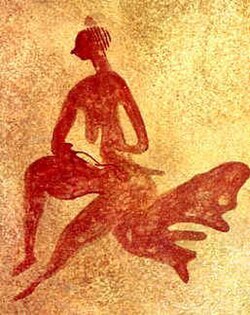
Africa boasts a rich tapestry of rock art. In North Africa, the Cave of Swimmers in Egypt features figures estimated to be 6,000 to 7,000 years old. Southern Africa is home to the San rock art and the Chongoni Rock Art Area in Malawi.
The Americas
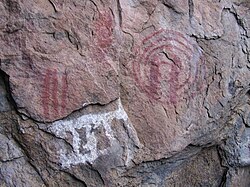
From the Cueva de las Manos in Argentina to the Petroglyph National Monument in New Mexico, the Americas show a vast array of styles. In Canada, sites like Petroglyphs Provincial Park in Ontario preserve indigenous markings.
![Native American rock painting close to Douglas, Wyoming, USA. One possible interpretation of this painting is: On the left side a group of United States Army soldiers with different insignia and on the right side Native Americans are shown[citation needed]](/images/7d/35/7d35b8b385c290bb3bd98caffa4aaa0e06f58086d7804a23f12b968aec524781.jpg)
Asia
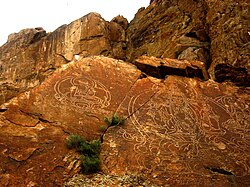
Asia's rock art is remarkably diverse. In Kazakhstan, Buddhist stone carvings line the Ili River, while Azerbaijan's Gobustan National Park contains carvings dating back to 10,000 BC. Notably, the Tibetan Plateau may hold the world's oldest art, with mud-imprinted hands and feet possibly dating back over 160,000 years.
Europe
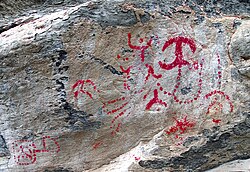
Europe is famous for its Paleolithic cave art, such as the Cave of Altamira in Spain and the Côa Valley. Other significant sites include the rock carvings at Alta in Norway and the Valcamonica drawings in Italy.
Australasia
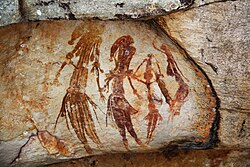
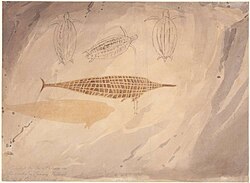
Australia contains some of the oldest firmly dated art on Earth. A charcoal drawing from the Nawarla Gabarnmang shelter is dated at 28,000 BP. In the Kimberley region, the Gwion Gwion paintings are of particular interest; some experts suggest they may be 50,000 years old, potentially predating Aboriginal settlement.
Summary of Global Rock Art
| Region | Notable Sites/Styles | Key Characteristics |
|---|---|---|
| Africa | Cave of Swimmers, San Art | Human figures, animals, and spiritual motifs |
| Americas | Cueva de las Manos, Chaco Culture | Hand stencils, geometric patterns, and petroglyphs |
| Asia | Gobustan, Tibetan Plateau | Ancient mud imprints and Buddhist carvings |
| Europe | Altamira, Côa Valley | Paleolithic cave paintings and Neolithic carvings |
| Australasia | Nawarla Gabarnmang, Gwion Gwion | Ancient charcoal drawings and biological preservation |
Frequently Asked Questions
What is the difference between a petroglyph and a pictograph?
A petroglyph is an image carved or scratched directly into the rock surface, whereas a pictograph is a painting created by applying pigment to the surface.
What is the oldest known rock art?
While dates are often debated, evidence from the high Tibetan Plateau suggests that intentional markings (hands and feet in mud) may date back between 169,000 and 226,000 years.
What is parietal art?
Parietal art is a term used to describe rock art found on the walls and ceilings of caves or within rock shelters.
How are some ancient paintings still so colorful?
In certain regions, such as the Kimberley in Australia, a symbiotic relationship between red bacteria and black fungi (like Chaetothyriales) has helped maintain the vivid colors of the pigments over thousands of years.
Where can I find the oldest firmly dated charcoal drawing?
The oldest firmly dated charcoal drawing was found in the Nawarla Gabarnmang rock shelter in Australia's Northern Territory, dated to approximately 28,000 BP.