Hamburg Mark: The Dual Currency System of Northern Germany
Until the unification of Germany in the late 19th century, the city of Hamburg operated a sophisticated and unique monetary system. Rather than relying on a single currency, the city utilized the Hamburg Mark in two distinct forms: the Mark Banco and the Mark Courant. This dual system allowed the city to maintain high-level international trade stability while providing practical, small-denomination coinage for daily local commerce.
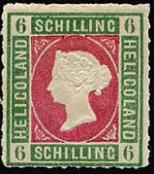
Both versions of the mark shared a common divisional structure: one mark was divided into 16 schilling, and each schilling was further divided into 12 pfennig. This system remained central to the economy of Hamburg and British Heligoland until 1875.
Key Facts
- Dual Nature: The system consisted of Mark Banco (bank/accounting money) and Mark Courant (physical circulation coins).
- Standard Ratio: Three marks were equivalent to one Reichsthaler, the primary German currency unit of the era.
- Stability: The Mark Banco was regarded as one of Europe's most stable currencies due to its strict silver backing.
- Regional Reach: The system was used in Hamburg and British Heligoland, and heavily influenced the currency of Lübeck.
- End of Era: The system was phased out between 1873 and 1875 following the introduction of the imperial German gold mark.
Hamburg Mark Banco: The Pillar of Stability
Established by the Hamburger Bank in 1619, the Hamburg Mark Banco was created to combat the monetary instability of the Kipper und Wipperzeit (a period of severe currency devaluation). It functioned as bank money and an accounting unit rather than a coin for the general public.
The bank accepted silver of verified weight and credited accounts in the Hamburg Reichsthaler Banco. This unit was equal to 3 Marks Banco. To maintain its value, the bank strictly managed silver standards. By 1770, the bank bought one Cologne mark of fine silver for 27 5/8 marks banco and sold it for 27 3/4 marks. This precision made the Mark Banco equivalent to the Danish and Norwegian rigsdaler specie, as well as the Dutch rijksdaalder.
The stability of the Mark Banco lasted until the Vienna Monetary Treaty of 1857, which introduced the Vereinsthaler (a unified silver coin). Eventually, with the 1871 unification of Germany and the 1873 gold mark standard, the Hamburger Bank became redundant and closed in 1875. At that time, 3 Marks Banco were converted into 4.5 gold marks.
Hamburg Mark Courant: The Currency of the People
While the Mark Banco handled large-scale finance, the Hamburg Mark Courant served as the actual physical coinage used for daily transactions. First issued in 1667, the Courant was designed to provide smaller fractions of value than the standard Reichsthaler.
In 1690, Hamburg adopted the Lübeck standard, setting the rate at 1 Cologne Mark = 34 marks courant. This meant the Mark Courant was worth 13/16 of a Mark Banco, containing approximately 6.88 grams of fine silver.
Over time, the influence of Prussian thalers increased. After 1840, these were often exchanged at a rate of 2 1/2 marks courant. Following the 1871 law on gold coinage, the German Empire set specific statutory rates to transition these debts into the new 10- and 20-mark gold pieces.
The withdrawal of the Courant was handled in stages during 1875. Small denominations (1/4 to 12 schilling) lost legal tender status on October 1, while larger pieces (up to 2 marks) followed on November 1. By December 31, 1875, all remaining coins were exchanged at a rate of 1.20 imperial marks for every mark courant.
Regional Influence and the Case of Lübeck
The city of Lübeck followed Hamburg's monetary lead closely. Although Lübeck stopped minting its own coins after 1801, it continued using the Hamburg currency system. The Hanseatic cities of Bremen, Hamburg, and Lübeck remained independent of major coinage conventions, such as the Dresden Convention of 1838, until the imperial legislation of the 1870s.
The integration was so deep that by 1873, 61% of all coins circulating in Lübeck were actually Hamburg currency. Additionally, Baltic trade brought Danish coins into the local economy, further diversifying the monetary landscape.
Currency Summary Table
| Feature | Mark Banco | Mark Courant |
|---|---|---|
| Primary Use | Bank accounts & International trade | Physical coins & Daily commerce |
| Nature | Accounting unit / Bank money | Circulating currency (Courant) |
| Subdivisions | 16 schilling / 192 pfennig | 16 schilling / 192 pfennig |
| Relationship | Standard of value | 13/16 of a Mark Banco |
| Final Conversion | 3 Marks = 4.5 Gold Marks | 1 Mark = 1.20 Imperial Marks |
Frequently Asked Questions
What is the difference between Mark Banco and Mark Courant?
The Mark Banco was a stable accounting unit used by the Hamburger Bank for large transactions and silver reserves, while the Mark Courant was the physical coinage used by the general public for everyday purchases.
How was the Hamburg Mark divided?
Both the Banco and Courant marks were divided into 16 schilling, and each schilling was further divided into 12 pfennig.
Why was the Hamburg Mark Banco considered stable?
It was backed by verified weights of fine silver and managed by the Hamburger Bank, which maintained strict buying and selling rates for bullion, making it a reliable medium of exchange in Europe.
When did the Hamburg Mark cease to be used?
The system was phased out between 1873 and 1875 following the unification of Germany and the introduction of the uniform imperial gold mark.
Did other cities use the Hamburg Mark?
Yes, the city of Lübeck used the same currency system, and by 1873, Hamburg currency made up 61% of the coins in circulation in Lübeck. It was also used in British Heligoland.