Grumman X-29: The Experimental Jet with Forward-Swept Wings
The Grumman X-29 stands as one of the most visually striking experimental aircraft in aviation history. Developed in the United States through a partnership between NASA, the U.S. Air Force, and DARPA, this aircraft was designed to push the boundaries of aerodynamics. Its most defining feature—wings that sweep forward rather than backward—was intended to test novel technologies that could redefine aircraft maneuverability and efficiency.
First taking to the skies in 1984, the X-29 served as a flying laboratory for advanced materials and computerized flight controls, proving that inherently unstable designs could be tamed through technology.
Key Facts
- Primary Purpose: Testing forward-swept wing technology and three-surface longitudinal control.
- Key Innovation: Use of carbon-fiber composites to prevent structural failure (aeroelastic divergence).
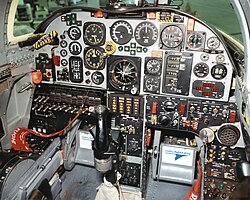
- Stability: Inherently unstable; required a computerized fly-by-wire system making 40 corrections per second.
- Performance: First forward-swept wing aircraft to achieve supersonic speed in level flight.
- Production: Only two aircraft were built.
Design and Development
The X-29 was developed by Grumman (internally designated as the G-712) after its proposal beat out a competing design based on the F-16 Fighting Falcon. To streamline development, Grumman utilized existing components: the forward fuselage and nose landing gear were sourced from two F-5A Freedom Fighter airframes, while the main landing gear and control surface actuators came from the F-16.
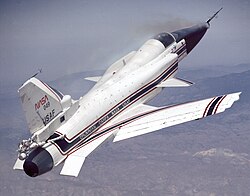
The most significant technological leap was the application of carbon-fiber composites. The wings, partially constructed from graphite epoxy, were swept forward at more than 33 degrees. While forward-swept wings had been trialed decades earlier on the Junkers Ju 287 and OKB-1 EF 131, the X-29 was the first to successfully integrate modern materials to solve the structural challenges associated with this layout.
Three-Surface Design and Inherent Instability
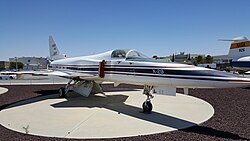
The X-29 is categorized as a three-surface aircraft. This means it utilizes three distinct areas for longitudinal control: canards (small forewings near the nose), the main forward-swept wings, and aft strake control surfaces. This configuration reduces trim drag and wave drag, allowing the aircraft to maintain efficiency even when the center of gravity is shifted.
However, this design placed the center of gravity well behind the aerodynamic center, making the aircraft inherently unstable. Without constant adjustment, the plane would quickly tumble out of control. To solve this, Grumman implemented a sophisticated fly-by-wire system—a computerized flight control system that replaces manual cables with electronic interfaces.
The system featured three redundant digital computers and three redundant analog computers. These computers "voted" on measurements to detect malfunctions. If all flight computers had failed mid-flight, the aircraft would have disintegrated due to aeroelastic forces before the pilot could react or eject.
The Maneuverability Paradox
Due to its high pitch instability, many expected the X-29 to possess extreme agility. However, Air Force tests revealed a paradox: to keep the aircraft stable, the flight control system had to moderate the pilot's ability to initiate maneuvers. Consequently, the X-29 did not exhibit significantly increased agility in practice. Engineers concluded that higher agility would have required larger control surfaces or faster actuators.
Overcoming Aeroelastic Divergence
A primary danger of forward-swept wings is aeroelastic divergence. In a standard forward-sweep configuration, aerodynamic lift twists the wing's leading edge upward. This increases the angle of attack, which further increases lift, creating a feedback loop that can snap the wings off the fuselage.
To prevent this without adding excessive weight, the X-29 used aeroelastic tailoring. By using the anisotropic elastic coupling of carbon fiber composites, the wing was designed to twist in the opposite direction as it bent. As lift increased and the wing tips bent upward, the composite laminate forced the leading edge to twist downward, reducing the angle of attack and neutralizing the divergent force.

Operational History and Legacy
The first X-29 flew on December 14, 1984, piloted by Chuck Sewell. By December 13, 1985, it made history as the first forward-swept wing aircraft to fly at supersonic speeds in level flight. The program continued through 1991, with the two aircraft completing a total of 242 flights.
The second X-29 was equipped with a spin recovery parachute to allow for high angle-of-attack testing. It successfully maneuvered up to an angle of attack of 25 degrees, reaching a momentary peak of 67 degrees during a pitch-up maneuver.
| Characteristic | Specification |
|---|---|
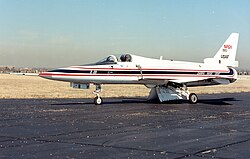
| Max Speed | Mach 1.6 (1,100 mph / 1,771 km/h) |
| Service Ceiling | 55,000 ft (17,000 m) |
| Engine | 1 × General Electric F404-GE-400 afterburning turbofan |
| Empty Weight | 13,800 lb (6,260 kg) |
| Max Takeoff Weight | 17,800 lb (8,074 kg) |
| Wingspan | 27 ft 2.5 in (8.29 m) |
| Range | 350 nmi (400 mi / 650 km) |
Frequently Asked Questions
Why did the X-29 have forward-swept wings?
Forward-swept wings were tested to reduce trim and wave drag and to potentially increase maneuverability and stability at high angles of attack compared to traditional wing designs.
What is aeroelastic divergence?
It is a structural phenomenon where aerodynamic lift causes a wing to twist upward, increasing the angle of attack and creating more lift, which eventually leads to the structural failure of the wing.
Could a human fly the X-29 without a computer?
No. Because the aircraft was inherently unstable, it required a computerized fly-by-wire system making 40 corrections per second to remain airborne. Without it, the aircraft would have disintegrated or crashed immediately.
Where can the X-29 be seen today?
One X-29 is on display at the National Museum of the United States Air Force in Ohio, and the second is located at the Armstrong Flight Research Center at Edwards Air Force Base.
Did the X-29 actually increase fighter agility?
While theoretically more agile, the flight control system had to limit maneuvers to prevent the aircraft from departing controlled flight. Therefore, the actual agility as flown was not significantly increased.