Greater Glasgow: Scotland's Largest Urban Conurbation
Greater Glasgow (known in Scottish Gaelic as Mòr-Ghlaschu and in Scots as Muckle Glesca) is a vast geographical area in Scotland. It consists of the city of Glasgow and all surrounding localities that are physically attached to it, forming a single contiguous urban area, or conurbation—a region comprising several cities, large towns, and other urban areas that have merged.
Unlike municipal boundaries, the extent of Greater Glasgow is defined by the National Records of Scotland for census and statistical purposes. Historically, the City of Glasgow experienced explosive growth in the late 19th and early 20th centuries. By 1912, it became the eighth city in Europe to reach a population of one million, joining the ranks of major capitals like London, Paris, and Berlin.
Key Facts
- Population: Approximately 1,028,220 as of 2020.
- Status: The largest urban area in Scotland and the fifth-largest in the United Kingdom.
- Languages: English, Scots, and Gaelic.
- Transport: Home to Scotland's only metro system and the UK's largest suburban rail network outside London.
- Geography: Spans an area of 265 km² (102 sq mi).
Defining the Urban Area
The boundaries of Greater Glasgow have shifted over time due to changes in how settlements are measured. In the 2001 UK Census, the population was recorded at 1,199,629. However, by 2016, this figure was adjusted to 985,290 because certain areas—specifically Motherwell & Wishaw, Coatbridge & Airdrie, and Hamilton—were removed due to small geographical gaps between populated postcodes.
It is important to note that "new towns" such as East Kilbride and Cumbernauld are not included in the Greater Glasgow settlement figures, despite their strong ties to the city, because they remain geographically separate.
By 2020, the population rose back to just over 1 million, following the re-addition of Barrhead to the calculations.
The Glasgow City Region and Metropolitan Area
Beyond the immediate conurbation lies the Glasgow City Region. This is a partnership of eight local authorities focused on economic growth, including Glasgow City Council, North and South Lanarkshire, East and West Dunbartonshire, Renfrewshire, East Renfrewshire, and Inverclyde. With a combined population of over 1.7 million, this region is described as a metropolitan area.
While the Scottish Government does not officially recognize "metropolitan status," the European Union's statistical body, Eurostat, has listed Glasgow as the 32nd most populous metropolitan area (or Larger Urban Zone) in Europe, covering approximately 3,346 km².
In a broader historical context, the former local government region of Strathclyde has been identified as a metropolitan area encompassing roughly 2.3 million people, representing 41% of Scotland's total population.
Transport and Infrastructure
Greater Glasgow is a major hub for transport. The region is served by the Glasgow Subway, the only metro system in Scotland. For air travel, the area utilizes two international gateways: Glasgow Airport and Glasgow Prestwick Airport.
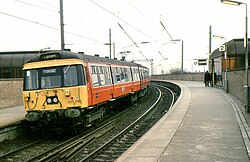
The region also boasts the most extensive suburban rail network in the United Kingdom outside of London, ensuring high connectivity between the city center and its outlying localities.
Population and Locality Summary
The following table provides a snapshot of population trends across key localities within the Greater Glasgow area.
| Locality | Council Area | 2001 Census | 2016 Estimate | 2020 Estimate |
|---|---|---|---|---|
| Glasgow | Glasgow City | 629,501 | 612,040 | 632,350 |
| Paisley | Renfrewshire | 74,170 | 77,220 | 77,270 |
| Hamilton | South Lanarkshire | 53,457 | 54,080 | 54,480 |
| Coatbridge | North Lanarkshire | 41,170 | 43,960 | 43,950 |
| Motherwell | North Lanarkshire | 30,301 | 32,590 | 32,840 |
| Clydebank | West Dunbartonshire | 29,858 | 26,320 | 25,620 |
Frequently Asked Questions
What is the difference between Greater Glasgow and the Glasgow City Region?
Greater Glasgow refers to the contiguous urban conurbation (the physically attached built-up area), while the Glasgow City Region is a broader economic partnership of eight local authorities that includes rural areas and separated towns.
Why did the population of Greater Glasgow appear to drop in 2016?
The decrease was not necessarily a loss of people, but a change in statistical boundaries. The National Records of Scotland removed several settlement areas, such as Motherwell and Hamilton, because of small gaps in populated postcodes.
Which transport systems serve the Greater Glasgow area?
The area is served by the Glasgow Subway, two international airports (Glasgow and Glasgow Prestwick), and the largest suburban rail network in the UK outside of London.
How does Glasgow rank among European cities historically?
In 1912, Glasgow was the eighth city in Europe to reach a population of one million, following cities such as Rome, London, Paris, and Berlin.
Is the Glasgow City Region a single municipal government?
No, it is a collection of individual local authorities. However, they established a joint Glasgow and Clyde Valley Cabinet in 2015 to coordinate strategic planning and economic growth.