Glasgow: The Vibrant Heart of Scotland
Known affectionately as The Dear Green Place (Scottish Gaelic: Baile Mòr nan Gàidheal), Glasgow is the largest city in Scotland and a powerhouse of culture, industry, and education. From its humble 6th-century origins to its status as a global industrial titan, the city has always lived by its motto: "Let Glasgow Flourish."
Today, Glasgow is a diverse metropolis where historic red sandstone tenements meet cutting-edge modern architecture, all centered around the lifeblood of the city, the River Clyde.
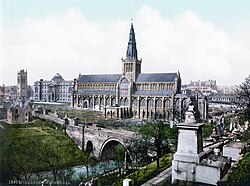
Key Facts
- Population: Approximately 650,300 (2024), making it the most populous city in Scotland.
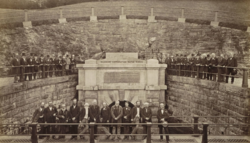
- Founded: Late 6th century, reputed to have been founded by Saint Mungo.
- Economic Hub: Historically famous for shipbuilding; currently home to the International Financial Services District (IFSD).
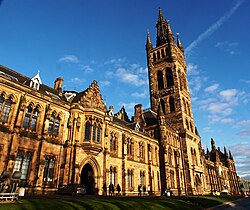
- Education: Home to the University of Glasgow, the fourth-oldest university in the English-speaking world.
- Transport: Features Scotland's only underground subway system, the third oldest in the world.
History and Evolution
Early Foundations and Growth
Glasgow's journey began in the late 6th century. By the 1170s, it had received its burgh charter, setting the stage for centuries of growth. The city experienced a massive population surge during the industrial era, peaking in the early 20th century. By 1921, the population had surpassed one million people.
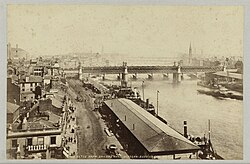
The Industrial Powerhouse
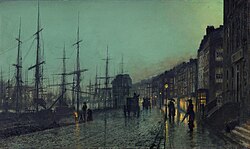
The River Clyde transformed Glasgow into a global center for shipbuilding and trade. This economic boom established the city as a symbol of industrial importance, fueling the construction of grand civic buildings and expanding the city's reach.
War, Regeneration, and Modernity
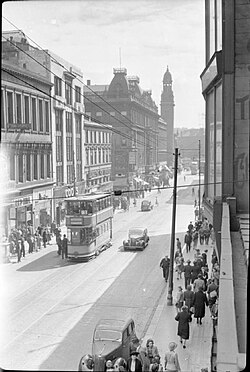
The city faced significant challenges during the World War years, including the Blitz, but emerged with a spirit of regeneration. In recent decades, Glasgow has shifted from heavy industry toward a service-oriented economy, focusing on finance, tourism, and the arts.
Government and Administration
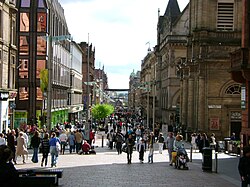
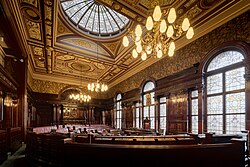
Glasgow is governed by the Glasgow City Council, headquartered in the magnificent City Chambers on George Square. The city is divided into 23 wards and is represented by 6 Members of Parliament (MPs) and 15 Members of the Scottish Parliament (MSPs).
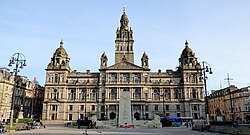
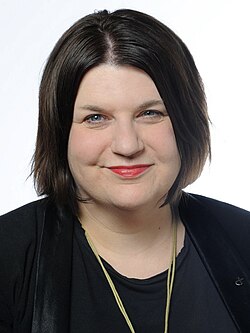
The current leader of the Glasgow City Council is Susan Aitken, who oversees the local government from the debating chamber within the City Chambers.
Geography and Demographics
City Layout and Climate
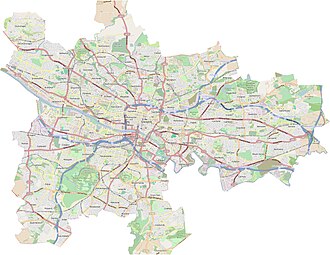
Covering approximately 68 square miles, Glasgow's geography is defined by its urban density and the winding path of the Clyde. The climate is typical of the region, with moderate temperatures and significant precipitation throughout the year.
A Diverse Population
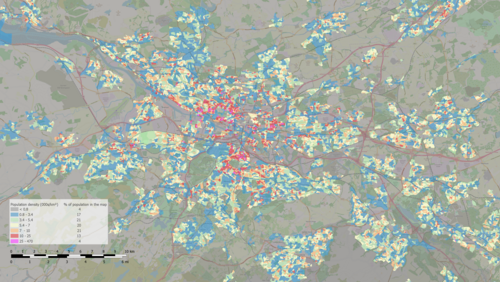
The city is a melting pot of ethnicities and religions. While the majority of the population identifies as White (80.71% in 2022), there has been a steady increase in Asian (11.08%) and African (3.59%) communities. Religiously, the city has seen a shift; while Christianity remains significant, there is a growing number of people identifying as having no religion (43.23% in 2022) and an increase in the Muslim community (7.86%).
Culture, Architecture, and Landmarks
Civic Pride and Art
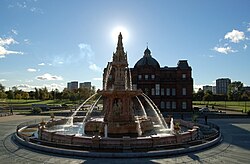
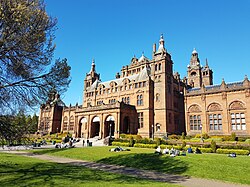
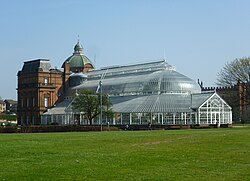
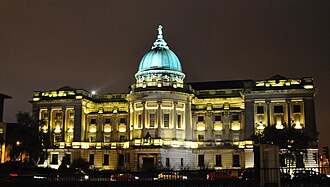
Glasgow is renowned for its museums and galleries. The Kelvingrove Art Gallery and Museum houses one of Europe's finest civic art collections, while the People's Palace on Glasgow Green celebrates the city's social history.
Architectural Highlights
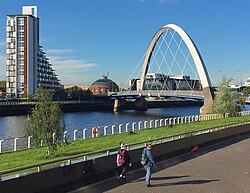
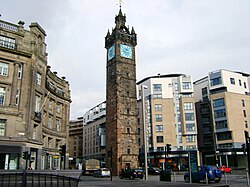
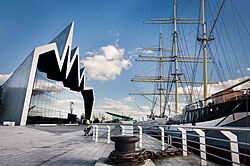
The city's skyline is a mix of the old and new. The Tolbooth Steeple marks the historic Merchant City, while the Clyde Arc (the "Squinty Bridge") and the SEC Armadillo—inspired by shipbuilding hulls—represent the modern era.
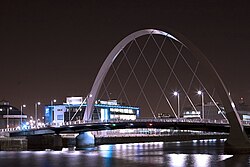
![The design of the SEC Armadillo is inspired by Glasgow's shipbuilding history, with flat sheet material cladded to framed hulls[212]](/images/2e/e0/2ee01edb5ab30b8f49230adee4a12806d04b888ff8b3829ebe9ac29699194a33.jpg)
Knowledge and Media
Glasgow is a center of learning and information. The Mitchell Library is one of the largest public reference libraries in Europe, and the city hosts several world-class institutions, including the University of Glasgow and the Royal Conservatoire of Scotland.
Economy and Infrastructure
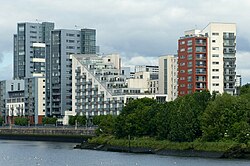
The Modern Economy
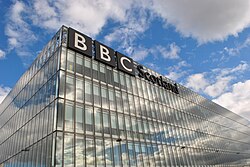
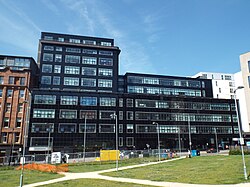
The International Financial Services District (IFSD), often called "Wall Street on the Clyde," was ranked as the 39th largest financial center globally in 2012. Additionally, Pacific Quay has become a hub for major employers and the headquarters of BBC Scotland.
![The International Financial Services District (IFSD), nicknamed "Wall Street on the Clyde", the 39th largest financial centre globally in 2012[219]](/images/cd/6e/cd6e950127ed296b0a1545d08f15aaaf45aec3b35bd3c238d6e9eef50213d8cc.jpg)
Transport and Connectivity
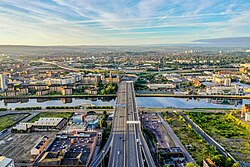
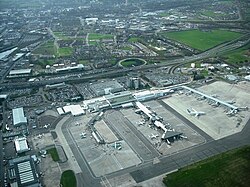
Glasgow is highly connected. The M8 motorway is Scotland's busiest, and Glasgow Airport serves as a primary gateway to the city. Within the city, the subway and a comprehensive bus network facilitate movement.
Sports and Recreation
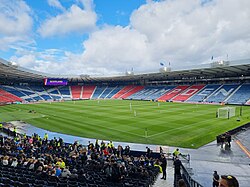
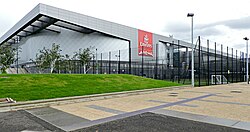
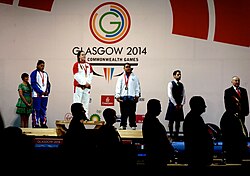
Sport is central to Glaswegian identity. The city is home to Hampden Park, the national stadium for Scotland's football team, and the fierce rivalry between Celtic and Rangers. Glasgow also proved its capability as a global host during the 2014 Commonwealth Games, leaving behind legacies like the Emirates Arena.
City Summary
![The OVO Hydro arena (right) is the second-busiest arena venue in the world. The SEC Armadillo is located to its left[198]](/images/37/df/37df330473f2bf697d805055a3d0faf48f7c284d5949976274649de8ef6fd159.jpg)
| Category | Detail |
|---|---|
| Nickname | The Dear Green Place |
| Population (2024) | 650,300 |
| Area | 68 sq mi (175 km²) |
| Key Industry | Finance, Tourism, Education, Shipbuilding (Historic) |
| Major Landmark | Glasgow City Chambers, River Clyde, Kelvingrove Museum |
Frequently Asked Questions
What is the significance of the River Clyde to Glasgow?
The River Clyde was the catalyst for Glasgow's economic rise, transforming it into a global leader in shipbuilding and maritime trade, which defined the city's industrial identity for over a century.
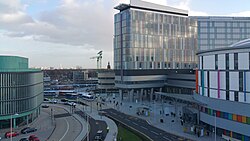
Which is the largest hospital in Europe located in Glasgow?
The Queen Elizabeth University Hospital is the largest hospital campus in Europe.
What makes the Glasgow Subway unique?
The Glasgow Subway is the only underground rail system in Scotland and is recognized as the third oldest subway network in the world.
How has the city's population changed over time?
Glasgow saw a massive surge during the industrial revolution, peaking at over 1.1 million in 1938, before declining and stabilizing around 600,000 to 650,000 in recent decades.
What are the major universities in Glasgow?
The city is home to several prestigious institutions, including the University of Glasgow, University of Strathclyde, Glasgow Caledonian University, and the University of the West of Scotland.