Gertrude Käsebier: A Pioneer of Artistic Portraiture
Gertrude Käsebier was more than just a photographer; she was a trailblazer who redefined the boundaries of portraiture at the turn of the 20th century. From her early struggles in a restrictive marriage to her ascent as one of the most celebrated artists of her era, Käsebier combined technical mastery with a deep psychological insight into her subjects. Her work transitioned photography from a mere recording of facts into a recognized form of fine art.
Her journey was marked by a relentless pursuit of artistic independence, often challenging the social norms of the Victorian era and the rigid ideologies of her contemporaries.
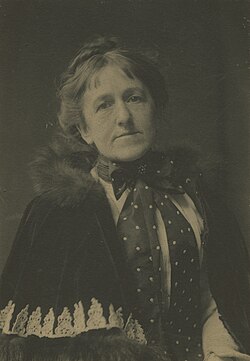
Early Life and the Path to Art
Born Gertrude Stanton on May 18, 1852, in Fort Des Moines, Iowa, her early years were shaped by the American frontier. In 1860, she moved to Golden, Colorado, where her father served as the town's first mayor. It was during this period that she developed a lifelong affection and respect for Native Americans, an experience that would later define some of her most significant work.
Following her father's sudden death in 1864, the family relocated to Brooklyn, New York. In 1874, at age 22, she married Eduard Käsebier. While the marriage provided financial stability, Gertrude later described it as a miserable union, noting that her husband was "terrible" and nothing was ever good enough for him. The couple lived separate lives after 1880, though they remained married due to the social scandals associated with divorce at the time.
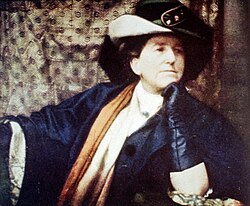
The Awakening of an Artist
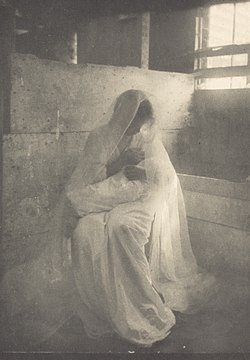
At age 37, Käsebier defied social expectations by enrolling in art school. In 1889, she moved her family back to Brooklyn to study full-time at the Pratt Institute of Art and Design. Under the mentorship of Arthur Wesley Dow, she began to refine her artistic vision. During her time at Pratt, she was deeply influenced by the Arts and Crafts movement and the educational theories of Friedrich Fröbel, whose emphasis on the bond between mother and child became a recurring theme in her photography.
To further her expertise, Käsebier traveled to Europe in 1894, studying the chemistry of photography in Germany and painting under Frank DuMond in France. Upon returning to Brooklyn, she worked as an assistant to Samuel H. Lifshey, where she mastered studio management and advanced printing techniques.
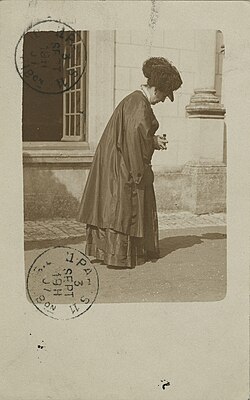
Capturing the Spirit of the Sioux
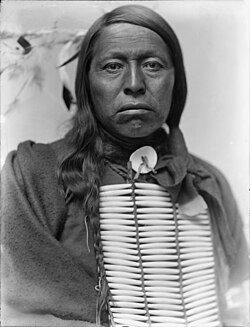
In 1898, inspired by the parade of Buffalo Bill's Wild West troupe in New York City, Käsebier sought permission from William "Buffalo Bill" Cody to photograph the Lakota people. Unlike commercial photographers of the time, her goal was purely artistic.
Käsebier sought to capture the "real raw Indian" she remembered from her childhood in Colorado. This approach led to a famous encounter with Chief Iron Tail. She photographed him without his regalia to create an intimate, quiet portrait. While Iron Tail initially disliked the image for being too dark and preferred his full ceremonial dress, Käsebier viewed the stripped-down portrait as a revelation of true character.
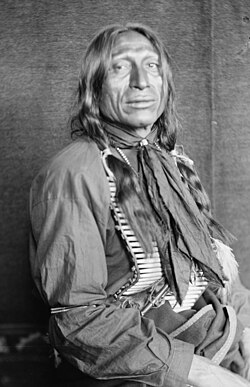
Her portrait of Chief Flying Hawk offered a different emotional resonance. Having fought in the Great Sioux War of 1876 and witnessed the Wounded Knee Massacre, Flying Hawk's expression in the photograph was one of anger and frustration, reflecting his struggle with the constraints of reservation life and the performative nature of show business.
The Height of Fame and the Photo-Secession
By the late 1890s, Käsebier was recognized as a leading figure in pictorialism—a style of photography that emphasized atmospheric effects and composition to create a painterly quality. In 1899, the influential Alfred Stieglitz declared her the "leading artistic portrait photographer of the day." That same year, her print The Manger sold for $100, a record-breaking sum for a photograph at the time.
Käsebier's accolades grew rapidly: she was one of the first two women elected to Britain's Linked Ring and became a founding member of the Photo-Secession in 1902. Her work was frequently featured in the prestigious publication Camera Work.
However, her relationship with Stieglitz eventually soured. While Stieglitz held an idealistic, anti-materialistic view of art, Käsebier embraced the commercial side of photography to support her family. This conflict reached a breaking point in 1906 when she joined the Professional Photographers of New York, an organization Stieglitz viewed as overly commercial.
Professional Independence and Legacy
After the death of her husband in 1910, Käsebier pursued her career with complete autonomy. She helped establish the Women's Professional Photographers Association of America and eventually resigned from the Photo-Secession in 1912, citing Stieglitz's unfair financial practices regarding the sale of prints.
In 1916, she co-founded the Pictorial Photographers of America. Throughout the 1920s, she remained a sought-after portraitist for the intellectual and artistic elite, including Robert Henri and Mabel Dodge. She also served as a mentor to a new generation of women photographers, including Imogen Cunningham and Laura Gilpin.
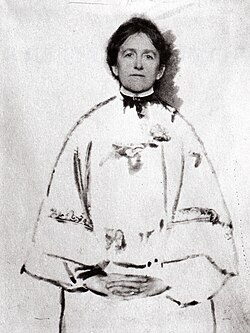
Käsebier retired from photography in 1929, liquidating her studio. She passed away on October 12, 1934. Her legacy was cemented in 1979 when she was inducted into the International Photography Hall of Fame and Museum.
Key Facts
- Education: Studied at the Pratt Institute of Art and Design and under Frank DuMond in France.
- Major Influence: Integrated Friedrich Fröbel's theories on motherhood into her photographic themes.
- Historic Achievement: One of the first women elected to the Linked Ring in Britain.
- Notable Subjects: Chief Iron Tail, Chief Flying Hawk, and Auguste Rodin.
- Artistic Philosophy: Focused on individual expression and psychological depth over costumes and customs.
- Hall of Fame: Inducted into the International Photography Hall of Fame and Museum in 1979.
| Period/Year | Key Milestone | Significance |
|---|---|---|
| 1889 | Enrolled at Pratt Institute | Formal transition into professional art study. |
| 1898 | Sioux Portrait Project | Captured intimate, non-commercial portraits of Lakota leaders. |
| 1899 | Sale of "The Manger" | Set a record price for a photograph ($100). |
| 1902 | Photo-Secession Founding | Joined the elite circle of avant-garde photographers. |
| 1912 | Resignation from Photo-Secession | First member to leave, asserting financial and artistic independence. |
| 1929 | Retirement | Liquidated studio after a prolific career in portraiture. |
Frequently Asked Questions
How did Gertrude Käsebier's approach differ from Edward Curtis?
While Edward Curtis often added elements to his photos to fit a specific vision of Native American life, Käsebier focused on the individuality and expression of the person. She sometimes removed ceremonial items to concentrate specifically on the subject's face and stature.
Why did she have a falling out with Alfred Stieglitz?
The conflict was primarily based on the commercialization of art. Stieglitz believed true art should be separate from financial gain, whereas Käsebier embraced commercial success to support her family, leading to a permanent rift in their professional relationship.
What influenced her focus on mother-and-child photography?
Käsebier was heavily influenced by the theories of Friedrich Fröbel, a scholar whose work on early childhood education and the importance of the maternal bond shaped her artistic perspective.
What was the significance of her portraits of the Sioux?
Her portraits were significant because they were non-commercial and sought to capture the authentic character of the individuals. By photographing leaders like Chief Iron Tail without regalia, she challenged the stereotypical "noble pose" of the era.
Which institutions hold her work today?
A major collection of her work is held by the University of Delaware, and several of her Sioux portraits are preserved at the Smithsonian Institution's National Museum of American History.