Georgian Horsemen of the Wild West: The Secret History of the 'Cossack' Riders
When people think of the American Wild West, images of cowboys and Native Americans usually dominate the scene. However, one of the most popular and influential acts in the legendary Wild West shows was actually performed by a group of daring horsemen from Georgia. Though they performed under the guise of Russian Cossacks, these riders brought a unique blend of cultural heritage and death-defying skill to the United States.
The journey began in 1892 in England, where a troupe of young Georgians, aged 18 to 25 and led by Prince Ivan Makharadze, joined Buffalo Bill’s Wild West. By 1893, these riders—specifically from the Guria region—arrived in the United States. For over three decades, they toured with Buffalo Bill and various other circuses, becoming a staple of American entertainment.
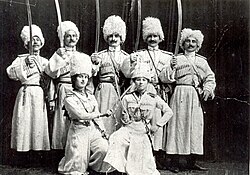
The Identity of the 'Cossacks'
To the American public, these performers were billed as Russian Cossacks. This label was used because Georgia had been annexed by the Russian Empire during the 19th century, and the "Cossack" name carried a colorful, adventurous reputation that appealed to audiences. However, historical evidence confirms their true Georgian identity through their surnames, which featured traditional suffixes such as -dze, -shvili, -ia, and -iani.
The Spectacle: Dance and Dzhigitovka
A typical performance was a choreographed blend of cultural pride and athletic prowess. The riders entered the arena dressed in the chokha (a traditional Georgian wool coat), carrying weapons and singing. The act usually began with a march around the arena, followed by a traditional Georgian dance performed to the rhythm of handclaps, sometimes executed on a wooden platform.
The highlight of the show was the stunt riding, known as Dzhigitovka—a Turkic term referring to a skillful and courageous rider. These maneuvers were breathtaking and high-risk, including:
- n
- Standing straight up in the saddle or even on their heads while galloping.
- Riding three horses simultaneously.
- Jumping from a galloping horse to the ground and back again.
- Picking up small objects from the earth at high speeds.
- Standing on a horse at full gallop to fire a weapon.
- The most dangerous feat: removing the saddle while galloping, dismounting, and then remounting and replacing the saddle without stopping.
Influence on the American Rodeo
The impact of these Georgian riders extended far beyond the circus ring. According to Western historian Dee Brown, trick riding entered the American rodeo via a troupe of these "Cossack daredevils" imported by the 101 Ranch. Intrigued by these stunts, American cowboys began incorporating variations into their own performances. Even the flamboyant costumes associated with modern rodeo may have been influenced by the colorful attire of the Georgian riders.
| Category | Details |
|---|---|
| Arrival in US | 1893 |
| Primary Leader | Prince Ivan Makharadze |
| Public Identity | Russian Cossacks |
| Key Skill | Dzhigitovka (Trick Riding) |
| Typical Pay | $40–$50 per month (approx. 100 rubles) |
| Traditional Dress | Chokha |
Key Facts
- The riders were primarily from the Guria region of Georgia.
- They performed for over 30 years in the US, including with Buffalo Bill and the Ringling Brothers.
- Their monthly pay of $40–$50 was substantial, considering a cow in Georgia cost only 3–5 rubles at the time.
- They significantly influenced the development of trick riding in American rodeos.
- Many riders were later persecuted by the Bolshevik regime upon returning to Georgia.
Tragedy and the Soviet Era
The golden era of touring ended with the First World War and the rise of the Bolsheviks. Some riders remained in the US, settling in cities like Chicago and joining the Miller and Ringling Brothers' circuses, eventually starting American families and losing touch with their homeland.
For those who returned to Georgia, the homecoming was grim. The Bolshevik regime viewed them as American spies. Many were imprisoned or exiled; for instance, Ivane Baramidze disappeared after being captured in 1937. Prince Ivan Makharadze’s son was sent to Siberia after his father refused to surrender a well-tamed horse to the Bolsheviks.
To survive, many riders destroyed photographs and evidence of their time abroad. Some resorted to labeling photos with misleading political slogans, such as "Proletarians of all the countries, unite!", to avoid suspicion. The regime also confiscated their American gifts and possessions, leaving many families in a state of constant fear and psychological distress.
Frequently Asked Questions
Why were Georgian riders called Cossacks in the US?
They were called Cossacks because Georgia was part of the Russian Empire at the time, and the term "Cossack" had a colorful, adventurous reputation that was more marketable to American audiences.
What is Dzhigitovka?
Dzhigitovka is a Turkic term used to describe the art of skillful and courageous trick riding, involving complex maneuvers performed while the horse is at a full gallop.
How did these riders influence American cowboys?
They introduced advanced trick riding techniques to the 101 Ranch, which cowboys then adapted for the American rodeo. Their colorful costumes also likely influenced the flamboyant dress seen in rodeo performances.
What happened to the riders after the Bolshevik revolution?
Many who returned to Georgia were accused of being spies, imprisoned, or exiled to Siberia. Others were forced to destroy their photographs and memories of America to avoid persecution.
How much did the Georgian riders earn in the United States?
They earned relatively high wages for the time, typically between $40 and $50 per month, which was equivalent to about 100 rubles.