General Aviation: Definitions, Fleet Statistics, and Regional Scope
General aviation (GA) encompasses a vast and diverse array of flight activities, ranging from the simplicity of gliders and powered parachutes to the complexity of large, non-scheduled cargo jets. This sector is a cornerstone of civil aviation, supporting everything from private leisure and sport to critical commercial services and professional training.
The scope of GA includes a wide variety of aircraft types, such as rotorcraft (helicopters), piston and jet-engined fixed-wing aircraft, various types of gliders, and lighter-than-air craft. Beyond private flying, the sector supports essential commercial activities known as aerial work—which includes air ambulances and surveying—as well as comprehensive flight training programs.
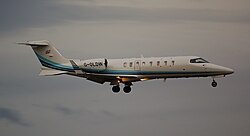
Defining General Aviation
Defining the exact boundaries of general aviation can be complex, as different international and national bodies apply varying criteria.
The ICAO Standard
The International Civil Aviation Organization (ICAO) provides a strict definition, describing general aviation as any aircraft operation that is not a commercial air transport operation or an aerial work operation. Under this framework:
- Commercial Air Transport (CAT) involves transporting passengers, cargo, or mail for hire or remuneration.
- Aerial Work refers to specialized services, including agriculture, construction, photography, surveying, observation, patrol, search and rescue, and aerial advertisement.
The United Kingdom Perspective
In the UK, organizations often use broader definitions that incorporate elements of commercial aviation. The British Business and General Aviation Association defines GA as all aeroplane and helicopter flying, excluding only the Armed Services and major airlines. Similarly, the General Aviation Awareness Council includes all civil aviation operations except for scheduled air services and non-scheduled air transport for hire.
For strategic reviews, the Civil Aviation Authority (CAA) defines GA as any civil aircraft operation other than a scheduled commercial air transport flight. This inclusive approach allows the CAA to incorporate aerial work and minor CAT operations into the GA sector. A significant portion of this activity is dedicated to sport and recreational aviation.
General Aviation in the European Union
Estimating the total size of the European GA fleet is challenging because many categories, such as amateur-built aircraft and microlights (ultralight aircraft in the 450–600 kg class), are regulated by individual national authorities rather than the European Union Aviation Safety Agency (EASA).
A European Commission study from the early 2010s estimated approximately 13,000 certified GA aeroplanes within the EU, the majority of which were piston aircraft. However, industry surveys from EASA, GAMA (General Aviation Manufacturers Association), and IAOPA (International Council of Aircraft Owner and Pilot Associations) suggest that microlights may constitute a fleet segment as large as, or larger than, certified aircraft, with tens of thousands of units across countries like Germany, France, Italy, and the UK.
General Aviation in the United Kingdom
The UK maintains a robust GA infrastructure. It is estimated that there are 27,000 civil aircraft registered in the UK, with 96% of these engaged in general aviation activities. Additionally, approximately 900 foreign-registered GA aircraft are based within the country.
The infrastructure supporting these flights is extensive, consisting of more than 1,800 aerodromes and landing sites. These range from large regional airports to small farm strips, though over 80% of all GA activity is concentrated at 134 of the larger aerodromes.
Based on 2005 data, the UK GA fleet was distributed as follows:
- Fixed-wing aircraft: 9,000
- Hang gliders: 7,000
- Microlights: 4,100
- Gliders: 2,500
- Airships and balloons: 1,800
- Helicopters: 1,300
![There were 7,000 hang gliders registered in the UK in 2005.[8]](/images/8d/ce/8dce31293de1eccd88eee63cd533c61a2ed37ae2796f977db1b961b4d36fdd69.jpg)
During the same period, the sector recorded between 1.25 and 1.35 million flight hours. The pilot community included 28,000 Private Pilot Licence holders (out of 47,000 total licences) and 10,000 certified glider pilots. Furthermore, some of the 19,000 professional licence holders also participate in GA activities.
Key Facts
- Broad Scope: GA includes everything from gliders and microlights to business jets and air ambulances.
- UK Fleet: Approximately 96% of the 27,000 civil aircraft registered in the UK are used for GA.
- Infrastructure: The UK has over 1,800 landing sites, but 80% of activity occurs at 134 major aerodromes.
- EU Diversity: Microlights (450–600 kg) represent one of the largest fleet segments in Europe due to national regulations.
- Regulatory Variance: ICAO excludes aerial work from GA, while the UK's CAA includes it.
| Category | Statistic |
|---|---|
| Total Registered GA Aircraft | 26,000 |
| Annual Flight Hours | 1.25 – 1.35 Million |
| Private Pilot Licences | 28,000 |
| Certified Glider Pilots | 10,000 |
| Total Landing Sites/Aerodromes | 1,800+ |
Frequently Asked Questions
What is the difference between General Aviation and Commercial Air Transport?
Commercial Air Transport (CAT) specifically involves the transport of passengers, cargo, or mail for hire or remuneration. General Aviation generally refers to all other civil aviation operations, though definitions vary between the ICAO and national bodies like the UK CAA.
What is considered "aerial work" in aviation?
Aerial work refers to aircraft operations used for specialized services. Examples include agricultural spraying, construction support, aerial photography, surveying, search and rescue, and patrol operations.
What are microlights?
Microlights are a category of ultralight aircraft, typically falling within the 450–600 kg weight class. They are highly popular in Europe and are often regulated by national authorities rather than EASA.
How is GA activity distributed across UK landing sites?
While there are more than 1,800 aerodromes and landing sites available in the UK, the vast majority of activity—over 80%—is concentrated at 134 of the larger aerodromes.
Does the UK CAA follow the ICAO definition of General Aviation?
No, the UK CAA departs from the ICAO definition by including aerial work and minor commercial air transport (CAT) operations within the scope of general aviation for its strategic reviews.