CAA General Aviation and Technical Training History
General aviation encompasses a diverse array of unscheduled air activities, ranging from local flying clubs to professional training establishments. To better serve this sector, the Civil Aviation Authority (CAA) announced a more proportionate approach to regulation in 2013, leading to the creation of a dedicated General Aviation unit in 2014.
Key Facts
- The CAA established a dedicated GA unit in 2014 to provide proportionate regulation.
- The Civil Aviation Flying Unit (CAFU) operated 49 aircraft across 13 different types.
- Flight Calibration Services were privatized and sold to Flight Precision Ltd in 1996.
- Technical training evolved from the Signals Training Establishment (STE) to the College of Telecommunications Engineering (CTE).
- The CAA's technical training history is closely linked to Bletchley Park.
The Civil Aviation Flying Unit (CAFU)
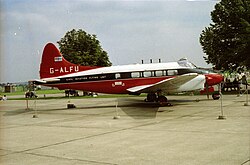
The roots of the Civil Aviation Flying Unit (CAFU) extend back to 1944 with the founding of the Air Ministry's Civil Operations Fleet. Over its history, the CAA and its predecessors operated 49 aircraft of 13 different types, primarily of British origin. These included the de Havilland Tiger Moth, Avro Anson, Airspeed Consul, Percival Prince, de Havilland Dove, Hawker Siddeley HS 748, and Hawker Siddeley HS 125.
Operational Roles and Responsibilities
CAFU aircraft performed a wide variety of critical aviation tasks, including:
- Calibration and testing of radio and radar navigational aids both within the UK and internationally.
- Flight testing for candidates seeking commercial pilots' licenses, instrument ratings, and instructor ratings.
- Training and testing for authorized type-rating and instrument examiners.
- Transporting Government Ministers, MEPs, and other official personnel.
- Providing charter flights for Dan-Air Services Ltd.
- Radar target flying for the College of Air Traffic Control and airport lighting inspections.
- Conducting Ordnance Survey photographic flights and aerodrome evaluation flights.
- Testing new equipment and procedures, such as Ground Proximity Warning Systems, Microwave Landing Systems, and Extended Range Twin-engine Operations (ETOPS)—a certification allowing twin-engine aircraft to fly long distances from the nearest airport.
- Providing refresher flights for Flight Operations Inspectors and educational flights for schools.
Privatization and Transition
Until 1996, the CAA was responsible for the calibration of approach and navigation aids. This service was subsequently privatized and sold to Flight Precision Ltd. Following this shift, the Flight Calibration department moved from Stansted Airport to Teesside Airport near Darlington, while photographic laboratory services were contracted to HighLight Photographics.
Between 1996 and 2002, the CAA operated two HS 125-700 aircraft. These were used for communications roles serving the CAA, NATS (National Air Traffic Services), and Highlands & Islands Airports Ltd (HIAL), as well as conducting radar trials for NATS and providing continuation flying for professional pilots.
Technical Training at Bletchley Park
In the early 1970s, the CAA operated the Signals Training Establishment (STE) at Bletchley Park. Based in Block D and surrounding classrooms, the STE trained technicians to maintain en-route and airport telecommunications, radar, and navigational aids.
The Apprentice Experience
The STE offered a two- to three-year locally domiciled apprenticeship. Upon completion, technicians were posted to en-route centres or airports. The facility also provided advanced training for existing technicians to keep pace with technological shifts.
Apprentices enjoyed access to the 'AT Club' and the 'Radio Shack' (call-sign G4BWD), located in an old DF (Direction Finding) hut. Using a Yagi antenna and a long wire for HF (High Frequency) use, they were able to access the 2-metre band.
Evolution into the College of Telecommunications Engineering
In 1974, the STE introduced a streamlined one- to two-year course for entrants with higher qualifications (A-levels or above), who were known as 'Super-Techs' or 'Super-ATs'. By 1975/1976, the STE was renamed the College of Telecommunications Engineering (CTE). During this transition, 'Apprentice Technicians' became 'Engineer Cadets,' and graduates were designated as 'Air Traffic Engineers' rather than 'Radio Technicians'.
CAA Operational and Training Summary
| Entity/Unit | Primary Focus | Key Transition/Date |
|---|---|---|
| GA Unit | Proportionate regulation of general aviation | Established 2014 |
| CAFU | Flight testing, calibration, and official transport | Founded 1944 (as Civil Operations Fleet) |
| Flight Calibration | Navigation and approach aid calibration | Privatized 1996 (Flight Precision Ltd) |
| STE / CTE | Technical training for air traffic engineers | Renamed to CTE in 1975/1976 |
Frequently Asked Questions
What is general aviation in the context of CAA regulation?
General aviation is an official category covering unscheduled air activity, including training establishments and flying clubs. The CAA established a dedicated unit in 2014 to ensure regulation of this sector is proportionate.
What aircraft did the Civil Aviation Flying Unit operate?
CAFU operated 49 aircraft across 13 types, including the de Havilland Dove, Tiger Moth, Hawker Siddeley HS 125 and HS 748, Avro Anson, Airspeed Consul, and Percival Prince.
When was the CAA's flight calibration service privatized?
The Flight Calibration Services group was privatized and sold to Flight Precision Ltd in 1996, moving its operations from Stansted to Teesside Airport.
What was the purpose of the Signals Training Establishment (STE)?
The STE, located at Bletchley Park, trained technicians to maintain radar, telecommunications, and navigational aids for UK airport and en-route services.
How did the training titles change when STE became CTE?
When the STE became the College of Telecommunications Engineering in 1975/1976, 'Apprentice Technicians' were renamed 'Engineer Cadets,' and they graduated as 'Air Traffic Engineers' instead of 'Radio Technicians'.